Learn Vocabulary and more with the New York Times

Every now and then I run across a link that is just too cool to wait for an appropriately themed post, and today is one of those days.

Today I discovered The Learning Network, a blog on education hosted by The New York Times.  This extremely active blog uses content from NYT as the basis for lesson plans, quizzes, activities, and other materials directed at both teachers and students across all academic disciplines.  You can investigate their archives based on subject matter (grammar, social sciences, math, etc.) or by type of activity (word of the day, ‘6Q’s about the news,’ poetry pairings, etc.), or search the blog for a specific topic, article, or event.

One of the currently featured posts is “Twelve Ways to Learn Vocabulary with The New York Times,” full of neat trivia regarding the main NYT website itself (did you know that double clicking any word in an article will bring up dictionary definitions of that word?), lesson suggestions on content based analysis (even for the sports pages!), and opportunities for student writing.

This blog and some other cool resources I’ve encountered will soon be showing up on the re-organized resource pages here at Brain Popcorn, so stay tuned!

Why Science Needs Art, and so do we all


“When we try to pick out anything by itself, we find it hitched to everything else in the Universe.”
John Muir

Every so often, when I tell people that I write a blog about interdisciplinary education for museums, schools, and the generally curious, the response I get is a generic “That’s cool!” while their faces say quietly “What?”  and “For heaven’s sake, why?”

Why indeed.  At its most flippant level, the answer is ‘because it’s fun.’   However, there are serious reasons to advocate for interdisciplinary learning, and every so often I feel the need to point out just how many people agree with me.

For instance, graphic designer, computer scientist, and author John Maeda (who also happens to be the founder of Second Life) claims that “Innovation is born where art meets science.” In answer to the question “Why does science need artists?” he replies

We seem to forget that innovation doesn’t just come from equations or new kinds of chemicals, it comes from a human place. Innovation in the sciences is always linked in some way, either directly or indirectly, to a human experience. And human experiences happen through engaging with the arts – listening to music, say, or seeing a piece of art.

For this reason, he advocates for turning the tenets of ‘STEM (science, technology, engineering, and math) education’ into ‘STEAM,’ including the arts to promote innovative thinking and a greater acceptance of ambiguity.  (For more good background on the whats and wherefores of STEM Education, check out this excellent New York Times article, “STEM education has little to do with flowers.” Unsurprisingly, this article also points out the many benefits of looking at the connections between these subjects as opposed to the ‘silo’ approach.)

The Common Core Standards, which are slowly being adopted nation-wide, are also supportive of interdisciplinary education, though the standards are of necessity organized currently under the major umbrellas of English language and literature, and Mathematics.  Consider this benchmark for third grade, located under the ‘comprehension and collaboration’ strand in the English standards:

Determine the main ideas and supporting details of a text read aloud or information presented in diverse media and formats, including visually, quantitatively, and orally. [emphasis mine]

Visually–the reading and comprehension of artwork, symbols, photography, and motion pictures.
Quantitatively –the reading of charts, graphs, and numerical results.
Orally — the comprehension of spoken words, theater, lyrics, music, etc.

These are true interdisciplinary skills, necessary in all fields and for life in general.  And beyond the development of life skills, interdisciplinary education and exploration has been shown to promote creativity.
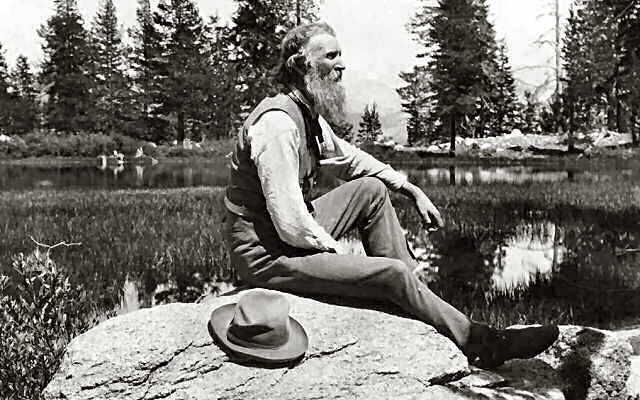
John Muir, environmentalist

The power of imagination makes us infinite.
~John Muir

Miller Mc-Cune reported this spring that studies have shown that experiencing different cultures can make you more creative, as can thinking of yourself as a seven year old.    (As I regularly travel and visit toy stores, this is good news for me all around.)

Check out The Walters Art Museum’s two interdisciplinary classroom units at their teacher resource page, Integrating the Arts, for some examples of how this could be done in connection with a museum or in  your own space.
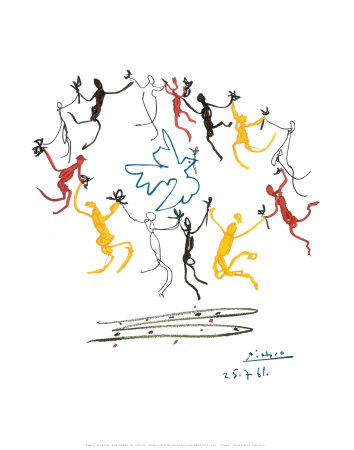
The Dance of Youth, by Pablo Picasso

“All children are artists.  The problem is how to remain an artist once he grows up.”
~Pablo Picasso

What steps can be taken, once we’re ‘grown up,’ to keep that creativity alive?  (Other than visiting museums and giving ourselves permission to play?)  The Idea Hive has some suggestions: The Subtle Art of Provoking Serendipity , including gathering diversity and making connections.  Interdisciplinary learning in the workplace as well as the school and the museum.  I love it.

‘The most exciting phrase to hear in science, the one that heralds new discoveries, is not “Eureka!” but “That’s funny.”‘
~Isaac Asimov

Has all this put you in the mood for some fresh ideas?  Open up the multimedia Moodstream created by Getty Images and let your brain start popping.

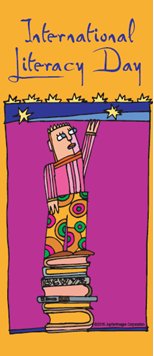
Happy International Literacy Day

International Literacy Day, according to the calendar hanging in my office, was technically September 8th, but as I have been having inexplicable glitches attempting to access WordPress, I’m a little behind.  (But the Salem LitFest isn’t for another week, so I’m still in the running!)

Therefore, in the name of celebrating cool stuff, which today is reading (who am I kidding?  We celebrate reading all the time in my world), I bring you neat thoughts about literacy, and a handful of reading-related activities.

First of all, good news for those of us who have more books than shelves to put them on: Book owners have smarter kids from Salon.com

And next, hear about how educators at the Eric Carle Museum focus on ‘reading the pictures’ in their storytimes as much as reading the words, improving comprehension and engaging kids and adults in the art of illustration: Noggin video

Looking for good books to read?  Ask your local librarian or check out some useful lists on Reading Rockets, helpfully organized by theme.

Also, don’t forget to check out the awesome interdisciplinary lesson plans available at the Kennedy Center’s ArtsEdge–many of them have literacy themes.  One of my favorites is the Adjective Monster, a ‘paper sculpture’ art and geometry project built around Go Away Big Green Monster by Ed Emberley.

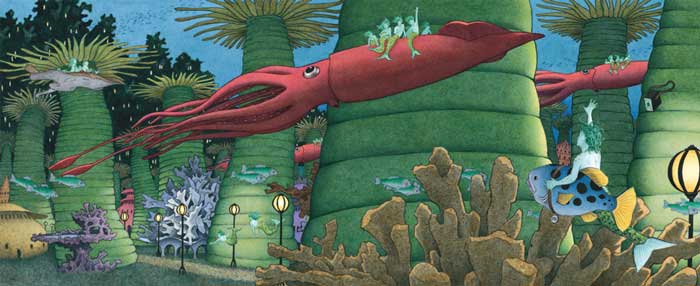
Illustration from Wiesner's Flotsam

Inspired by the ‘reading pictures’ video?  Everyone loves a good wordless book, and David Wiesner has created several.  Try out this very cool classroom photography project featured in School Library Journal and inspired by Flotsam, with neat tie-ins to science and history.  Kudos to my Anonymous Tip-Master for pointing this one out! I love how crazy and beautiful his illustrations are, and part of a long tradition of fish-exaggerations.  In 1719, the first full-color illustrated book of fish was published, including several fish that were figments of the illustrator’s imagination!  (See The Fantasy Fish of Samuel Fallours for the scoop.)

For more science tie-ins, read Flotsam paired with Tracking Trash, a very cool book about ocean currents and the problem of the ocean as ‘plastic soup’ [National Geographic].  Sector 7 is also a personal favorite, and great for teaching story-boarding or introducing a unit on clouds.

And lest we think all literacy only has to do with kids old enough for words, a neat article about visual literacy that begins developing in infancy: Escher-Themed Nurseries?  Even 4 month olds can recognize impossible objects from Cognitive Daily.  (You thought I’d manage not to include a reference to Eye Spy in this post, didn’t you?  Tune in next time for more cool stuff to do with impossible objects and how to create your own scratch holograms!)

A Welcome Un-Surprise

In January, the UK’s Telegraph reported “Museums ‘should provide more hands-on experiences for children'” with the subtitle “Children are getting bored with ‘interactive’ push-button displays in museums and would rather dress up and touch exhibits, a campaign group claims.”

…And I thought ‘campaign group? Try 9/10 of the museum professionals I have worked with and/or know!’

In fact, what surprised me most about this article was not its findings, but the fact that it provoked so few expressions of vindication in the worlds of museum education where I tread.  Some of us have been saying this kind of thing for a long time.

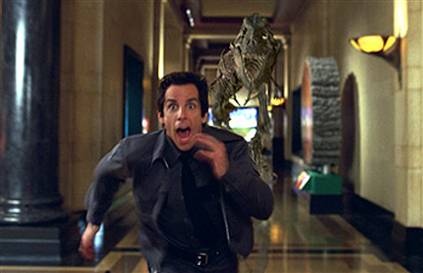
Movie still from "Night at the Museum"

Okay...so it *might* be possible for exhibits to be too interactive. But I doubt it. Movie still, Night at the Museum, 2006.

While it’s nice to see that some of the best memory-generating (not to mention that buzzword of my museum studies’ days, ‘meaning-making’) experiences possible in museums are finally (occasionally?) getting the lauds and general public attention they deserve, I can’t help but think that it’s not exactly news.  I’ll grant you I’m in a privileged position where true interactivity is concerned: hands-on inquiry is at the heart of The Discovery Museums, where I spent the last three years, and it’s most certainly an organizing principle of PEM’s Art and Nature Center where I am now.  (After all, how many art museums do you know that let you leave your own recycled cardboard and oddity ‘trashimals’ in the same gallery space as ‘real’ professional artists’ works?)

More exciting to me than the Telegraph’s non-news is the advent of The Participatory Museum, written by Nina Simon of Museum 2.0.  She’s graciously making the content of her book entirely available for free online, as well as for paid pdf download if you like the pretty formatting.  Almost all chapters are up as of this post, with the rest due to be available by the end of March.  One of the things that I find most intriguing about the way she approaches participation is that she’s inspired by some of the very cool tech-y projects and possibilities, but is not confined by them.  Things don’t have to involve the internet–or a computer at all–to be fascinating, relevant, memorable participatory experiences.  And she goes many steps beyond the ‘touch a whalebone’ approach mentioned in the Telegraph article, into ways to promote conversation.  I’ve only just started making my way through the chapters she’s posted, but I’m looking forward to several hours’ worth of pondering!

On a related online-resource-note, I’ve collected a number of new and awesome useful links which I’ll be adding to the resources page through the rest of this week, so check back for those soon!

Plum Blossoms, Bamboo, and Pine Sprigs

Welcome in Lunar New Year with the spirit of friendship (as represented by the flower arrangement above) and with an arrangement of my own suggestions for cool resources and activities.

Lunar New Year

Lunar New Year Parade, Chinatown, New York City 2009, photo by ho_hokus

History and Culture

A brief but interesting collection of information on the New Year as celebrated in China, from the University of Victoria

A nice resizeable map of China, with or without more detailed information, from National Geographic

Asia-Art.Net, a collection of really beautiful examples from several cultures, organized by medium or by culture.

Science

Why is it Lunar New Year?  Observing the Moon, from Science NetLinks

Arts and Crafts

Disney’s family activities offer up some fun and easy decorations for the holiday: a festive ribbon dragon, a beautiful lacy banner, and a good-luck goldfish.

The Smithsonian strikes again!  (I love these guys as much as I love National Geographic!) The Sackler and Freer Museums are home to the Smithsonian’s Asian collections, and they have both Chinese centric and Across Asia teacher resources as part of their larger set of Online Guides.

Theater and Music

Two fabulous resources from the Kennedy Center’s Artsedge:

Puppets on the Move: China and the Silk Road and

The Sounds of China Pod Page, with music to listen to and connected information and activities.

Literature

Also from the Kennedy Center, Chinese Calligraphy and Ink Painting

And finally, from Read-Write-Think, which is run by the National Council of Teachers of English, a very cool Fairy Tale Autobiographies lesson plan, which uses Chinese tales but could be adapted for pretty much any culture.

Not enough?  Then come celebrate with the Peabody Essex Museum, on Saturday February 27! (Chances are very good you’ll find me making paper lanterns in East India Marine Hall…)

2009 Wrap-Up

Welcome back, folks!

Before we launch into all the cool and exciting new stuff planned for 2010, I wanted to take a chance to wrap up some leftover business from 2009.   I posted my own contributions to the New England Museum Association conference in November, and promised the slideshows from my co-presenters, Mike Adams of Boston’s Museum of Science, and Nancy Jones of Longfellow National Historic Site.  Mike’s fabulous talk focused on the ways in which the MOS adds to existing programs, reworks older programs, and invites in local experts from numerous other institutions to host Archaeology Week every October.  Nancy’s marvelous contribution brought art, literature, and history to the discussion, with examples of hands-on crafts, teen involvement projects, music, and a dash of poetry.

Another reason to love November

Is it just too long until National Poetry Month for you?  It certainly is for me–which is why it’s awesome that November is  Family Literacy Month.

The central idea behind Family Literacy Month is that parents and other adult role models are keystones to their children’s habits of, attitudes toward, and grasp of reading.  If you’re looking for some fun ways to incorporate literacy activities into your day, here are a few places to get started:

Credit to cx1uk

For ages 3-5: 31 Days of Reading (though personally I think older kids would enjoy some of these too!)

For all ages:
The Massachusetts Libraries’ page on Family Literacy Month, with a link to events occurring at local libraries and information on the Boston Children’s Museum event later this month.

The National Center for Family Literacy; they’ve got an interesting collection of research and resources for educators on working with parents and children.

Even more research and resources from the Massachusetts Family Literacy Consortium.

And because I cannot include links to all that dry information without some other fun places to start playing with words:

Wordle: creating pictures with words (ala the image above in this post)

Word Games by Merriam Webster Online

Read aloud the colors the words are written in, not the words themselves.

The Stroop Effect, at Neuroscience for Kids: trick your brain–how easy is it to read a color when the word says something else?