2009 Wrap-Up

Welcome back, folks!

Before we launch into all the cool and exciting new stuff planned for 2010, I wanted to take a chance to wrap up some leftover business from 2009.   I posted my own contributions to the New England Museum Association conference in November, and promised the slideshows from my co-presenters, Mike Adams of Boston’s Museum of Science, and Nancy Jones of Longfellow National Historic Site.  Mike’s fabulous talk focused on the ways in which the MOS adds to existing programs, reworks older programs, and invites in local experts from numerous other institutions to host Archaeology Week every October.  Nancy’s marvelous contribution brought art, literature, and history to the discussion, with examples of hands-on crafts, teen involvement projects, music, and a dash of poetry.

Happy Winter Solstice 2009!

Let it Snow

You would think I’d be done with cool snow-themed links by now, right?  Nope.

Guide to Snowflakes from CalTech.  Great chart of the immense variety of snow crystal shapes, with neat pictures by Ken Libbrecht and descriptions of some of the conditions needed to form specific kinds of snowflakes.  This is just one page out of a pretty impressive site all about snow and frost.  Well worth exploring.  (One of my favorite accidental discoveries on this site was the page on how to make snowflake fossils.)

Solstice: the day the sun stands still (from the Latin)

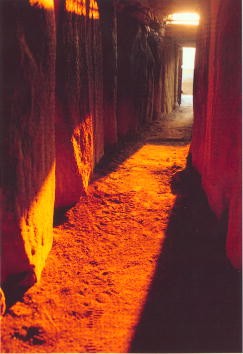
Newgrange at Solstice

Newgrange at Solstice, from Fodors.com (Click for original page)

Find all kinds of cool facts about the solstice today from National Geographic (you’ve all noticed I love these guys by now, I should hope?) I particularly enjoyed the mention of Newgrange, an incredibly cool Stone Age monument/tomb in Ireland which is 1000 years older than Stonehenge.  When it was built, it was designed to exactly align with the winter solstice dawn.  I visited it in summer, and it was still impressive then.

Here we come a wassailing

What’s the solstice without a touch of celebration? Despite my general fondness towards things historical, I haven’t tried either of these recipes yet.  However, they look delicious and have very positive reviews, so taste at your own discretion.

Kid-Safe Recipe

High Octane Recipe

Happy Holidays to all! This blog will be going on vacation until Jan. 2nd, 2010.  May you and yours be safe, warm, merry, and curious this holiday season.

The Past in Motion

This does not, I suppose, technically qualify as archaeology.

However, in the theme of really-cool-bygone-stuff, I bring you: The Animated Bayeux Tapestry.

This is no substitute for getting to see the real thing–the sheer immensity of this tapestry just does not convey on a video clip.  However, it’s a cunning piece of animation, and the foley artist involved clearly had a lot of fun with everything from the feasting noises to the horses to the ‘guuuuh’ and ‘gack’ sounds of battle.  And if you’re looking for a way to liven up the story of 1066 and the Norman Conquest, this is a fun way to go about it.

Have I whetted your appetite for tapestries, Normans, or movie-making?

Britain’s Museum of Reading has a great site about the Bayeux Tapestry, including an activities page which made me grin.  [Specifically the directions on how to make your own Norman soldier’s helmet.  (Halloween, anyone?)]

If it’s the sounds that really caught your fancy, check out Paul Orselli’s great recent blog post: Exhibit Designer’s Toolkit: Creating the Sounds of Gore and Squidge

And if you’re intrigued by the illustration style of the medieval tapestry, try your hand at the Historic Tale Construction Cit (presumably pronounced ‘kit’ as all ‘c’s are hard).  Write and illustrate your own story using figures, settings, and beasts from the Bayeux Tapestry–careful, this is a hoot and dangerously addictive to those of us who grew up loving computer programs like Storybook Weaver.  The image interface is pretty sound, too–you can resize and flip the image elements, as well as type captions, with the option to create several frames, save them, email them, and submit to a visitor-created gallery.
Archaeology in the News

There’s been a lot of fun stuff going on in the world to do with archaeology!

Upcoming local event if you’re in Boston:
Next week is Archaeology Week at the Museum of Science.  Though The Discovery Museums sadly isn’t going to be there this year, we were last year and it was a blast.  I highly recommend the Fair on Friday and Saturday.  Hopefully we’ll see you there next year, too!

Awesome new discovery in England:
Just a few weeks ago, news broke of a hoard of Anglo-Saxon gold and metalwork found in a private farmer’s field by an amateur with a metal detector.  More details on Huffington Post and more pictures on National Geographic.

For kid-friendly background on the Anglo-Saxons, check out the BBC Primary History site here, including activity suggestions on the Teacher Resources page.

There aren’t a lot of metal working simulation activities out there for kids–I intend to do some playing around with aluminum foil to see if I come up with anything fun, and if I do, I’ll be sure to post it.

Buried streetlights surface on Governors Island

Buried streetlights surface on Governor's Island

Archaeology as a Character in Art:
Have you ever heard of Goverthing, the lost New York settlement last seen around the mid-1950’s?  Neither have most other people, but in a really neat confluence of art, imagination, and archaeology, visitors to Governor’s Island witnessed a dig uncovering this buried town.  Playing with the ideas of how we look at history, what we believe based on what’s buried in the ground, and just how gullible people are or aren’t, this exhibition looks like it was a lot of fun.

Putting Twitter in a Historical Context?

Wait…really?  Twitter, the ‘so new you have to be part of it to look cool’ mini-status-update gadget that half the world loves to hate already?  Twitter plus history equals something interesting?

Yup.

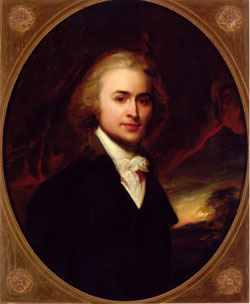
John Quincy Adams as ambassador to Russia

John Quincy Adams as ambassador to Russia

While I admit to being slightly biased about just how cool this organization is, (I worked on the interactive timeline on The Coming of the American Revolution) the Massachusetts Historical Society has gone and done something kind of fun.  This summer marks the 200th anniversary of John Quincy Adams’ voyage to Russia, to the diplomatic post appointed to him by then President Madison.  Though JQA wrote long diary entries as well, he also kept a line-a-day journal with navigational coordinates of their journey and a summary of the day’s highlights–much like today’s Facebook status updates or Twitter posts.  The MHS is doing a daily re-post of those summary entries on Twitter, and also has an overview page about the project available at their main site.

My favorite techno-gadget they’ve included is a progressive Google map tracking JQA’s progress across the Atlantic, linked from the end of most posts.

For further thought:
– What other historical figures would you love to see as a Twitterer or in some other modern guise?
– How else could you use Google maps in another context?  Historical?  To plan out the plot of a story?  Tracking sea turtles? (The New England Aquarium, another institution for which I have a positive bias, has a rehabilitation center that tracks its ‘outpatients.’)