Varying your Information Diet

Photo by Nevit Dilmen.  Creative Commons license.

Photo by Nevit Dilmen. Creative Commons license.

Remember that post I made a few weeks ago about Creativity in the Workplace?  Authors Rainey Tisdale and Linda Norris ran a related networking and creativity event at the USS Constitution Museum last week in cooperation with the NEMA-YEP group.

With the blood-and-attitude-shifting assistance of music and a dance circle, Tisdale and Norris led participants in a speed-networking creativity discussion, challenging each of us to consider and then share what we were passionate about, what we wanted more of from our jobs/careers, what we were good at, and how we could implement and incorporate into our daily routines elements of their steps to creative thought processes.

River tributaries, courtesy of the US Fish and Wildlife Service (public domain)

River tributaries, courtesy of the US Fish and Wildlife Service (public domain)

One of the steps they list to help prepare your mental ground for creativity is to vary your information diet.  With the easy availability of tailored information streams now (everything from RSS feeds to Twitter streams to Pandora channels), it’s easy to wrap yourself in a comfortable bubble of information you’ve essentially pre-selected.  One solution, of course, is to vary the tributaries that are feeding into your stream.  Here are a few quick and easy ways to do that:

Have a Tumblr? Freshen up your Dashboard!

A lot of museums and libraries have gotten into publishing fun stuff from their archives and collections, visitor images and videos, and even staff-created music videos on tumblr.  I recommend just poking around the museum tags until you find some that appeal.  Who doesn’t want neat and beautiful art and animals and whatever on their screen every day?

NPR has thoughtfully collected a list of their own and other public media tumblr blogs, featuring news, science, arts, politics, history, food, all of the above, and more.

The fun and passionate folks over at We Need Diverse Books are doing a summer reading series, where they recommend books by diverse authors and/or with diverse characters that share elements with better known works, ie ‘readers of Harry Potter will probably like Nnedi Okarafor’s Akata Witch.’  They’ve just started, so you have a whole summer of fun kids’ and YA lit recommendations ahead of you.

Looking for a few more ‘grown up’ reads? Try the folks at Go Book Yourself, where real live readers recommend 4 books you might like that have similar characteristics to a book you’ve read and liked.  (They also have a Twitter feed.)

Interesting Stuff in 140 Characters

I have such a love/hate relationship with Twitter.  People post all these cool links and then I end up with roughly a bajillion tabs waiting to be read.

Yes, thank you, New Scientist, exactly what I mean.  (You might want to follow that link, by the way, it leads to some really interesting book reviews!)

Aside from New Scientist, here are a few other feeds I follow that promote the kind of brain-popping curiosity experience I love:

  • Think Progress – lots of interesting and occasionally fairly terrifying news about global environmental, political, and other newsworthy news
  • Creative Nonfiction – for those of us who like our true stories to sound like stories
  • Education Week – largely, but not exclusively, an aggregator of news from all over US school systems
  • Crossed Genres – speculative fiction publishers with an emphasis on diverse story telling, in all the ways that can be interpreted
  • American Museum of Natural History – fun science facts, all the time!
  • Two Nerdy History Girls – a pair of authors who are also amateur historians.  Highlights the hilarious, wacky, and cool bits of history
  • Future of Museums – Some very museum-focused information, but also wide ranging idea pulling from other fields

There are, of course, many more, and if you have suggestions for me, feel free to add them in the comments!

Meanwhile, don’t let yourself get overwhelmed by information overload, either, and remember to give yourself time to reflect and ponder and daydream and make those brain-popcorn connections between information and ideas…or in Norris and Tisdale’s term: Incubate.
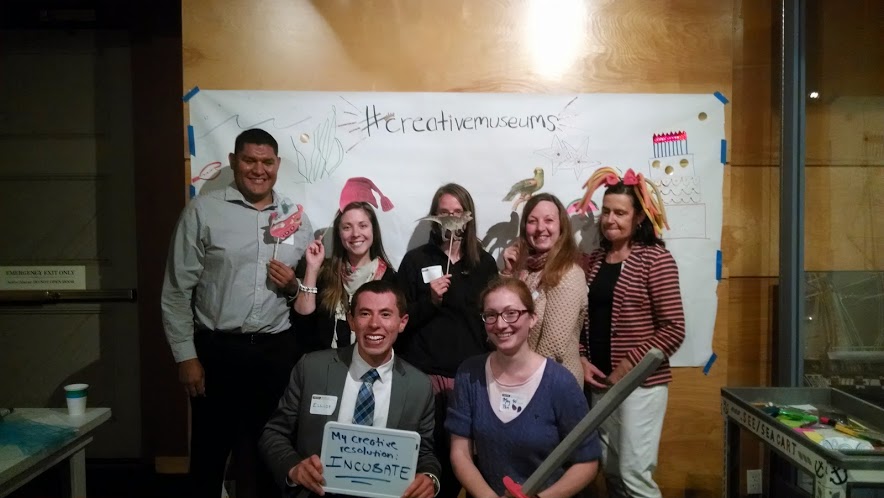
 

The PEM contingent at the #creativemuseums DIY photobooth.  Yes, I'm the one with the sword.

The PEM contingent at the #creativemuseums DIY photobooth. Yes, I’m the one with the sword. Naturally. Don’t you think better with a lightsaber in hand?
 

Weird and Wonderful Watercolors

I believe I mentioned how overwhelmingly inspiring and simultaneously despair-inducing visiting the Sargent watercolors show was at the MFA earlier this year.  (I look at his work and kind of want to bang my head against a wall, but in a good way?)  I had a similar reaction checking out the Turner & the Sea show at PEM earlier this week, where Turner can make oil paintings look like watercolors and watercolors look like oils.

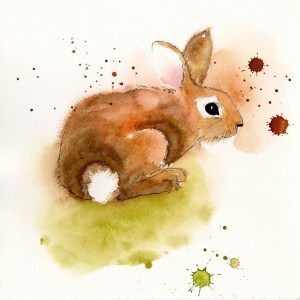
"PanPan" by Blule, click for link

“PanPan” by Blule, click for link

The good news is, you don’t have to be a Sargent, a Turner, or even a Blule to have fun with watercolors — and if the artistry just gets too much, tackle them with science!

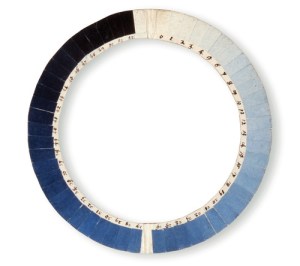
This cyanometer from the 18th century is a watercolor gauge that helped scientists determine that water vapor in the atmosphere helps determine the blueness of the sky.  Click for link.

This cyanometer from the 18th century is a watercolor gauge that helped scientists determine that water vapor in the atmosphere helps determine the blueness of the sky. Click for link.

Artful Experiments (emphasis on the ‘art is fun’)


Color mixing via water gun, by Dreamscaping with June Rollins

Color mixing via water gun, by Dreamscaping with June Rollins

Water Pistol Color Mixing – Watercolors are fantastic for exploring color interactions, and misting a canvas prepped with pre-sprinkled paint with a water pistol sounds like a really good summer camp project.  I wonder if you could actually shoot liquid watercolor onto a paper?  What might happen then?


For a softer look, using liquid watercolors in a spray bottle works great.  Seems like a 'let's do this outside!' activity if you don't want to have to do a lot of clean up, though! Click for source.

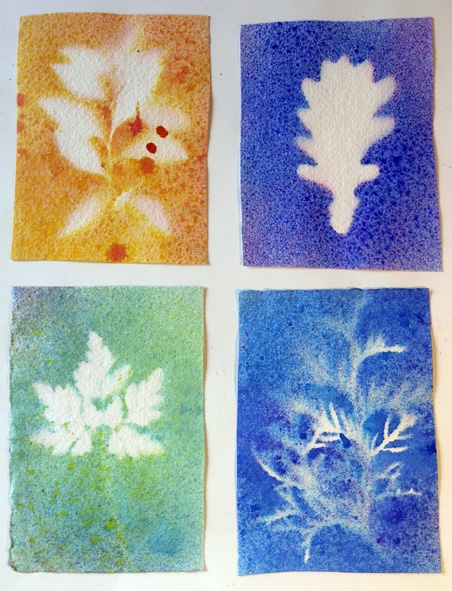
Watercolor prints by Artful Kids

Watercolor Spray Negatives – I’ve linked these before in a prints post, but the fact remains that this is a beautiful technique and one I still want to try!

Artful Experiments (emphasis on the ‘scientists can have fun too’)

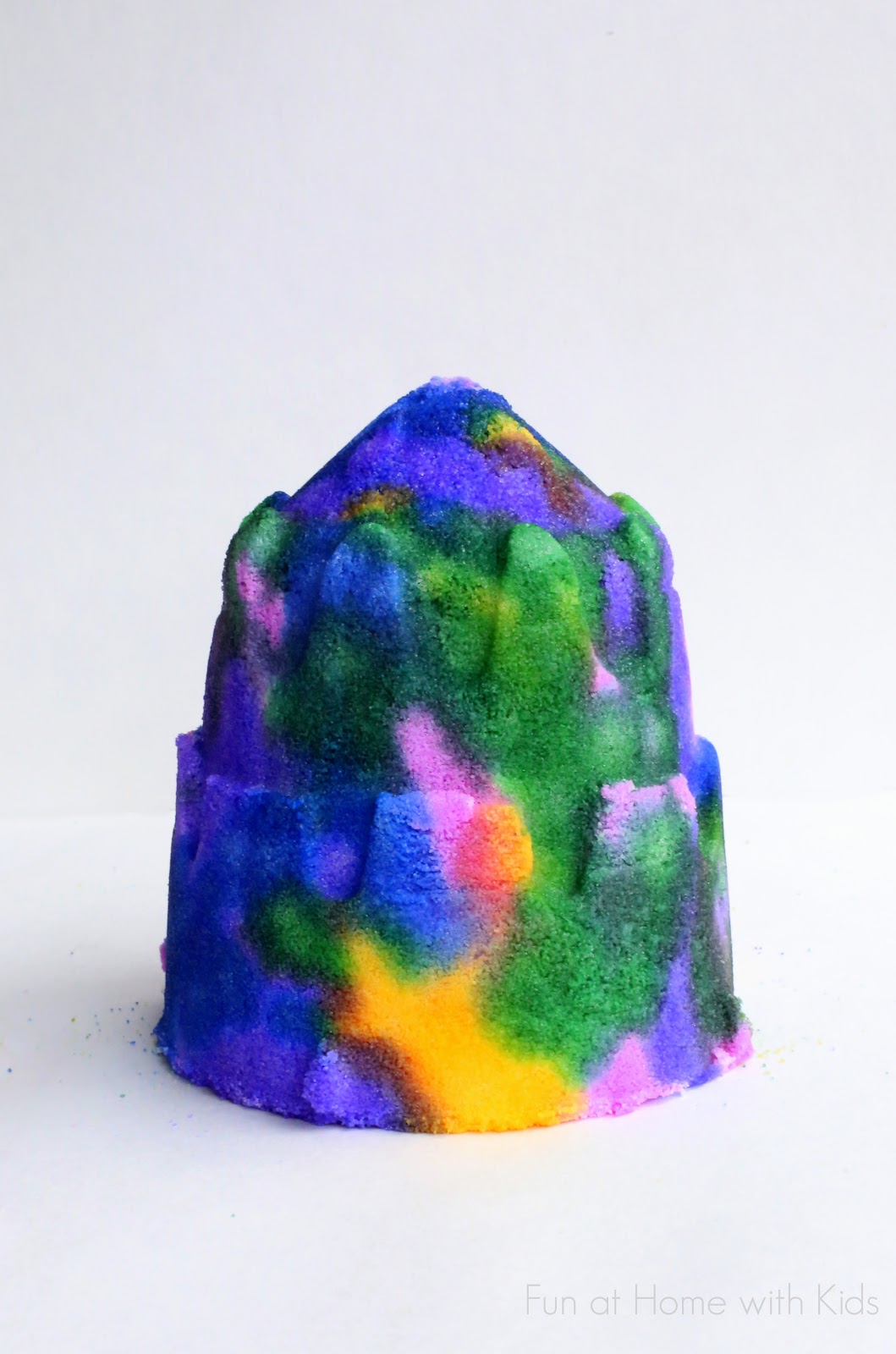
Painted salt sculpture from Fun at Home with Kids

Painted salt sculpture from Fun at Home with Kids

Painted Salt Sculptures – a fun color mixing and absorption activity, with bonus crystal study!  I wonder what would happen if you used sugar or some other substance instead of salt?


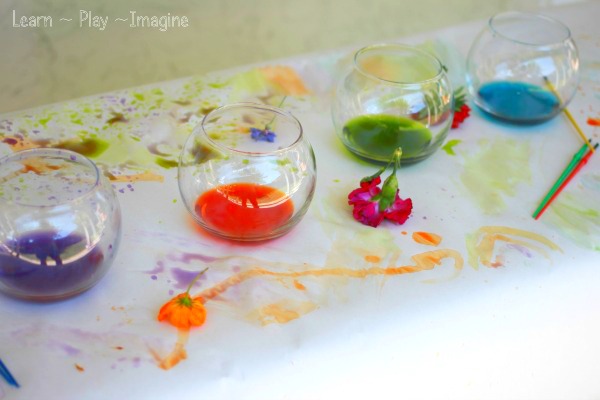
Flower watercolors from Learn Play Imagine

Flower watercolors from Learn Play Imagine

Make Your own Watercolors 1 – From Flowers  or 2 – From Fruits, Vegetables, and Spices – I especially like the first link, but the second has some suggestions for source materials I hadn’t seen elsewhere.  This would be a fun activity to do in concert with/relation to a study of pigments in leaves, as well.

Oil and Watercolor interactions from Easy Art Activities with Kids

Oil and Watercolor interactions from Babble Dabble Do

Oil and Watercolors, Theme and Variations – Eyedroppers, oil, water, and watercolors make for a great experiment in density and paper marbling!

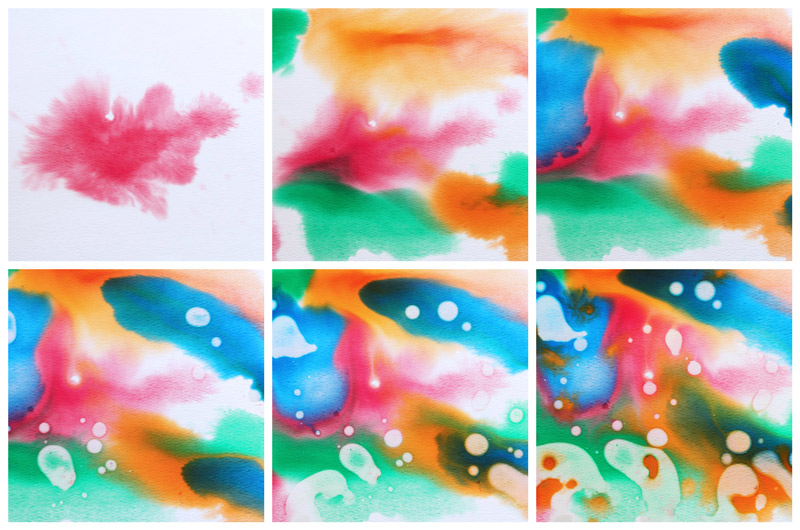
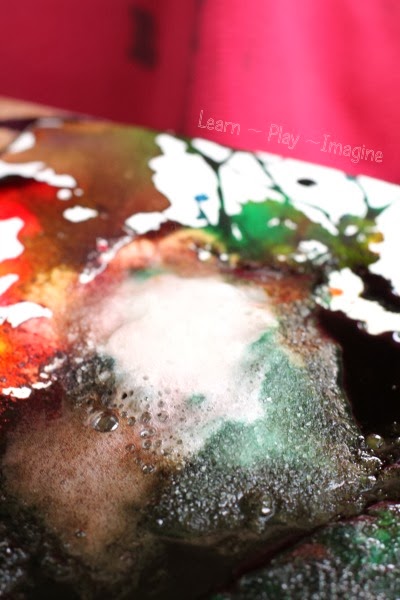
Erupting watercolors from Learn - Play - Imagine

Erupting watercolors from Learn – Play – Imagine

Erupting Watercolors – This is a combination of multiple science explorations: water absorption, color mixing, chemical reactions – I can’t wait to try this out with a group at the museum.  I just need a good story or art object to tie it to!  (We’ve got to have a volcano related artwork somewhere in the collection…)

Mindboggling Museum Resources Online

Beware, curious one, for the internet hath no bottom!

Beware, curious one, for the internet hath no bottom!

It is always exciting to see what museums are up to when it comes to making their collections and expertise available regardless of geography or gate fee.  Here are a few cool resources I’ve come across recently that are great for the teacher, writer, or perpetually curious mind:

British Library – The Romantics and Victorians – Primary and secondary sources (letters, articles, films, teachers’ notes and more), and thematic explorations of 22 authors of the Romantic and Victorian periods (roughly Jane Austen through Thomas Hardy) represented in the British Library collections.  (Rather makes me want to reread AS Byatt’s Possession…)

Metropolitan Museum of Art Back Catalogue – Catalogues, bulletins, online publications, and educator resources both current and archived from previous exhibitions and collection highlights, lots with full text, etc, readable online or downloadable in PDF.  And, for that matter, the Met’s Online Collection is downright jaw-dropping too.

NPR’s new Education blog – went straight to my RSS feed the day it launched, and I’m watching where it goes with great interest!

Source sadly defunct.  If you know how to credit this image creator, please let me know!

Source sadly defunct. If you know how to credit this image creator, please let me know!

And a few perennial favorites always worth a second (or sixtieth) look:

Exploratorium Learning Tools – Their set of podcasts, teacher resources, and activities to try at home or in the classroom is always good for a delve, and the folks in the Tinkering Studio have a great maker-centric set of engineering and design projects too.

Kennedy Center’s ArtsEdge – Always a new bunch of lesson plans, and a very easy to navigate guide to the (relatively new) national arts curriculum standards, very helpful!  I for one was thrilled to see a lesson plan on Trees in Nature and Art that I can add to my resources for Branching Out.

Review: Rosie Revere, Engineer by Andrea Beaty and illustrated by David Roberts

Slatebreakers offer up fantastic and thoughtful reviews of children’s literature and YA, and as I am planning a September program at PEM using this book, it was very exciting to me to see that they love it as much as I do!

Brianna's avatarslatebreakers

Rosie Revere, Engineer by Andrea Beaty, illustrated by David Roberts. Abrams Books for Young Readers, 2013. Currently available.

Age level & genre: Picture book fiction with a fantastical twist

61qEmnn-MCLFace Value: The wacky illustrations hint at the slightly off-kilter world created by David Roberts. Rosie’s pride in her work is clear in her exuberant facial expression. I knew from the cover that this book was going to be a ton of fun.

Does it break the slate? Yes, there is no question about it: this book breaks the slate. Rosie learns to be confident in her inventive ideas and to never be afraid to fail, because failures are learning opportunities.

Who would we give it to? This book is just right for the girls who love building with Legos and constructing stuff with items out of the recycling bin.

View original post 364 more words

Ideabox: Twigs

It seems like Spring’s only just decided to stay, but at the museum we’re already looking towards the fall and the September opening of Branching Out, Trees as Art.  I’ve been gleefully anticipating this show for a while now, and it’s finally getting close enough to start telling you about it!

ideabox twigs

As we’ve been investigating artists who work with assorted tree materials in surprising ways, I’ve come across some fun interdisciplinary ideas for exploring trees (especially twigs) in and out of the classroom.  Here are a few of my favorites!

Science

Winter twig study – Indoor and outdoor ways to explore what trees are ‘up to’ in winter

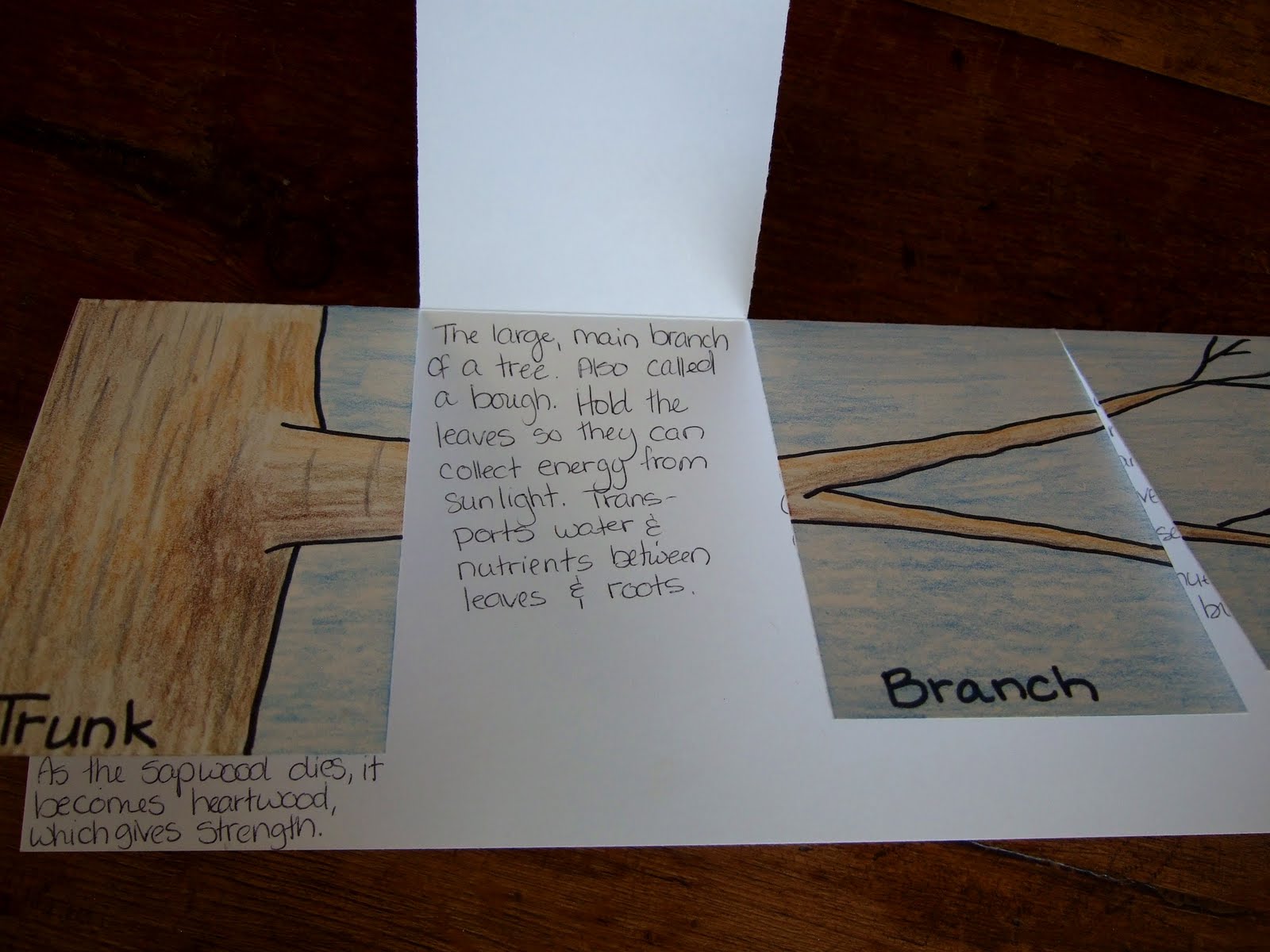
Identifying parts of a tree (foldable) – A good way to practice scientific drawing and make an interactive vocabulary flashcard, from the Inspired Classroom blog.

Tree Study Foldable from The Inspired Classroom

Tree Study Foldable from The Inspired Classroom

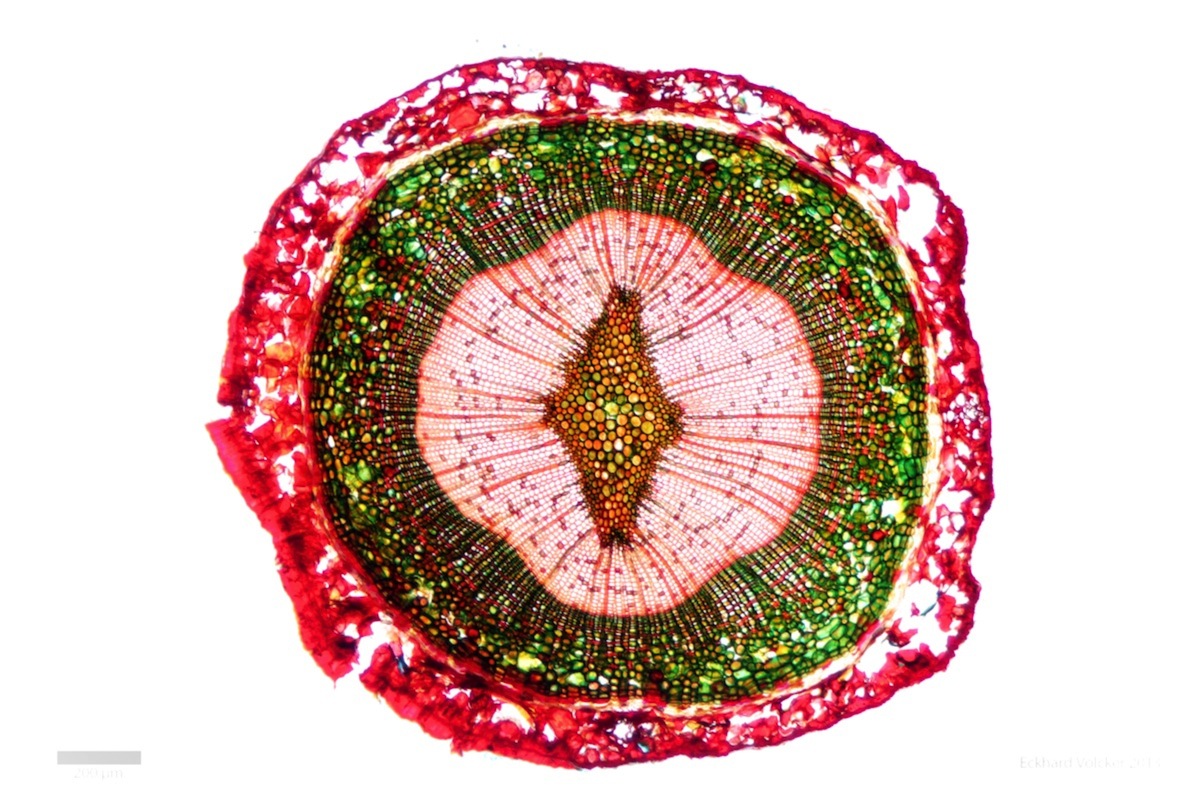
A magnifying glass or dissecting scope will only get you so far, but check out these amazing photos of slivers of branches thin enough to distinguish the layers of cells:

Conifer cross section by Eckhard Voelcker

Conifer cross section by Eckhard Voelcker

Math

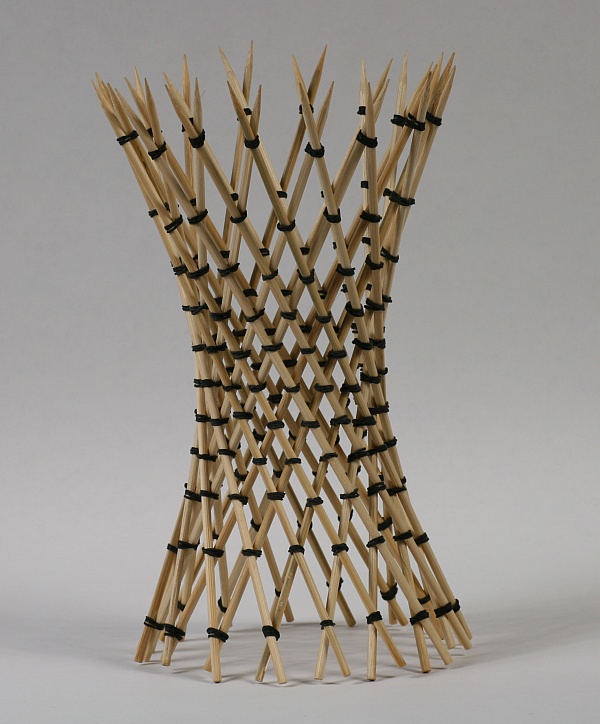
Twig math?  Really?  Yes, really.  Check out this astonishing set of directions on how to make Skewer Hyperboloids – and then try it with twigs of the same approximate size!

Photo by Cindy Lawrence, see link above for source

Photo by Cindy Lawrence, see link above for source

Literature & Drama

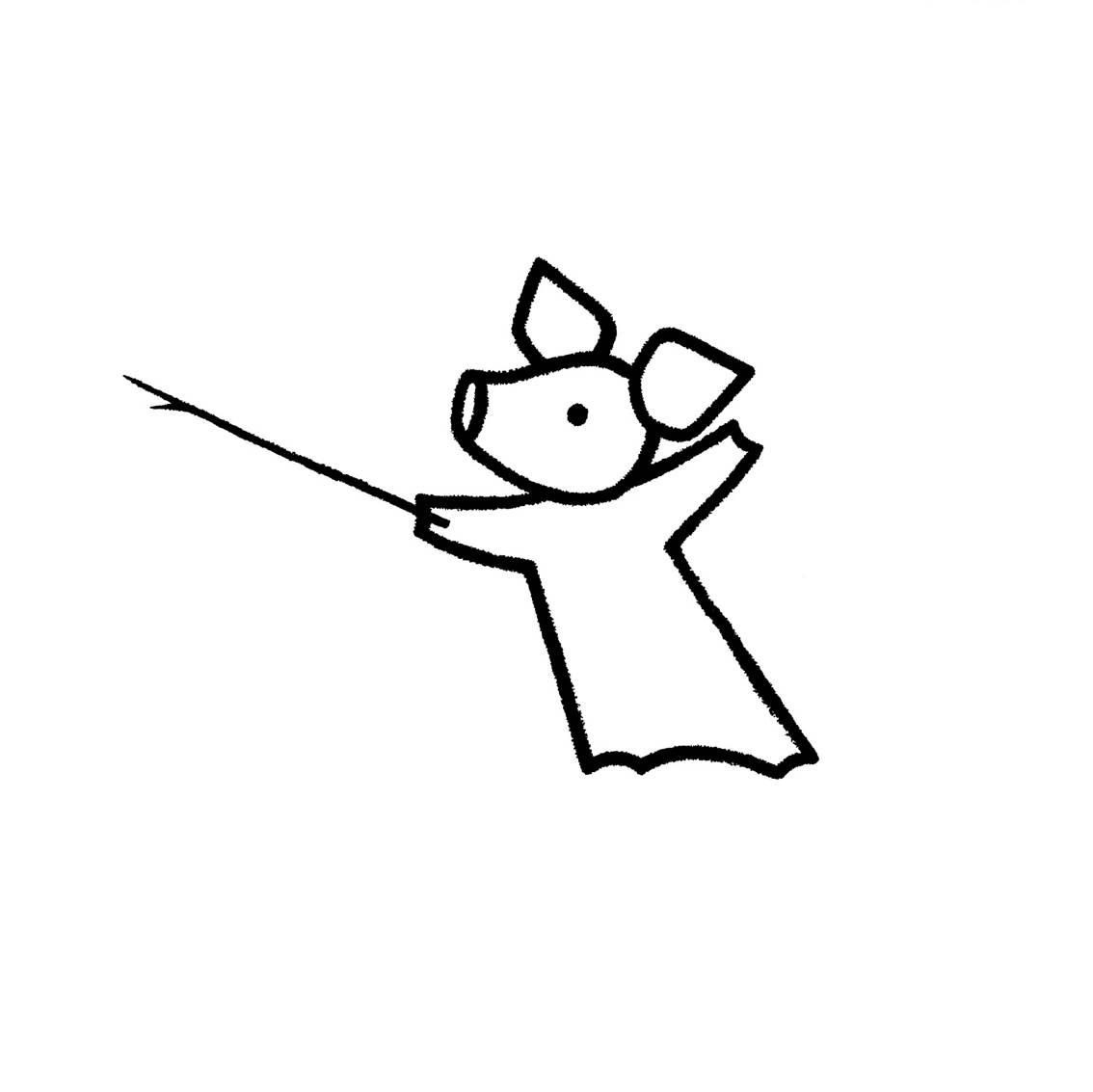
From "Not a Stick" by Antoinette Portis

From “Not a Stick” by Antoinette Portis

Paeans to imagination are always a hit in my book, and Not a Stick is a  great option for dramatic play as well.  Round up a few helpers and one of the world’s simplest props to act out the scenes imagined in Not a Stick, then challenge your audience to do the same with some other every day material–blankets? Paper plates? Cardboard tubes?  See what other suggestions they come up with for imaginative play.

 Book buying options for Not a Stick by Antoinette Portis0
Pinterest collection for Not a Box/Not a Stick activities

Art

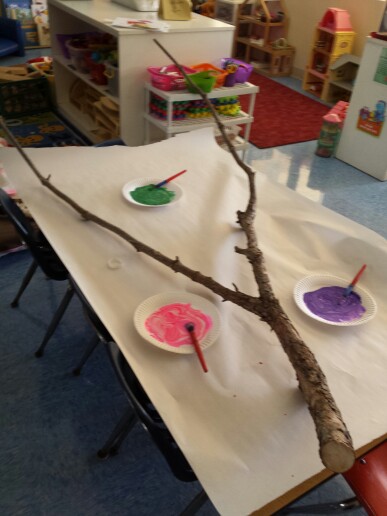
twig painting

Twig or branch, individual or collaborative, painting can bring out natural bark patterns, and encourage close looking at details like knots and buds

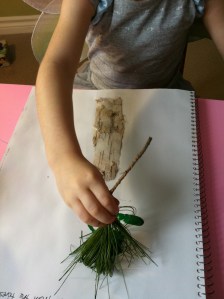
A few weeks ago during the Mass Poetry Festival, we had a guest calligrapher, Elissa Barr, who demonstrated brushwork with a variety of natural materials as well as traditional ones.  One of my favorites was using a pine twig with needles still on as a great variegated brush.

Kid using a pine twig brush, photo from Rockabye Butterfly, click for link

Kid using a pine twig brush, photo from Rockabye Butterfly, click for link

Encouraging Creativity at Work

Last week I participated in a webinar run by NEMA on creativity in the workplace (specifically museums, but hey, most workplaces have at least something in common, generally, coworkers, meetings, and too much paperwork).  Led by Rainey Tisdale and Linda Norris, authors of the new book Creativity in Museum Practice, it was an interesting discussion of ways to shake up the usual run of the workplace to encourage change and risk taking.

Here are a few highlights:

1) Reflect on your own creativity and habits using Twyla Tharp’s ‘creative inventory’ from The Creative Habit.  This includes thinking about your earliest creative efforts, your ‘greatest’ and ‘worst’ ideas, your role models and your fears.  In the week since the workshop, I’ve been considering how useful this method  might be in analyzing things like: How do these shape the way you currently act, and where are you holding yourself back from trying something new?

2) Increase the amount and variety of your organization’s information diet.  As a writer, I’ve come across the advice to read widely and often to improve one’s writing, and it strikes me as part and parcel of the same advice here.  There were some great examples of how to bring in outside viewpoints, including some from the webinar audience.  My favorites were watching TED talks  at department lunches, sharing what people were reading outside of work, and hosting a ‘Curiosity Club’ to talk about other things we are interested in outside our professional expertise.

Stages of Creativity slide from "Creativity in Museum Practice" webinar by Linda Norris and Rainey Tisdale

Stages of Creativity slide from “Creativity in Museum Practice” webinar by Linda Norris and Rainey Tisdale

3) Make space in your daily routine for ‘incubating’ your ideas.  Taking a walk during lunch is pretty much a requirement for me if the weather’s even slightly palatable, but I’ve been trying to make space in the mornings before work to work on my own creative projects, and I find my outlook on the day is better when I do, so I’m definitely behind this concept.

4) Reframe your projects as experiments, and embrace the possibility of failure.  Talk it out-what is the worst that could happen?  And if it’s too big a bad, make your experiment smaller.  Prototype.  This is the way I approach my cooking.  Which is why I eat a lot of sandwiches, but I haven’t died of malnutrition yet, and sometimes I end up with really good stir fry.

creative constraints

Creative constraints to prevent overload, slide by Linda Norris and Rainey Tisdale

5) Create spaces for reflection, collaboration, stimulation, and play.  Rearrange the furniture, change up the lighting, sprinkle the walls liberally with post-its.  We’d all love to have one of Google’s nest-chair isolation pod things, sure, but maybe just taking a perambulatory meeting through a green space would help freshen up the conversation.  (I vote for a ball pit and a slide.  Or maybe an ice cream sundae bar in the meeting room?)

Office slide at M Moser Associates

Office slide at M Moser Associates

6) Start an idea file, or files, personal and collaborative.  I’m already a big fan of Pinterest, so that works for me!

7) Set creative constraints.  “I don’t even know where to start!” is a pretty common block to a creative process, so give yourself a set of restraints, including but not limited to budgets, physical spaces, materials, or themes.  Or try the Scamper method, which looks interesting and was new to me.

What methods do you use to stay creative in your professional life?  Contribute your ideas in the comments!

Programs the PEM Is Offering at the MPF

Jackie and I had a great conversation last week about upcoming programs at PEM for the Poetry Festival, and she put together a lovely write-up! Many thanks to her for asking such interesting questions, too. My favorites were “What value does the experience of visualization bring to a poet’s sensibilities?” and “What value does fun lend to creativity?”

Recyclable Design Challenges

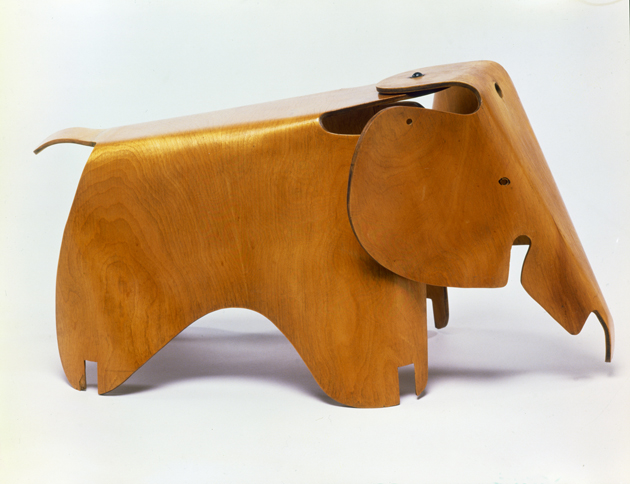
Charles Eames, Ray Eames. Molded Plywood Division, Evans Products Company (Venice, 1943-47). Elephant, 1945.

Charles Eames, Ray Eames. Molded Plywood Division, Evans Products Company (Venice, 1943-47). Elephant, 1945.

With the inspiration of California Design at PEM currently, not to mention the new Maker Lounge, we’ve been focusing on some fun design challenges with recycled materials that I thought I’d share.

Can packing peanuts be strong enough to make a bridge or a tree?

Can packing peanuts be strong enough to make a bridge or a tree?

Packing peanuts are the bane of many people’s existence.  Unless you’re into demonstrations of static electricity or have to ship breakable stuff nearly constantly, they’re a nuisance.

Unless they’re starch packing peanuts, in which case they’re awesome.

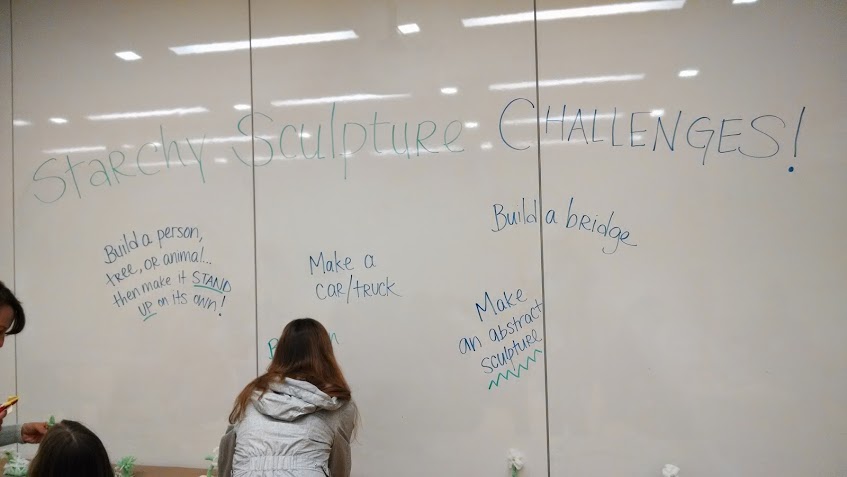
Check out what a damp sponge, a pile of starch packing peanuts, and a lot of imagination can do in the hands of some inventive visitors, challenged by our ANC staff:

starchy sculptures 1 starchy sculptures 2

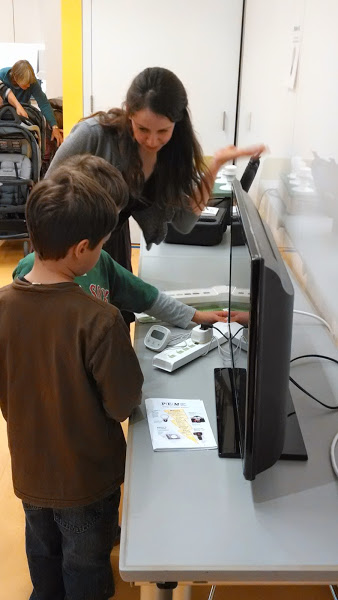
We also had some guests this week from the Green Up initiative working with visitors on energy-efficient design challenges, looking at insulation and ‘energy vampires’ in the home:

green up energy vampires green up insulation challenge

And remember how it’s National Poetry Month and we’ve got the amazing Mass Poetry Festival coming up next weekend?  We’ll be making random poetry generators, invented by yours truly, in addition to our other raft of fun drop-in art making, artist demos, and workshops.

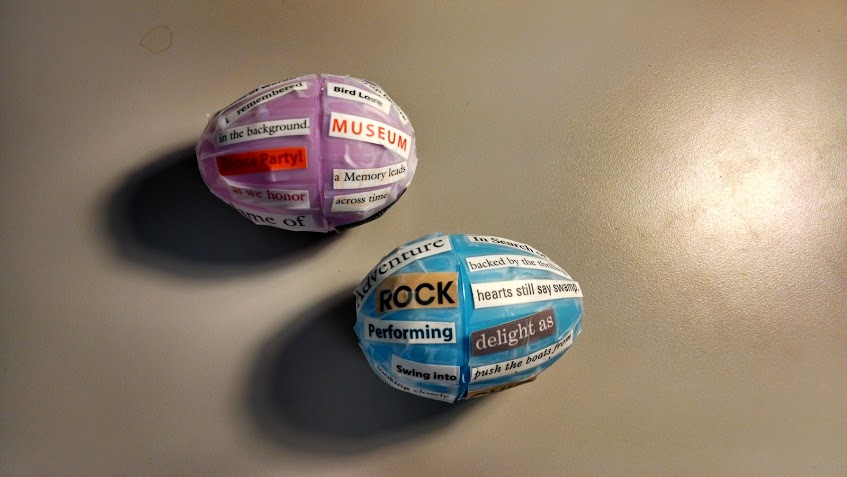
Nouns, adjectives, and verb phrases collaged onto plastic eggs: rotate to create inspiring phrases for poetry starters, and swap halves to create new possibilities!

Nouns, adjectives, and verb phrases collaged onto plastic eggs: rotate to create inspiring phrases for poetry starters, and swap halves to create new possibilities!

Build Your Own App

I haven’t had a chance to do a ton of exploring of this yet, but I definitely will! Sounds like a great option for pairing with programming in PEM’s new MakerLounge (http://pem.org/learn/maker_lounge)

West Baton Rouge Parish Library's avatarTeen Zone

The Massachusetts Institute of Technology (MIT) has released a website that allows you to create your own app. It’s free to use and relatively simple. The website features videos that introduce you to the simple coding language that the apps are made of, and then allows you to create real working apps that you can use on your Android device. Unfortunately, they have not been able to make the apps available for Apple devices, but fear not–You can still make them and test them out on the site.

app-inventor1

To use the App Inventor, click here. This will take you to the front page where you can click around to get your bearings and learn before you decide to make your app. If you use this, please tell us what you’ve made in the comments! We’ll showcase what ever it is you decide to make!

View original post

Poetry Constructions

Poetry works its way into many of my postsNational Poetry Month is one of my favorite times of year, and every year I find something new to get excited about.

This year it’s building blocks and poetry.  Not in the form of stanzas, rhyme schemes or metaphors, but creative ways to inspire, actual physical ways to randomize words, create sequences of ideas, and give poetry a visual heft that matches its presumptive mental and emotional ones.

Shape poems

ee cummings 'i carry your heart' as laid out in Festisite

ee cummings ‘i carry your heart’ as laid out in Festisite

I’m not a huge fan of concrete poetry in general, because I’m not always convinced by the whole form/function connection when it comes to text.  However, if you’re looking for a new way to *present* a poem and hand written calligraphy is not your top choice, you might want to try Festisite, which has a handful of pre-selected forms you can use to plunk any text into for a graphic twist, as I did with ee cummings’ ‘i carry your heart’ above.

Poetry pebbles 

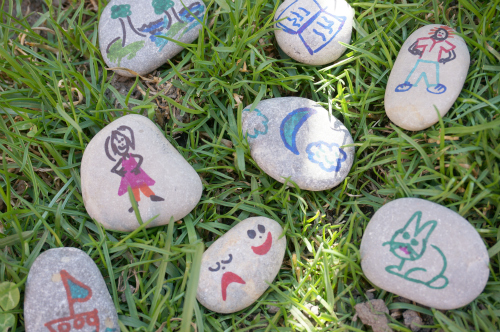
Poetry Pebbles from Kitchen Counter Chronicles

Poetry Pebbles from Kitchen Counter Chronicles

Story stones of all sorts are fun, assembling petroglyph-like images and then inventing the connections between each concrete object depicted.  Over at Kitchen Counter Chronicles one family used pre-created stones as poetry starters while outside on a nature walk: I think with older kids it could be as much or more fun to collect stones and decorate them along the way, to help spur further writing once back indoors.

Book spine poetry

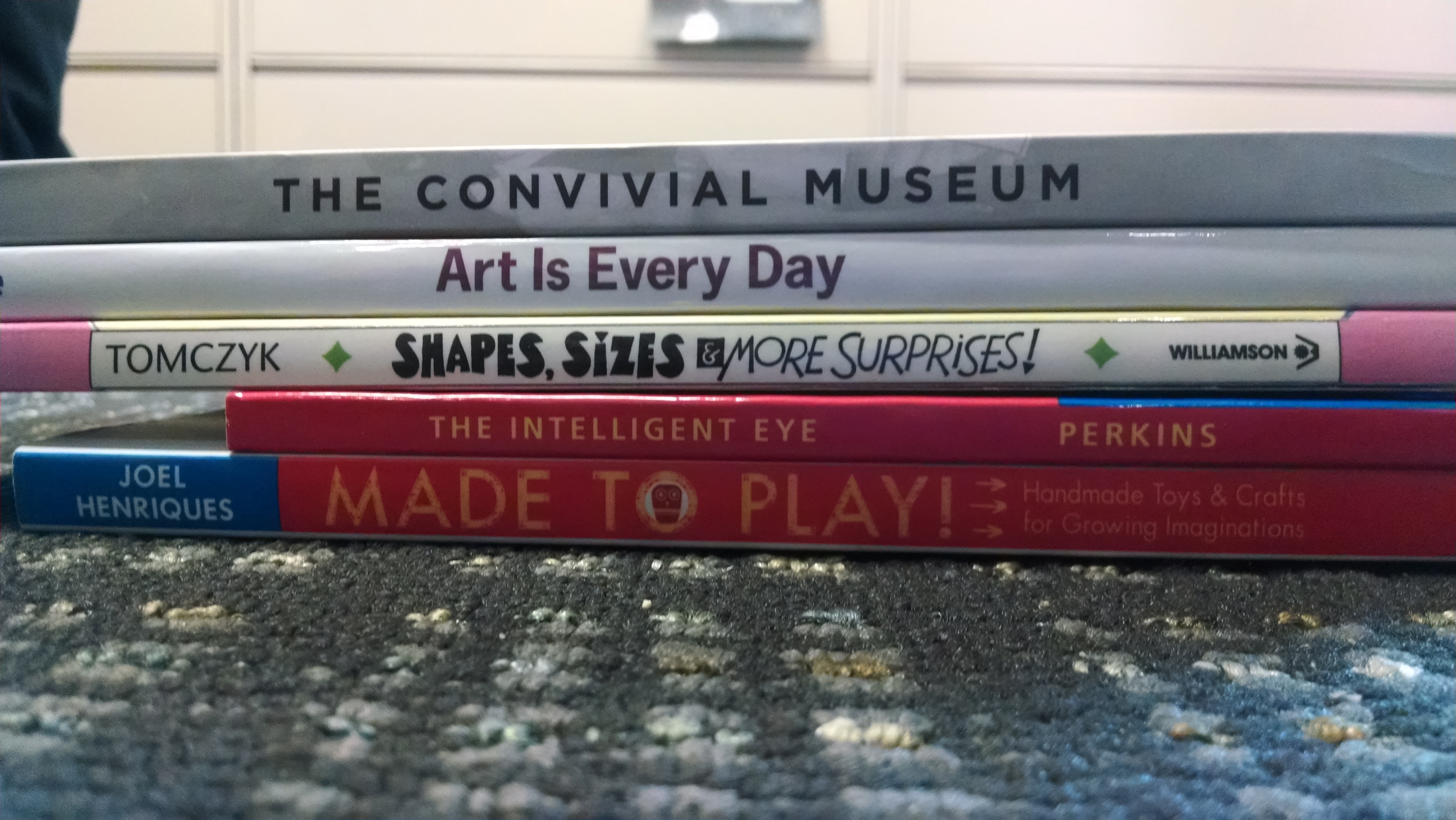
The Convivial Museum: Art is Every Day, Shapes & Sizes & more Surprises, The Intelligent Eye Made to Play!

A museum book spine poem, by me and my bookshelves

I love Nina Katchadourian’s Sorted Books Project, and so do the folks at the Association for Library Service to Children, who recommend this as a great way to get kids to explore a library during National Poetry Month.  Sign me up!

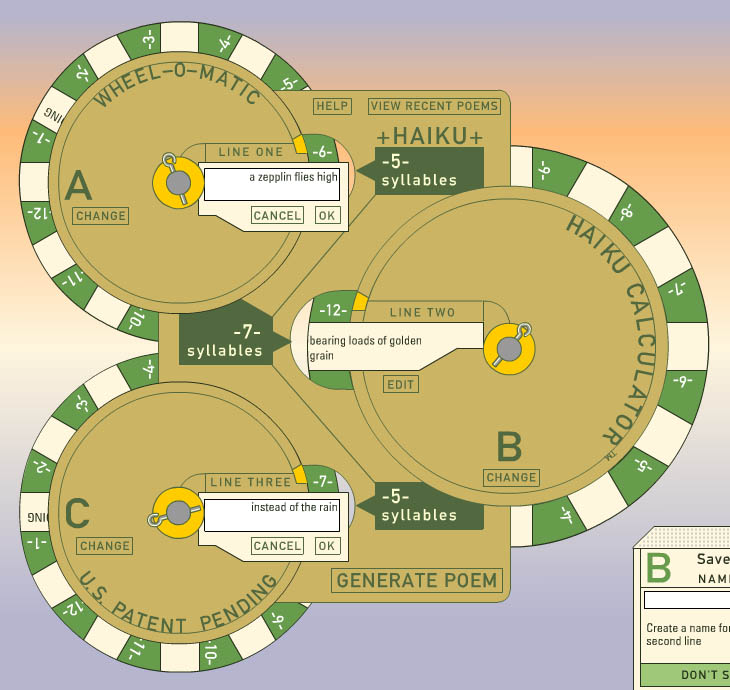
Haiku calculator

Haiku calculator by Eugene Parnell, sample text by me.

Haiku calculator by Eugene Parnell, sample text by me.

Eugene Parnell describes his “Wheel O Matic Haiku Calculator” as ‘pure cogs-n-wheels fun, a machine-age Nirvana of Modernist production-line assembly techniques applied to to the emerging meta-industry of cultural production.’  That’s a little wordy, but it is, in fact, a fun spin-the-wheel-get-a-random-poem-bit, and could be easily recreated in an analog version.  The digital version was a little buggy when I tried it–precreated wheels of poetry options didn’t seem to be loading, but you could create your own easily enough.

Word wheel templates here and here for kick-starting an analog version.

Assorted other National Poetry Month resources:
Lesson plans for K-12 on ReadWriteThink
Lesson plans, videos, and printables on Scholastic
NaPoWriMo (write a poem a day challenge)
Interdisciplinary resources for teachers and parents on Reading Rockets

Past National Poetry Month posts on Brain Popcorn:
2010: Popping with Poetry
2011: Poetry and Puddles
2012: It’s the Most Wordiful Time of the Year

Check back in a week or two for a sneak preview of May MA Poetry Fest activities at PEM, as well!