Happy St. Patrick’s Day, all! In addition to this incredibly cool news from the folks at Trinity in Dublin, let me also point you at a beautiful manuscript scan of Irish poetry from the folks at Houghton’s rare books library at Harvard and something for the fasion and history minded over at ‘OMGthatdress’.
Author: mwinikates
Nature in the Neighborhood
It’s still a little cold to get super excited about a long ramble in the woods, but I like to think ahead, and the teachers from the Salem State Pre-K program and I had a great time a few weeks ago looking at ways to incorporate art and nature study into their year long theme studying neighborhoods.
As a librarian’s daughter and former English teacher, I believe strongly in centering lessons around stories. Great stories make great hooks to engage learners of all ages!
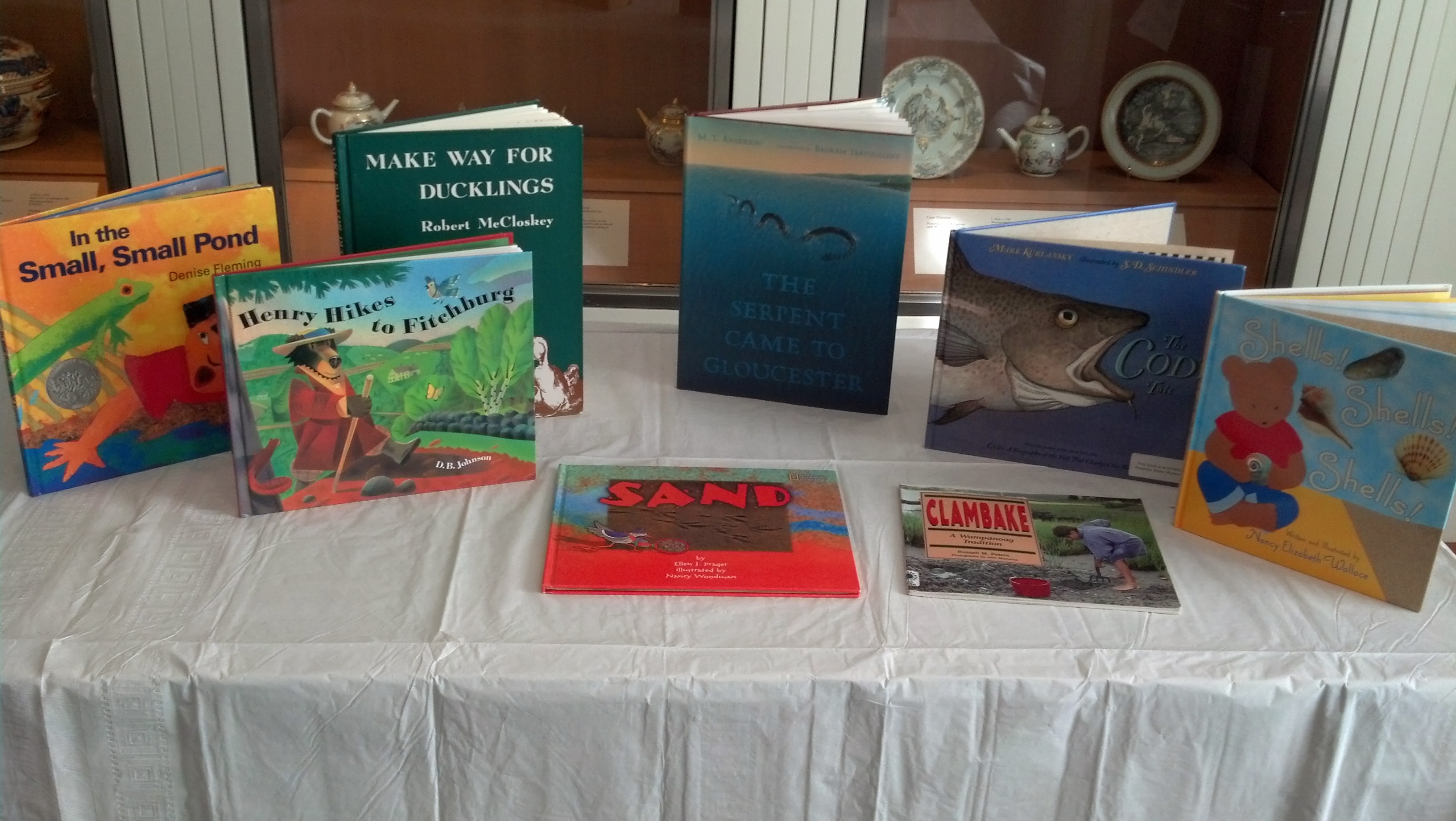
Fiction and nonfiction related to local MA history and natural history
So we started the day with a read aloud of MT Anderson’s The Serpent Came to Gloucester, which I love, not only because it’s based on actual history, but because the illustrations and sea-chantey-esque text are captivating. We then made sand paintings, with glue, sand, sea shells and sea glass (some courtesy of the local beaches, some thanks to Christmas Tree Shop). People made some beautiful designs! I only wish I had thought to have related music playing in the background while we worked.
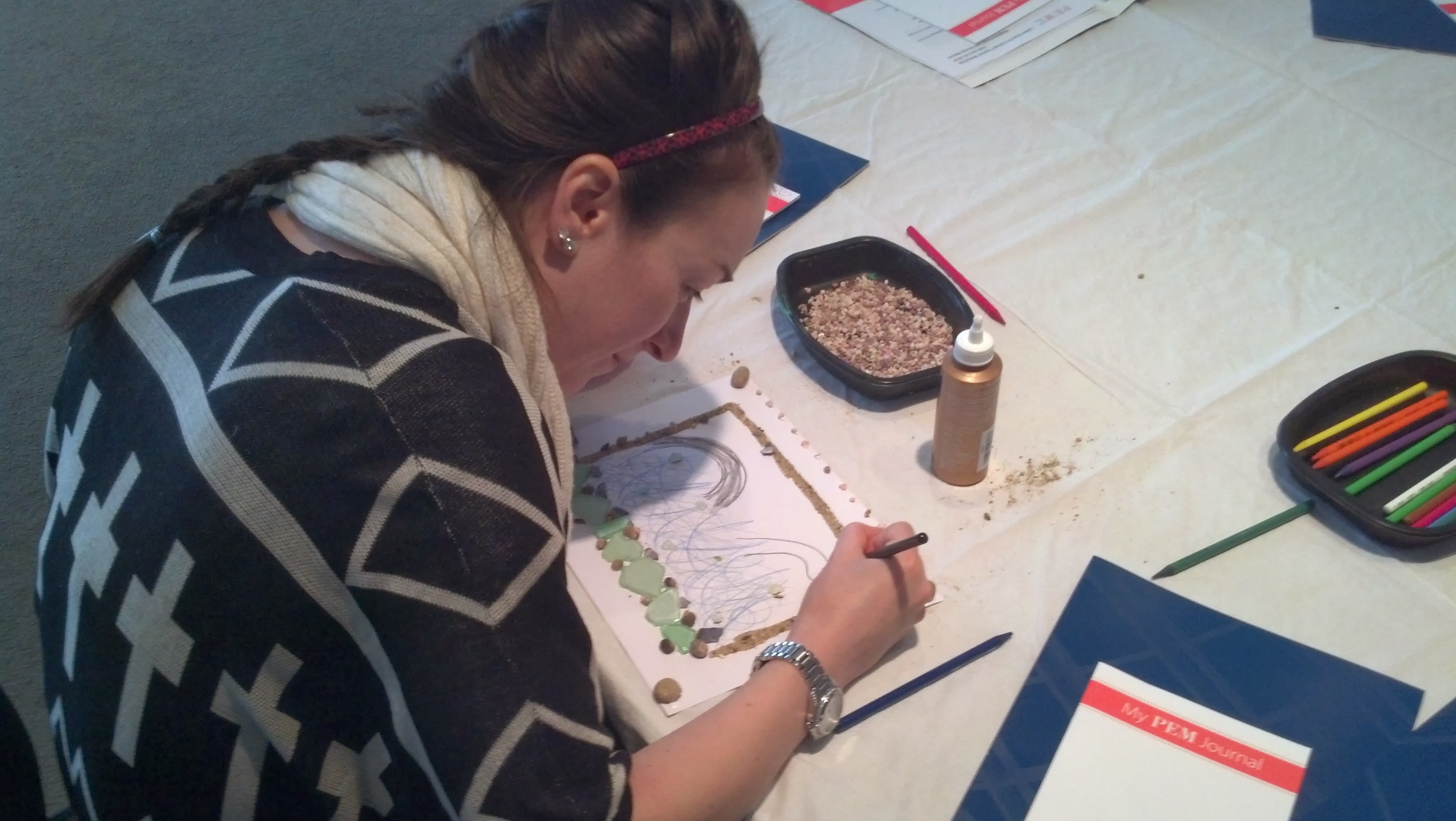
Inspired by the Delft tile-styled end papers in The Serpent Came to Gloucester
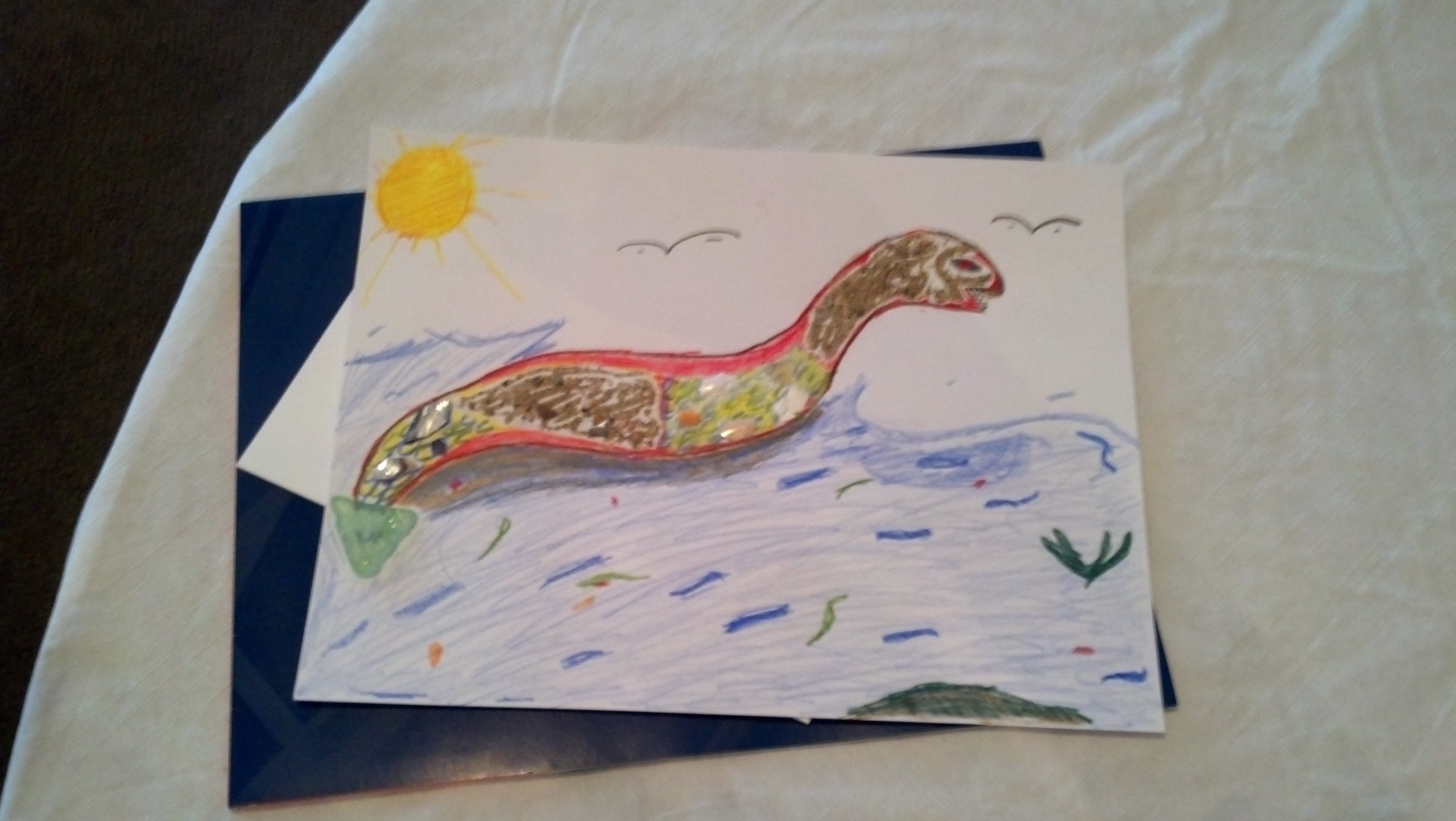
Mixed media sea serpent!
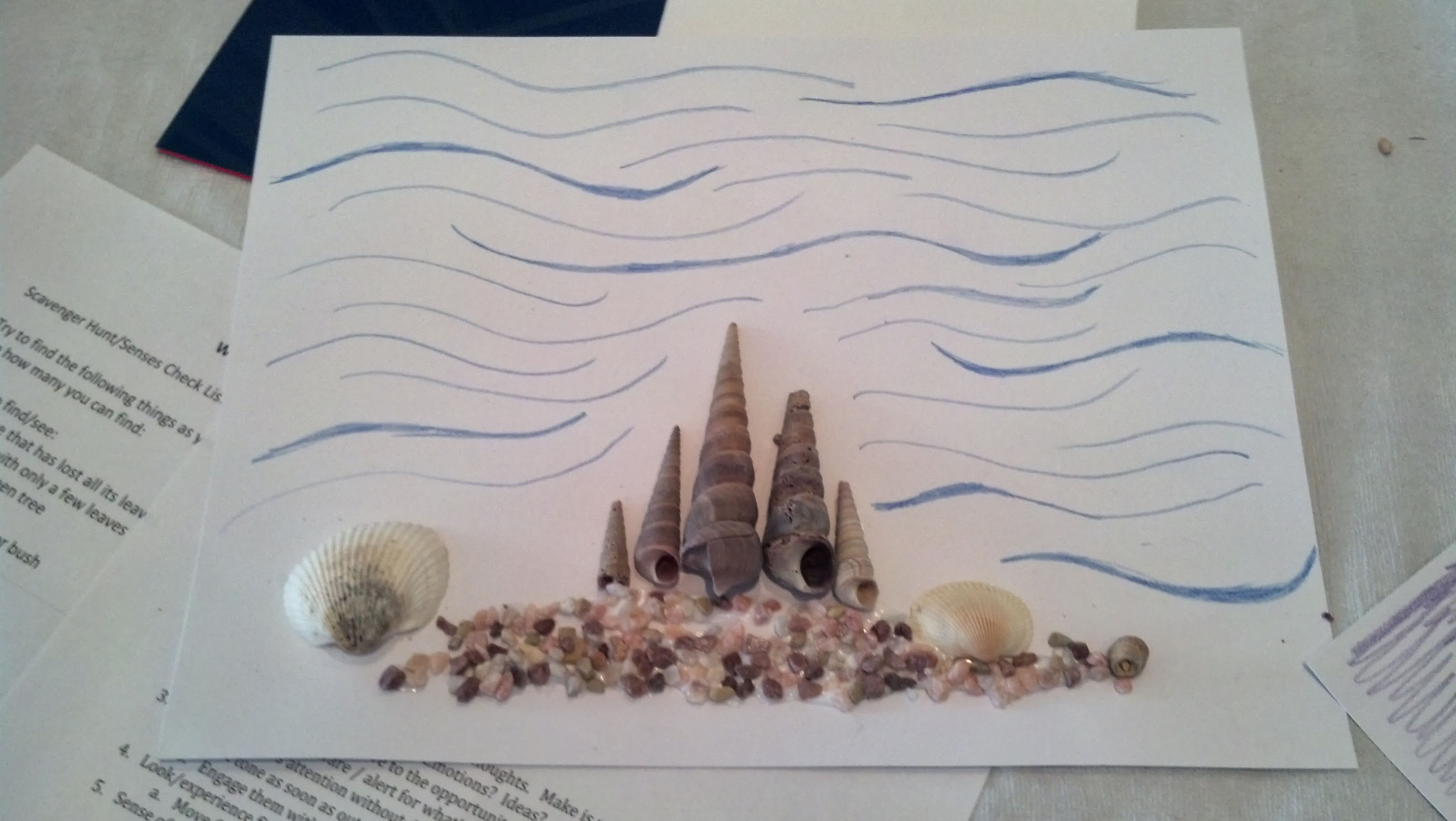
Sand Castle inspired by The Serpent Came to Gloucester
Next we moved on to oral history techniques that are useful with pre-k and other young students. Download the discussion notes here: Oral History Projects with Pre-K As part of this activity, we also worked with Twisteez wire to make a representation of our favorite toy from childhood, and talked about 2D and 3D ways of working art into story telling and personal history.
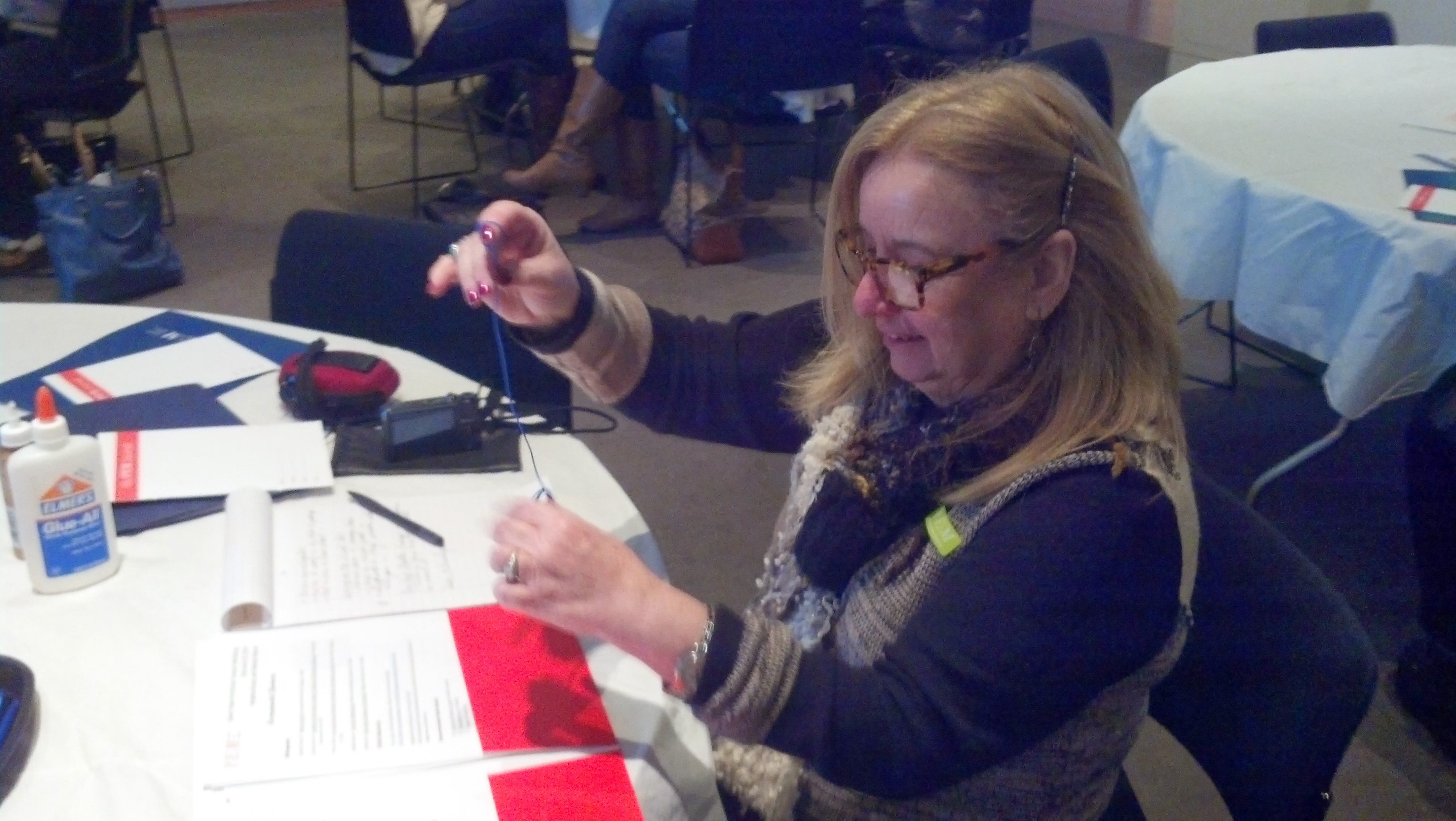
Recreating a childhood memory in wire.
Art & Nature Center director Janey Winchell made a guest appearance to talk about great ways to get young kids involved in and actively observing on a nature walk, complete with a suggested Nature Walk scavenger hunt.
School Programs manager Emily Scheinberg also led teachers on an investigation of Salem history in PEM’s collections.
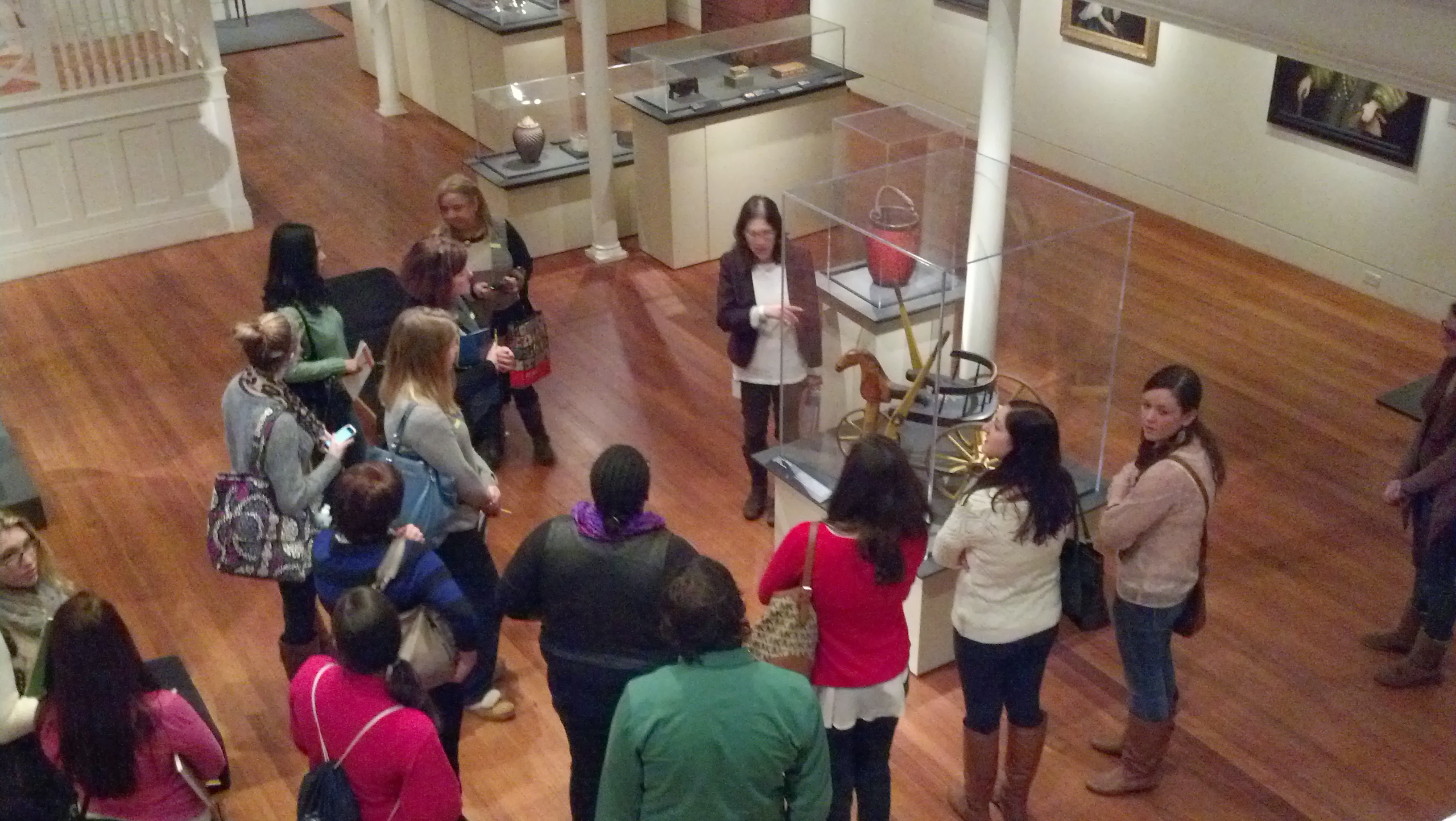
What clues to Salem’s past does a fire bucket hold?
Finally, we wrapped up the day with a pair of observation activities: examining and understanding beach erosion via milk and cookies, and creating ‘viewing frames’ to take on a walk through the neighborhood to encourage close looking, thinking about perspective, and even the basics of composition. These two activities were inspired by Corinne Demas’ The Disappearing Island and Dr. Seuss’ To Think That I Saw it on Mulberry Street.
Download activity directions erosion and frames
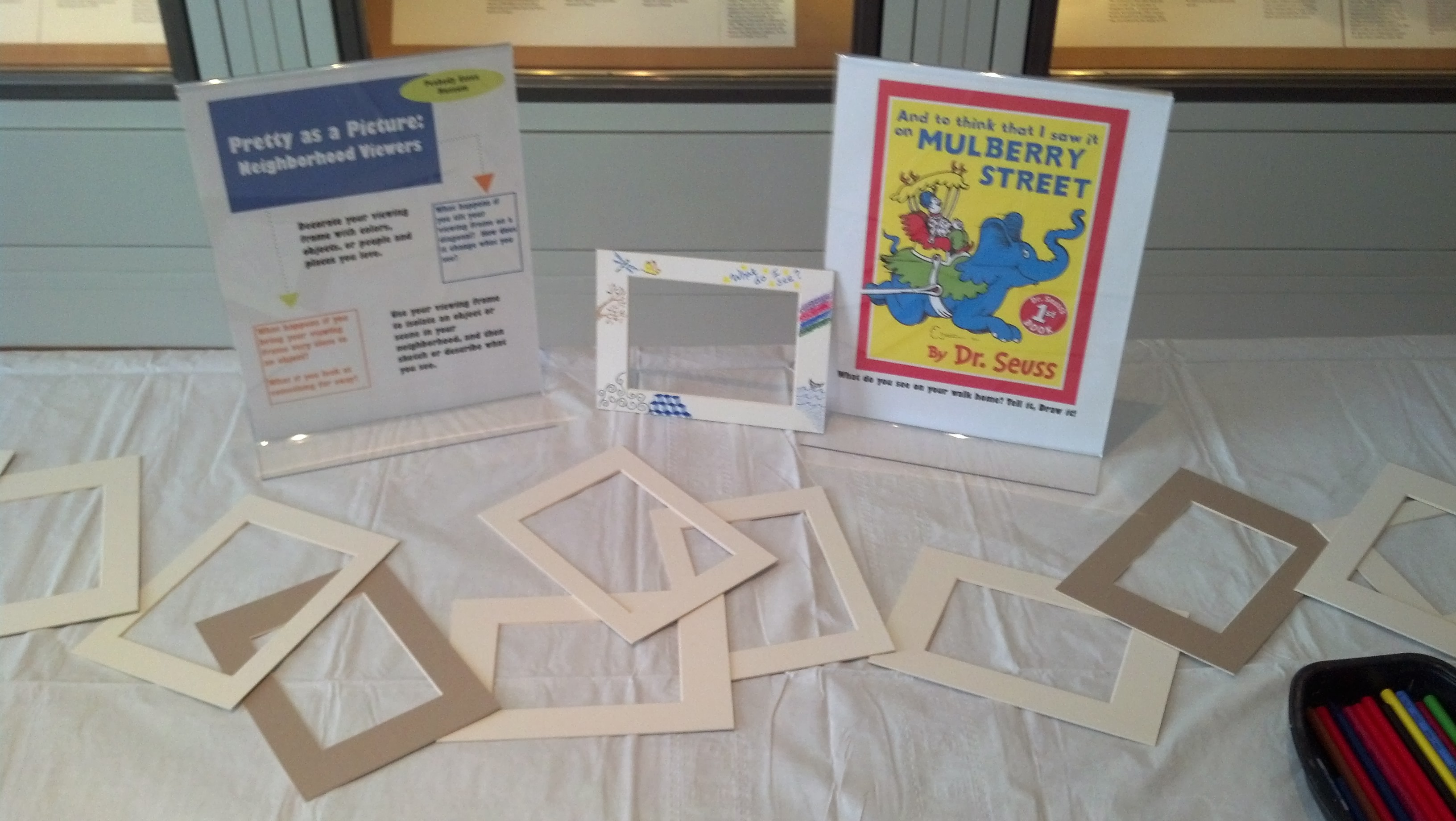
What do you see on the street? In the sky? On the buildings as you pass by?
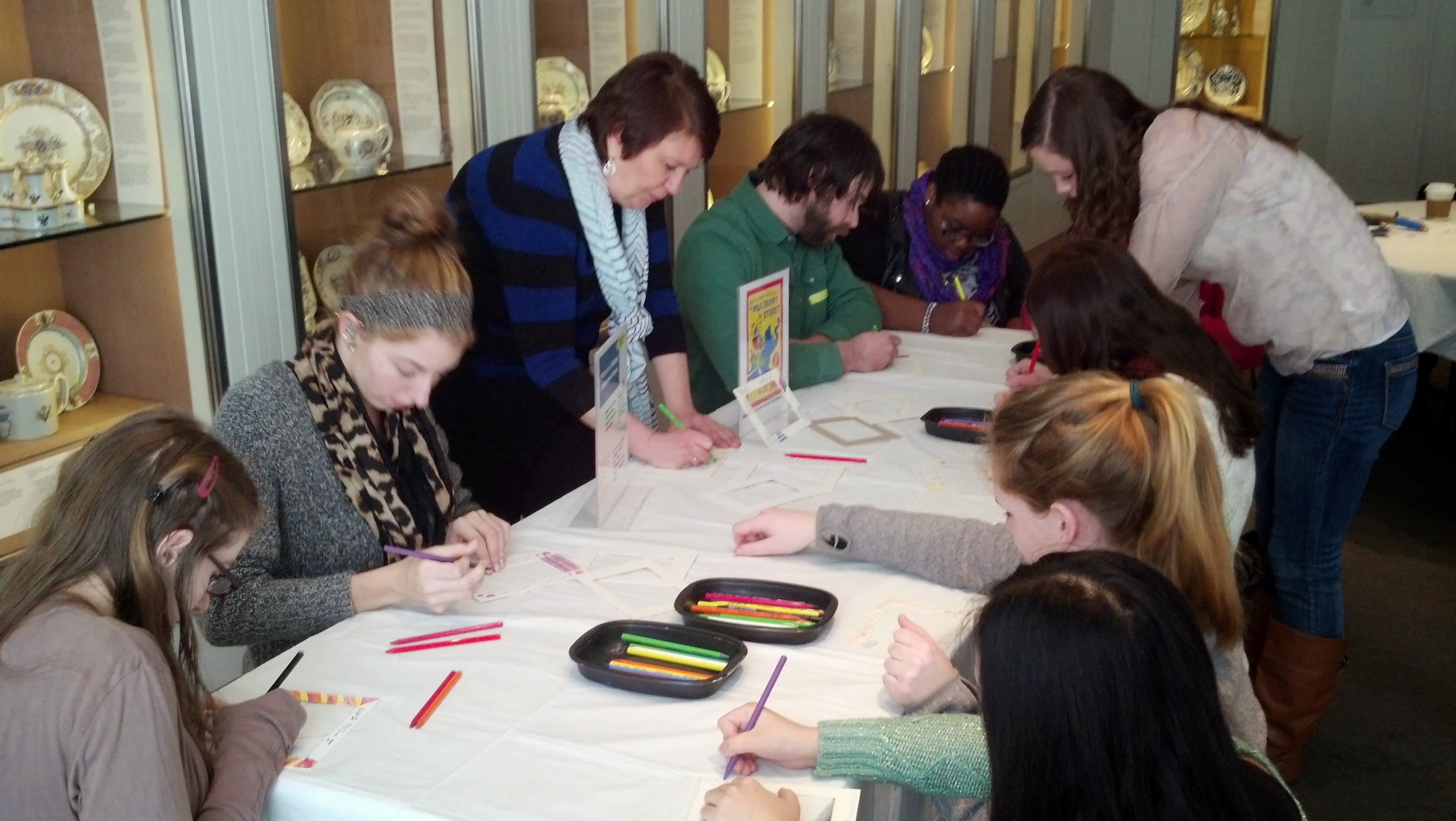
Decorating frames with a few of our favorite things.
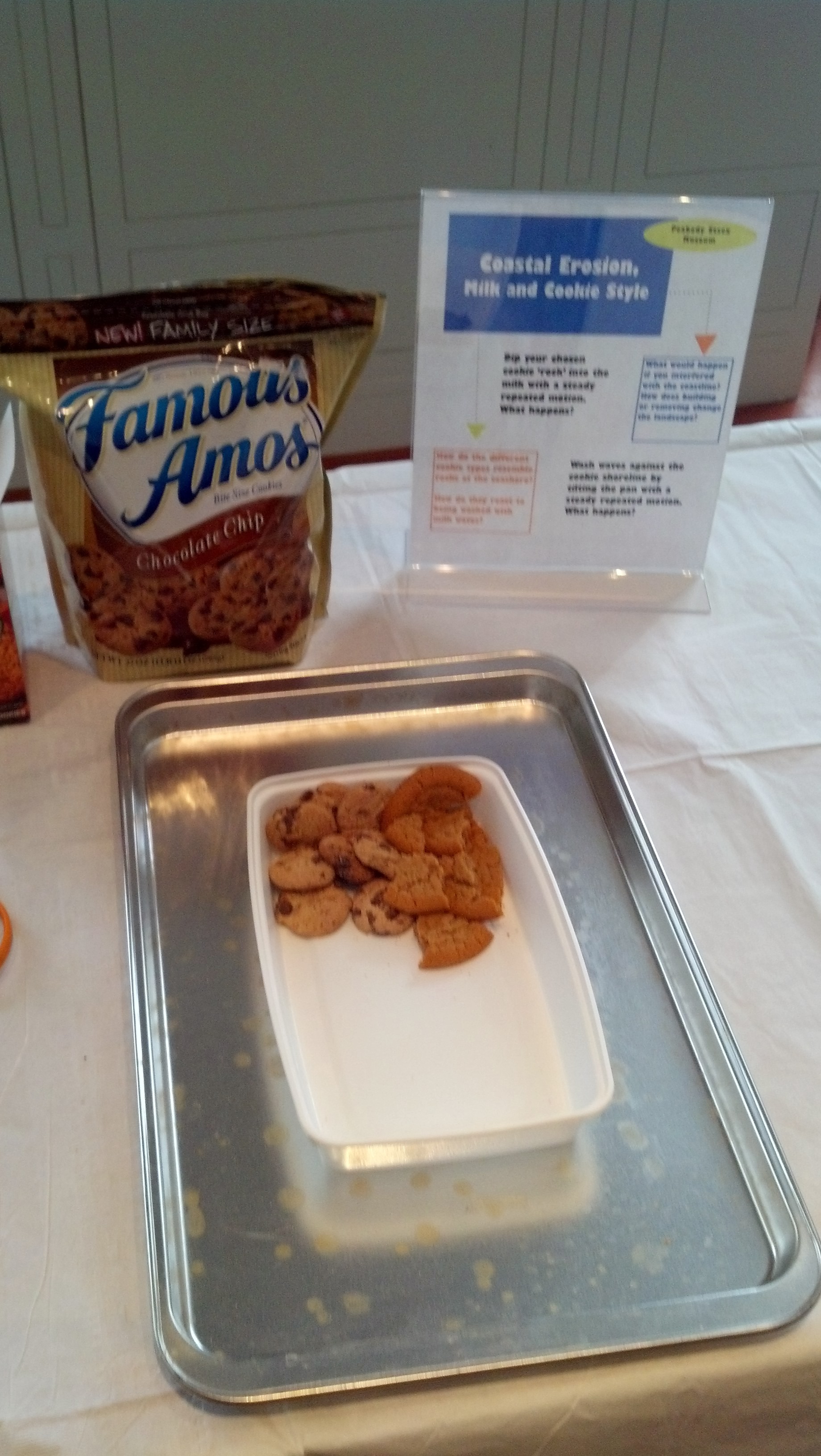
Sandstone and conglomerate…aka ginger cookies and chocolate chip. Which will stand up to milk’s erosive force?
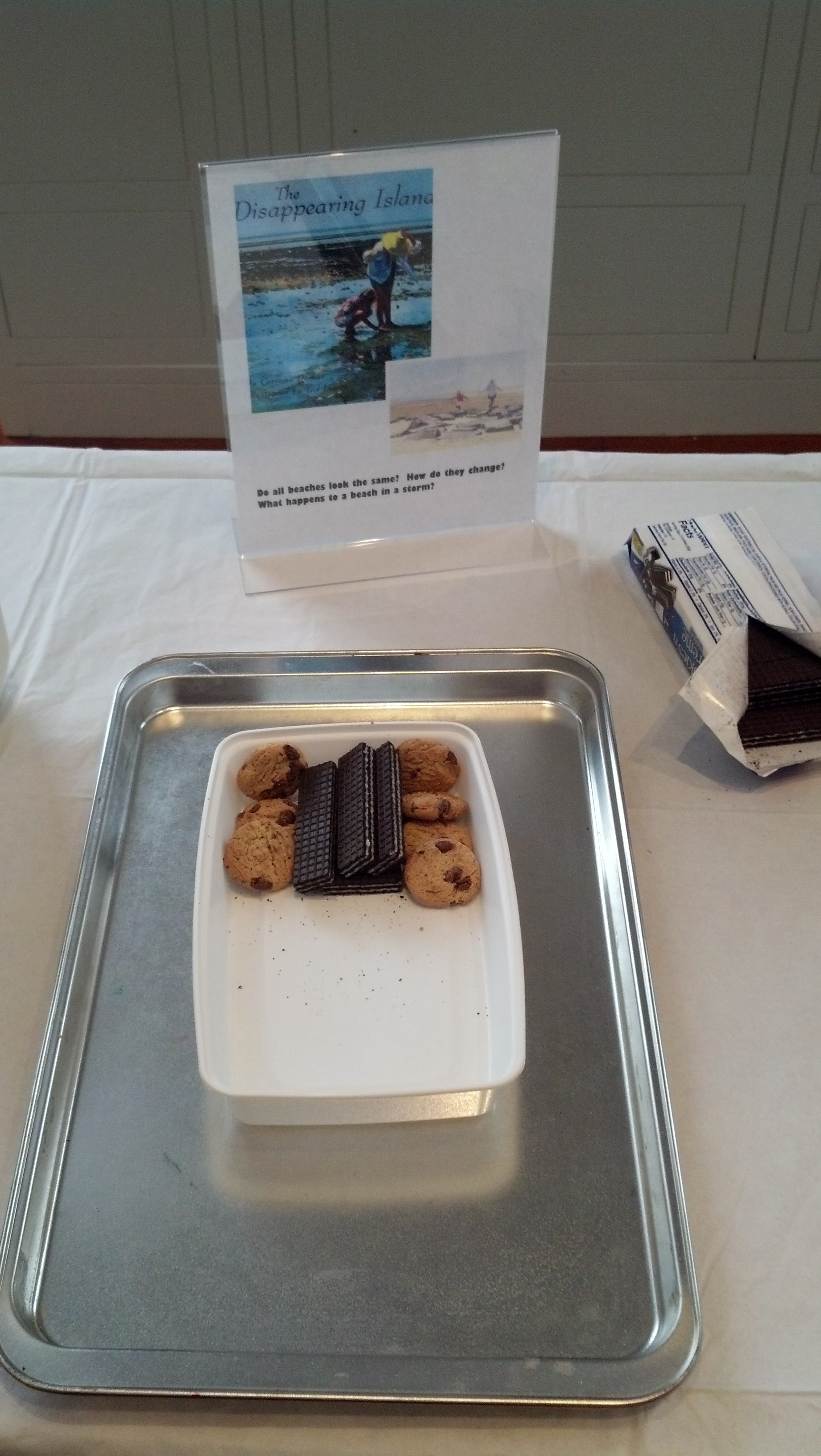
The beach before the milky waves, representing several kinds of rock!
Want more? Other classroom activities, read alouds, resources etc available for download here: handouts 2014
“Sound Like An Animal” Music and Art for your Wild Ones
February school vacation week has the potential to be the bogey man of a museum programming calendar. Attendance is seriously weather dependent, weather is seriously unpredictable, and in one week you can have a day with over 2,000 people one day and under 200 the next. Fortunately, despite some habitually inconvenient New England weather, we had a great week of vacation programming inspired by Beyond Human and from here to ear (the one with the live finches and the electric guitars!)
In addition to great performances and presentations by Curious Creatures, The Loon Lady, Jackson Gillman, and Steve Lechner from The Science Works, we had a lot of fun with our drop-in activities inspired by animal sounds. We made ‘sonar shakers,’ bull roarers, and bird calls, and people showed a lot of creativity in their decoration of particularly the last two!
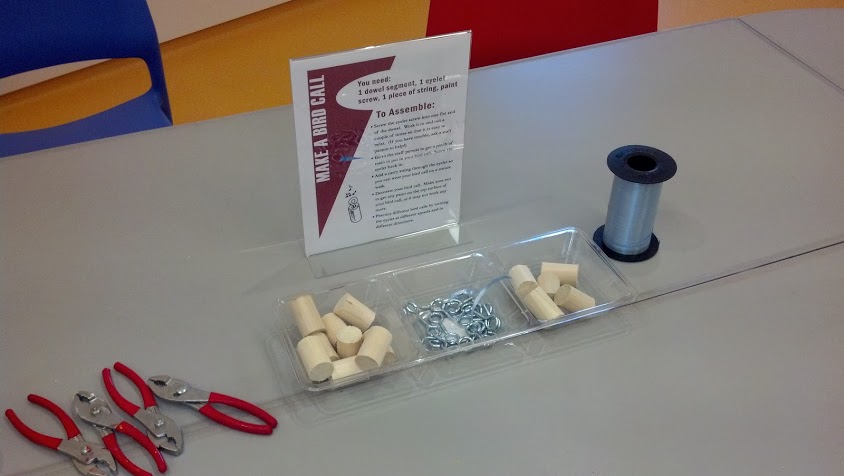
Set up for making bird calls: we dispensed rosin from the staff supply table to prevent it from going in small mouths

Final bird calls hanging up to dry, ready for a nature walk

Painted bullroarers. Helpful tip: the shorter the string, the easier it is to make that great low buzzing noise!
If you’re interested in the directions and background information from these activities, feel free to download the pdf with everything you need! Sounds Like an Animal Activity Directions
February 19th photos
This was a fun event. Looking forward to next month!

by Ed Rodley
So, another month is behind us, and another night of celebrating and mingling and Drinking About Museums: Boston.
We started off the evening with some good wishes from across the Pond, courtesy of Mar Dixon and the Drinking About Museums: London crew! Hopefully, they were all safely in bed by the time we started our event.
 DAM: London in full swing.
Photo by Mar Dixon
Fifty hardy souls braved the weather to come up to the Hong Kong and cheer on their comrades who volunteered to Show Off. The London salute was returned in similar style, and we got down to business: drinking!
 The DAM:BOS crew looking very happy.
Highlights of the evening
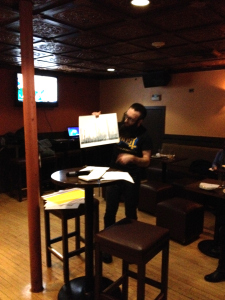 Jeff Steward did not tell us when the Fogg Museum will reopen but did show us the results of work he’s doing to visualize the 250,000 works of art in the Harvard Art Museum’s collection…
View original post 164 more words
A Posey of Printmaking Possibilities
It’s horrendous and snowy and rainy and just overall gross outside today, which makes me dream of bouquets of spring flowers, and also makes me want to stomp things. Put those two impulses together, and you get a handful of colorful ideas for making prints with unusual materials that I’ve been collecting for the past few months, just waiting for an excuse to try out!
Printing with Natural Materials
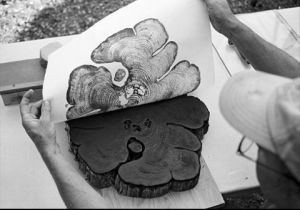
Using a tree cookie as a pattern: like woodblock, but less carving required! Click for source.
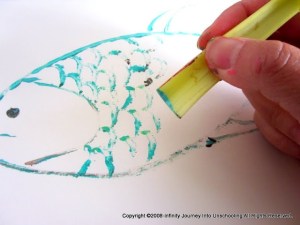
Printing with celery and other vegetables. Pinecones don’t work as well as you’d think, based on my previous efforts, but starfruit are great! Click for source.
Printing with Recycled Materials
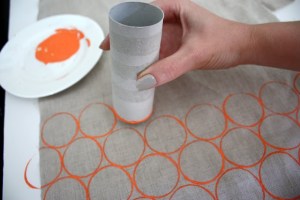
Cardboard tubes are one of the most useful things ever. I bet it would be fun to squish them and make different shapes to print as well. Click for source.
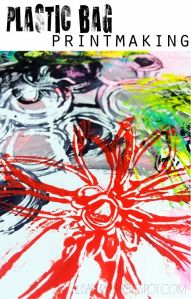
There are entirely too many plastic bags under my sink. This seems like a genius way to give them some bright new life. Click for source.
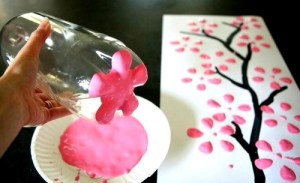
Probably my favorite of the lot–surprisingly pretty and definitely helping with my wintry mix grumpiness. Click for source.
Printing with Surprising Materials
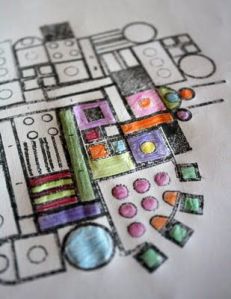
Definitely click through for this one: they made a lego print Millenium Falcon! Click for source.

This one has all kinds of possibilities based on how you mix the paint and how much you ‘squish’ the balloon in printing. I love the element of chance involved! Click for source.
Negative Prints
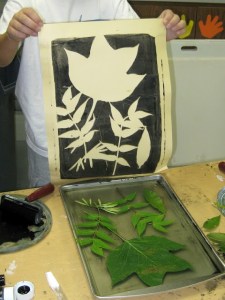
Looks surprisingly sharp for rolling paint over a pan of jello. I like the way the give of the substrate means you get nice even pressure. Click for source.
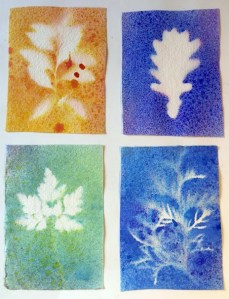
For a softer look, using liquid watercolors in a spray bottle works great. Seems like a ‘let’s do this outside!’ activity if you don’t want to have to do a lot of clean up, though! Click for source.
Rushin’ towards the Olympics
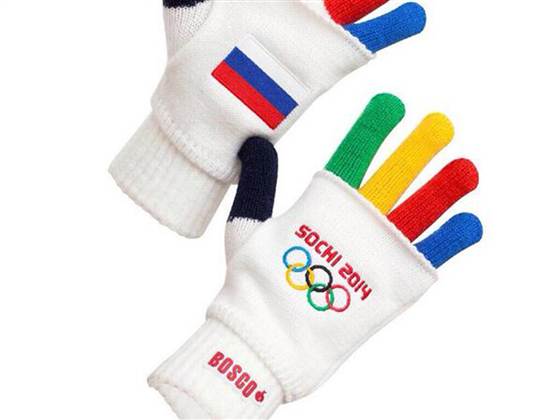
Pretty sure I had gloves just like this when I was 7, only there was a tiny knit teddy bear in a pocket instead of a Russian flag…
It’s almost time for the Winter Olympics, and time for me to find friends with working TVs so I can play too. Before the torch reaches the Olympic stadium, however, there’s still time to work in some fun Olympics themed interdisciplinary awesome!
Languages and Cultures
The folks over at The Educators’ Spin on It have compiled some fun pins about Russian language and culture to explore with younger children, and also a list of fun ways to use the three Sochi Olympics mascots (a bear, hare, and leopard) to explore Olympics history. (The mascots even have a Twitter account!)
 The Australian Olympic team has provided a set of interlinked Winter Olympics lessons for several grades and disciplines. (Despite its dubious educational benefit, my favorite is the coloring sheet featuring a kangaroo jumping out of a matryoshka, for sheer hilarity.)
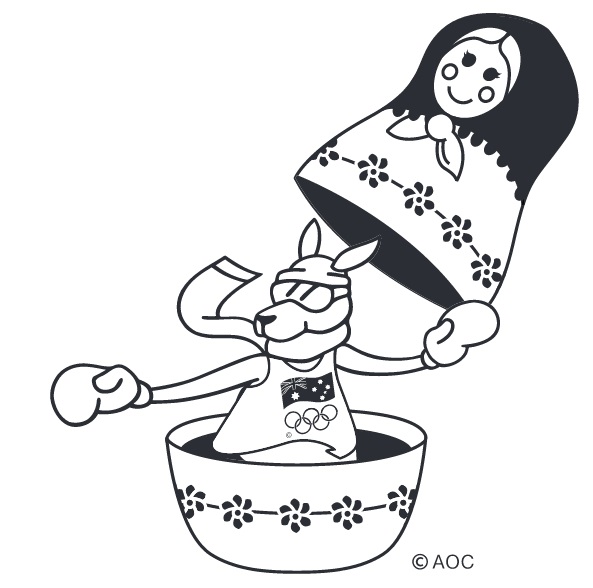
From the Australian Olympic team, see link above
Science and Engineering
NBC Learn has a host of neat videos on the science and design behind the tools, gear, and execution of various winter sports. There’s even one called ‘Olympic Movement and Robotic Design’ that I am looking forward to watching when I get a free minute. (2010’s series of films are still available thanks to the NSF here.)
Don’t miss Olympic STEM resources from Edutopia, or this great set of history, language, and science resources for older students from Teacher Vision either.
Plus, check out past Olympics round ups from right here on Brain Popcorn:
Vancouver 2010: Warming up for the Winter Olympics
Sliding, Rolling, and Gliding (Bobsleds and more!)
Inspiration from the Greats: Women Artists
Representation matters, and if you too noticed that all the artists mentioned in my previous post were guys, I am here to fix that with a round up of fun activities inspired by some great women artists. If you know of other fun activities inspired by female artists that belong in this list, let me know!
Kahlo
Over at Mommy Maestra they’ve collected a bunch of possibilities for exploring Frida Kahlo’s work at different age levels (though mostly younger). I was especially glad to see a number of great books recommended!
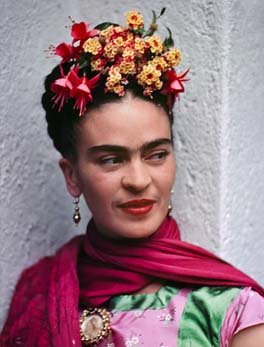
Photo of Frida Kahlo. Click for source link
And in honor of the lady’s signature hairstyle, a fun set of directions on how to make a Kahlo-inspired floral headband.
O’Keefe
There are a couple of useful links at Practical Pages, part of a long list of artist resources, in fact. The two stand-out activities for O’Keefe feature setting up a still life inspired by her Skull & Roses painting, and using a computer-assist to emulate O’Keefe’s ‘zoomed in flowers’ style. I personally think you could skip the computer step and instead experiment with a variety of magnification tools instead. I’m a fan of the loupe style that means one can work hands-free (like the Private Eye style) — or a big tripod magnifier. That way you can work in some math and science with thinking about scale and identifying flower parts.
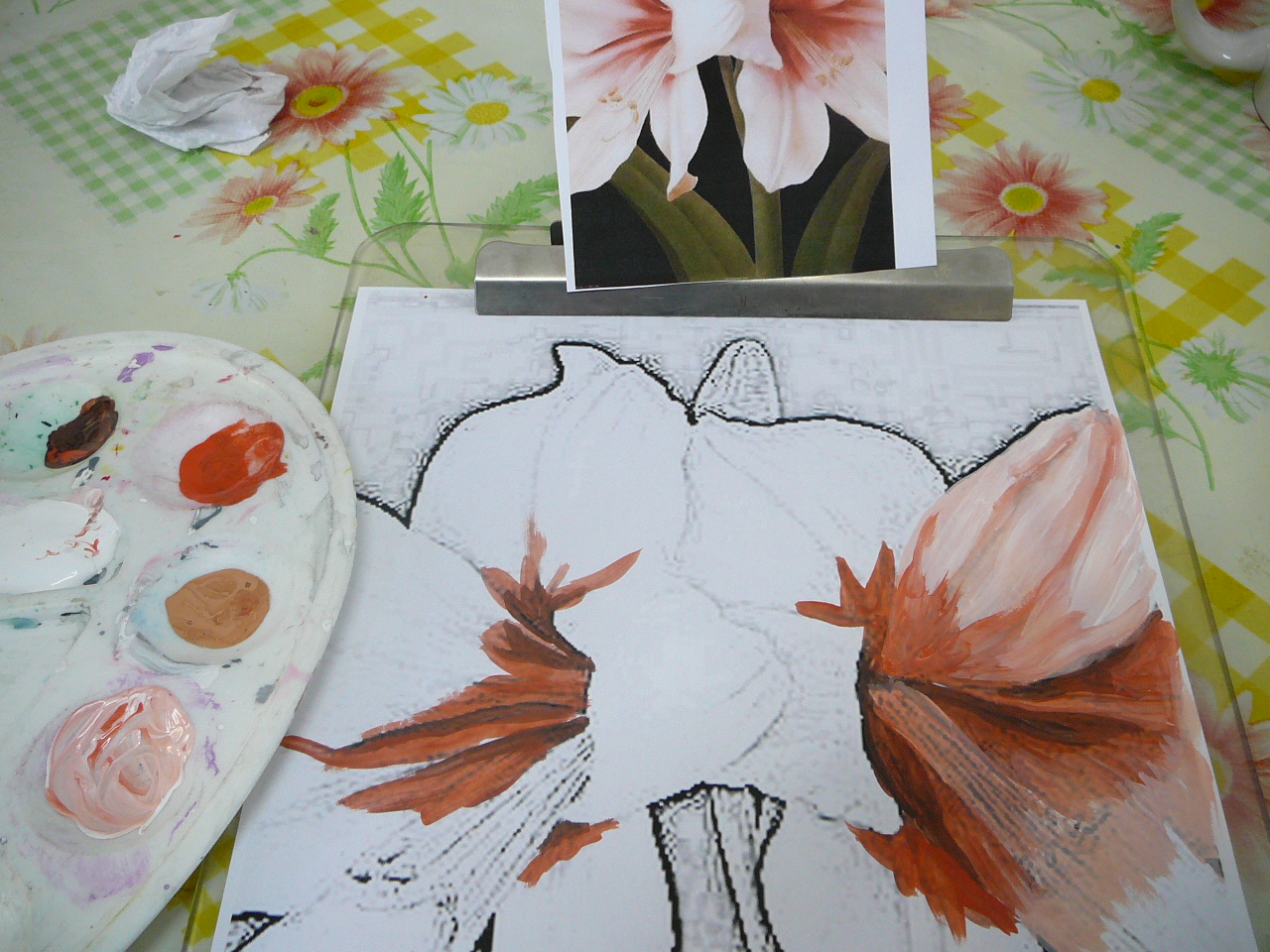
Computer-zoom and ‘pencil sketch’ filter + watercolors
And be sure to hop over to Grant Snider’s blog, “Who Needs Art?” to check out his beautiful webcomic about visiting the Georgia O’Keefe Museum.
Cassatt
Lots of the ideas I found for Mary Cassatt focused on process and on content (the importance of connection between the people in her paintings) as opposed to signature style. Check out the directions for a cute pastel drawing activity, or these mixed media works inspired by Children Playing on the Beach.
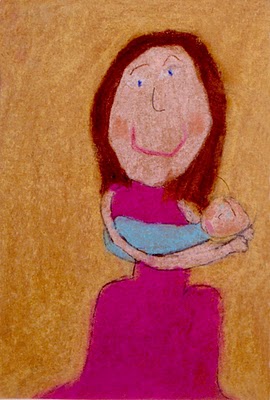
Child’s pastel drawing inspired by Mary Cassatt. Click for source
Morisot
Over on Practical Pages again, there are a few fun explorations of Morisot’s paintings. The author relies more than I would on using traced outlines of actual paintings by the artist–but trying to pencil in the right proportions when copying a Sargent watercolor nearly defeated me last week, so I’m not going to object too strenuously. I will, however, say that philosophically, I think sketching/doing one’s own line work is better in the long run for exploring the creative process.
That said, the blogger and her daughters made some amazing collages inspired by Morisot’s “The Cradle,” each turning out differently despite using the same line art to begin.
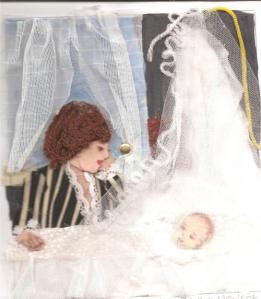
Collage inspired by The Cradle. Click for source.
She also has a painting activity inspired by “The Butterfly Catchers,” which just begs for a unit done outside, with butterfly nets and a combined art/science observation lesson.
Finally, just as a new year reminder, Brain Popcorn also exists in a (less formal, more frequently updated) tumblr version, with bonus occasional posts about politics, geekery, and women’s issues to intermingle among the museum and education posts. Drop by to say ‘hi!’
Inspiration from ‘The Greats’
Happy New Year to you all from Brain Popcorn!
I hope these first few weeks of 2014 find you well and happy and looking forward to all kinds of new ideas and things to learn and explore in 2014. Looking back at how I spent some of my Christmas vacation, and forward to some of what’s coming up at the museum, I decided the year’s first post ought to be about inspiration.
 Over the break, I went to the always rewarding Museum of Fine Arts, and spent an uplifting and intimidating 2+ hours in the Sargent watercolors show. It’s up for a few more days, and if you have the chance to see it and have *any* interest in anything from painting to color theory to cool images from interesting places to travel, it’s more than worth the effort to get there (preferably in the early morning before it’s positively swamped).
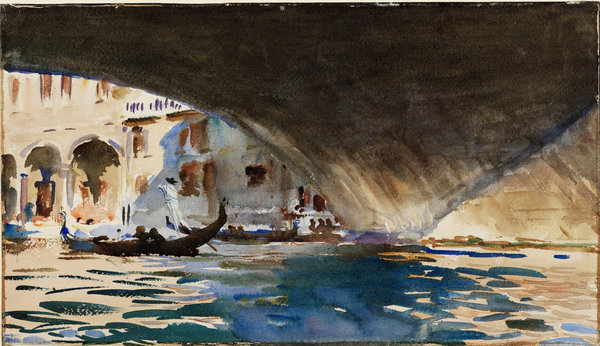
Underside of the Rialto Bridge, Venice, by JS Sargent
It takes a lot to convince me to buy the catalogue for an art exhibition–pretty as they are, they take up a lot of space and I am seriously short of bookshelves these days. (Books under the coffee table, in the night stand, on the top shelf of the closet, in my pocketbook, on my desk…) However, this was a knockout of a show and there was absolutely no question that it was worth it–especially when I can prop the catalogue up near my easel and try some of that ‘learning from the masters’ method of self-pedagogy. Maybe it will knock a few original compositions loose, too.
In the spirit of art forms that are a little more accessible than insanely intricate paintings of moored sailboats and the graceful facades of Venetian palazzos, however, here is a collection of some of my favorite art activities inspired by some big-name artists:
Mondrian
A perennial favorite for transformative works due to his simplicity, Mondrian has always been a personal favorite of mine as well. I can’t explain it, because generally squares of primary colors aren’t exactly my taste, but there’s something reassuring about the rules his paintings follow. (I was a kid who liked coloring inside the lines.)
Here are a few fun examples of people who took Mondrian’s squares to another level (click the pictures for links to the sources):
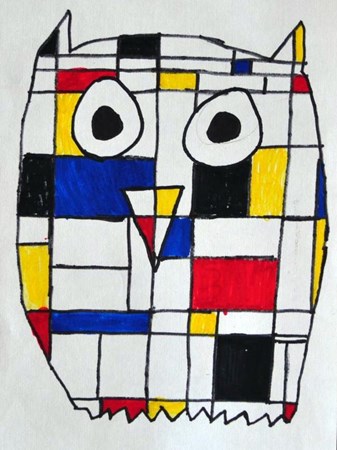
Mondrian Owl on Artsonia, drawn by a fourth grade student
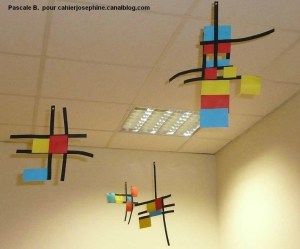
Mondrian mobile, from a French elementary classroom
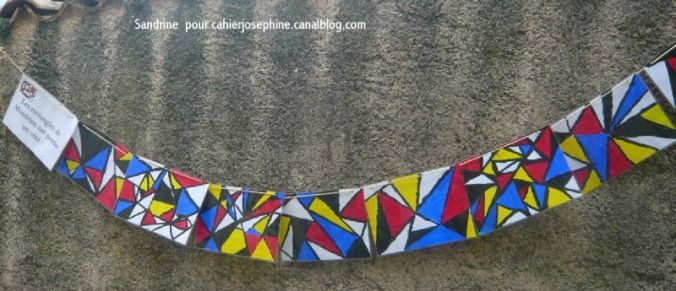
“Mondrian’s squares have lost a side!” Triangle paintings from a French elementary classroom
Klimt
I really love the projects that go from 2D inspirations to 3D transformations.
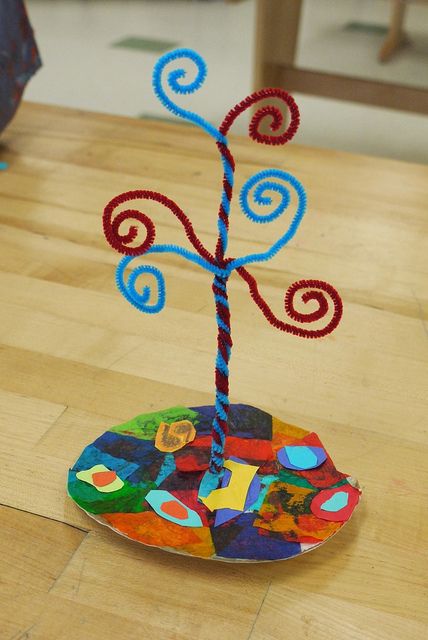
Inspired by the Tree of Life, 5th grade project
Chihuly
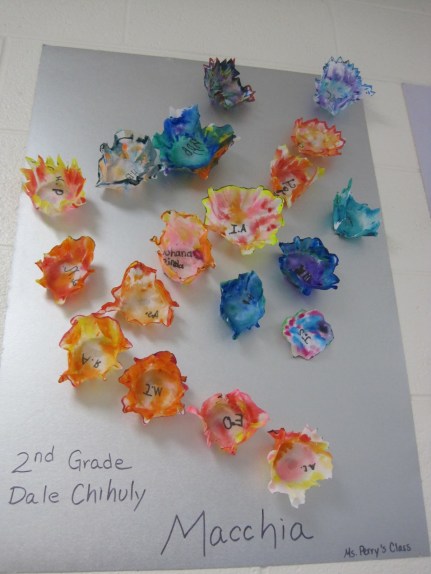
Coffee filter ‘Macchia’ (and a version for older kids on the same site)
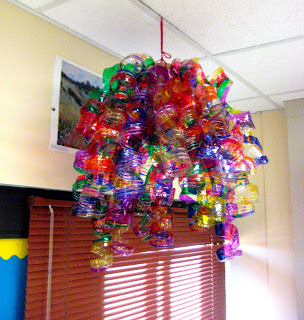
Sharpie on spiral-cut plastic bottles for the chandelier look
Also, be sure to check out the assorted very cool inspirational posters over at Masterclass Minis! (see example below)
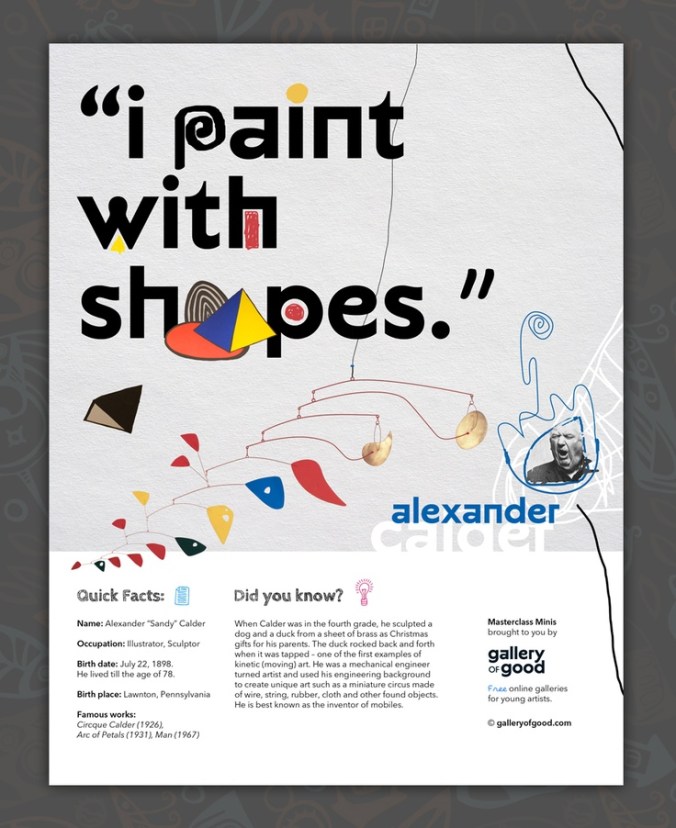
Finally, check back for a second round in “Inspiration from the Greats: Female Artists” coming in a few weeks!
Six Word Mysteries
Thanks to the urban legend of Ernest Hemingway’s horrifically sad six word story (“For sale: Baby shoes. Never worn.”) the idea of the six word story has been bruited about as a writing exercise for authors of all levels of experience.
How might this play out in a museum setting? Education programs often make use of ekphrastic writing prompts–poetry, found poetry, personal reflections, point of view exercises, etc.
What kind of six-word story comes to you when you look at this object?
Please add your stories in the comments below, the more the merrier!
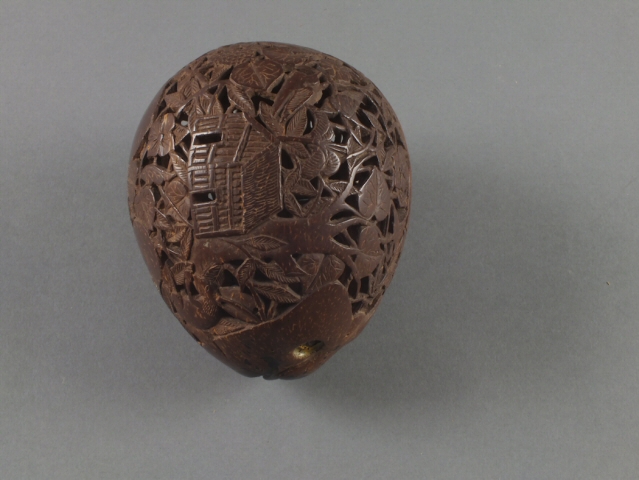
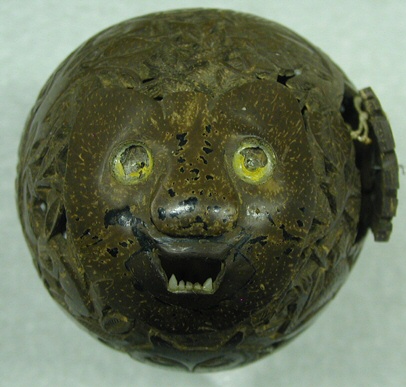
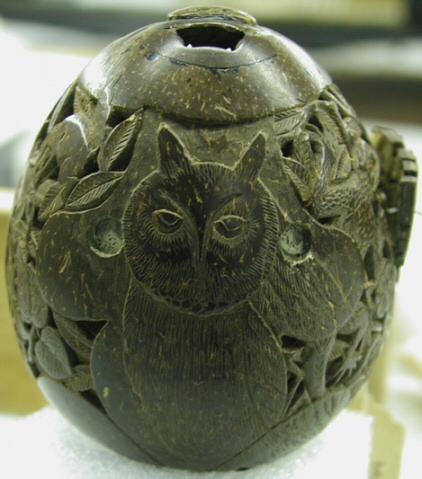
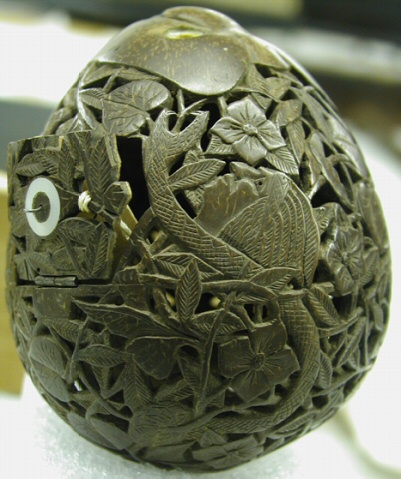
What is it? A souvenir coconut, collected in Mexico prior to 1956.
The catalog information reads: “The object has intricate carvings of a bird, owl, rattlesnake, rabbit, lizard, house, Indian head, and flowers and vines. The object overall is made to resemble a cat, with inlaid eyes and teeth. There is a little door in the side.”
Fuzzy and Ferocious
…and yes, I realize it’s October, but at least this time I’m not talking about Halloween costumes.
As you all know, the Art & Nature Center reopens next week, and late last week saw the return of a venerable member of PEM’s collection: an 1886 bison, fur freshly brushed, etc., ready to take center stage in his new installation. Watching the install was fascinating, and I’ve gotten to write up details about this item’s history and his exciting new future on PEM’s blog here: A Fine Furry Welcome.
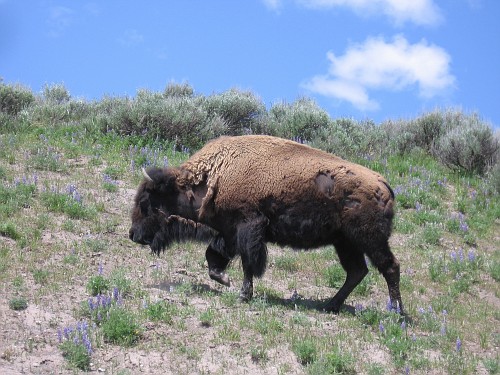
There are no pictures of the author standing in front of a live bison in Yellowstone NP, because, unlike many tourists, she values her life. Photo by the author’s family, Wyoming, 2006.
 Brain Popcorn