The Modern Life of a Bronze Age Woman

I love it when I run across someone who’s assembled an Ideabox-style post for me! National Geographic’s done a brilliant collection of interdisciplinary resources (geography, chemistry, archaeology, etc) surrounding the Egtved Girl (and bog bodies in general!)

I have pretty vivid memories of the Museum of Science in Boston’s Bog Girl exhibit, including a wobbly platform you could walk on that mimicked the consistency of a peat bog, so maybe you’re not as excited about bog bodies as I am, but you should be! Check out Nat Geo’s links below:

Unknown's avatarNational Geographic Education Blog

SCIENCE

The stunningly well-preserved remains of a 3,500-year-old woman reveal her travels as a high-status woman of her day. (Nat Geo News)

Learn more about the Egtved Girl and her “bog body” cousins with our video.

Teachers, scroll down for a quick list of key resources, including today’s MapMaker Interactive map, in our Teachers’ Toolkit.

Still a teenager when she died, the remarkably fashionable Egtved Girl was laid to rest about 3,500 years ago. She was buried dressed in a cropped wool bodice with flowing sleeves, a short skirt, and bronze bracelets and earrings. The large bronze disc on her woolen belt probably represented the sun. The Egtved Girl was buried with a birch-bark box containing an awl, bronze pins, and a hairnet. A bark bucket in her coffin revealed traces of Bronze Age beer—made with wheat, bog myrtle, berries, and honey. Illustration by FinnWikiNo, courtesy Wikimedia. CC BY SA 3.0 Still a teenager when she died, the remarkably fashionable Egtved Girl was laid to rest about 3,500 years ago. She was buried dressed in a cropped wool bodice with flowing sleeves, a short skirt, and bronze bracelets and earrings. The large bronze disc on her woolen belt probably represented the sun. The Egtved Girl was buried with a birch-bark box containing an awl, bronze pins, and a hairnet. A bark bucket in her coffin revealed traces of Bronze Age beer—made with wheat, bog myrtle, berries, and honey.
Illustration by FinnWikiNo, courtesy Wikimedia. CC…

View original post 864 more words

Michelle Obama, “Activism”, and Museum Employment: Part I

A good read, and I look forward to the rest of the series. I’m particularly interested in the phrase “human investments,” and the way it resonates with other discussions going on in the field about inclusion, paid/unpaid internships, wage equality, and diversity of all sorts in leadership roles.

the incluseum's avatarTHE INCLUSEUM

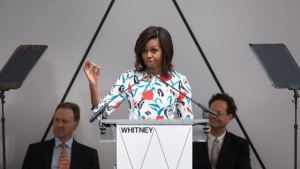
Over the next few weeks, a handful of Incluseumers will reflect on and unify three topics that are usually treated as separate. At the end of each post, we’ll attach a worksheet with suggestions for how to work through some of the ideas we discuss. You can download and print these worksheets to initiate conversations with colleagues. For the first post in this series, Porchia, Aletheia, and I (Rose) respond to Michelle Obama’s speech for the reopening of the Whitney.

* * * *

michelle_obama_at_whitney

Last week, Michelle Obama gave a speech for the reopening of the Whitney Art Museum in New York City. In this speech, she remarked that museums tend to not do a good job affirming youth of color. She stated:

You see, there are so many kids in this country who look at places like museums and concert halls and other cultural centers and they think to themselves, well…

View original post 1,117 more words

This Week’s Museum Reads: Curiosity

Museum Reads header imageAs a child, I was informed that ‘dull’ and ‘boring’ were swear words. Anything could be interesting if you looked at it long enough, asked enough questions, and any time you had free could be easily filled by more looking, listening, imagining, and investigating. (“Are we there yet?” was similarly disallowed, but “where are we?” was allowed as often as we liked, so long as we were willing to track our road trip route on a map.)  Consequently, I’ve spent my life always looking for the next new and interesting thing, and somehow I always find something.

A few interesting reads on the topic of curiosity:

Graphic made by Meg Winikates on Canva.com

Graphic made by Meg Winikates on Canva.com

Other Brain Popcorn posts you may enjoy:

This Week’s Museum Reads: Empathy & Engagement

Museum Reads header imageI spent all weekend marinating in poetry at the Massachusetts Poetry Festival, which was incredible and thought-provoking as always. As an interdisciplinary enthusiast, I was enthralled with the ways I saw people talking about poetry and science, poetry and art, poetry and environmentalism, poetry and current events, poetry and civil activism.  Coming back to my museum-persona, I was glad to see some of those same kinds of discussions are happening in this field as well, at AAM last week and continuing online and abroad.

Here are a few good reads from the last few days: