Jackie and I had a great conversation last week about upcoming programs at PEM for the Poetry Festival, and she put together a lovely write-up! Many thanks to her for asking such interesting questions, too. My favorites were “What value does the experience of visualization bring to a poet’s sensibilities?” and “What value does fun lend to creativity?”
Month: April 2014
Recyclable Design Challenges

Charles Eames, Ray Eames. Molded Plywood Division, Evans Products Company (Venice, 1943-47). Elephant, 1945.
With the inspiration of California Design at PEM currently, not to mention the new Maker Lounge, we’ve been focusing on some fun design challenges with recycled materials that I thought I’d share.
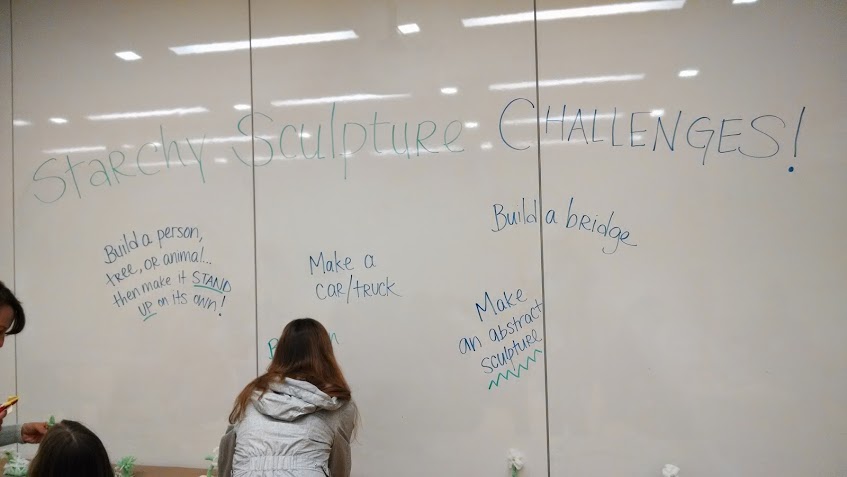
Can packing peanuts be strong enough to make a bridge or a tree?
Packing peanuts are the bane of many people’s existence. Unless you’re into demonstrations of static electricity or have to ship breakable stuff nearly constantly, they’re a nuisance.
Unless they’re starch packing peanuts, in which case they’re awesome.
Check out what a damp sponge, a pile of starch packing peanuts, and a lot of imagination can do in the hands of some inventive visitors, challenged by our ANC staff:


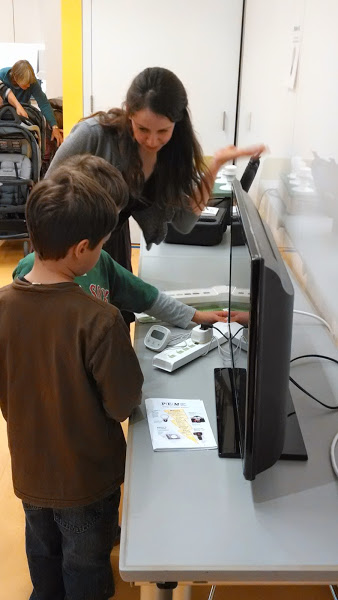
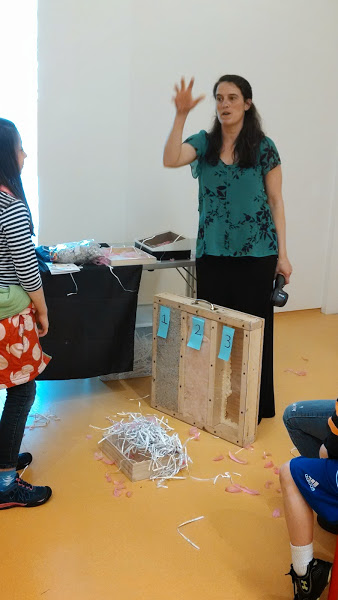
We also had some guests this week from the Green Up initiative working with visitors on energy-efficient design challenges, looking at insulation and ‘energy vampires’ in the home:
And remember how it’s National Poetry Month and we’ve got the amazing Mass Poetry Festival coming up next weekend? We’ll be making random poetry generators, invented by yours truly, in addition to our other raft of fun drop-in art making, artist demos, and workshops.
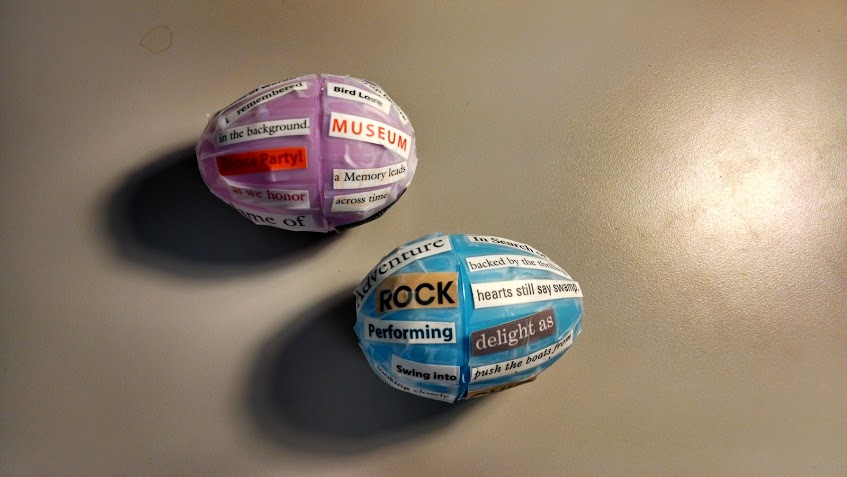
Nouns, adjectives, and verb phrases collaged onto plastic eggs: rotate to create inspiring phrases for poetry starters, and swap halves to create new possibilities!
Build Your Own App
I haven’t had a chance to do a ton of exploring of this yet, but I definitely will! Sounds like a great option for pairing with programming in PEM’s new MakerLounge (http://pem.org/learn/maker_lounge)

The Massachusetts Institute of Technology (MIT) has released a website that allows you to create your own app. It’s free to use and relatively simple. The website features videos that introduce you to the simple coding language that the apps are made of, and then allows you to create real working apps that you can use on your Android device. Unfortunately, they have not been able to make the apps available for Apple devices, but fear not–You can still make them and test them out on the site.

To use the App Inventor, click here. This will take you to the front page where you can click around to get your bearings and learn before you decide to make your app. If you use this, please tell us what you’ve made in the comments! We’ll showcase what ever it is you decide to make!
Poetry Constructions
Poetry works its way into many of my posts. National Poetry Month is one of my favorite times of year, and every year I find something new to get excited about.
This year it’s building blocks and poetry. Not in the form of stanzas, rhyme schemes or metaphors, but creative ways to inspire, actual physical ways to randomize words, create sequences of ideas, and give poetry a visual heft that matches its presumptive mental and emotional ones.
Shape poems

ee cummings ‘i carry your heart’ as laid out in Festisite
I’m not a huge fan of concrete poetry in general, because I’m not always convinced by the whole form/function connection when it comes to text. However, if you’re looking for a new way to *present* a poem and hand written calligraphy is not your top choice, you might want to try Festisite, which has a handful of pre-selected forms you can use to plunk any text into for a graphic twist, as I did with ee cummings’ ‘i carry your heart’ above.
Poetry pebbles
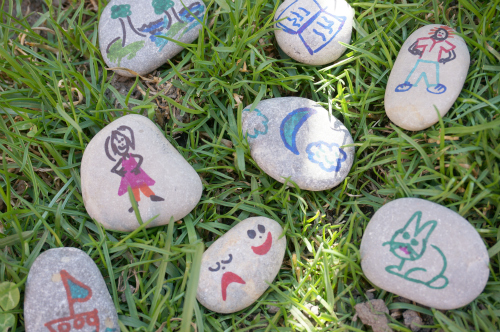
Poetry Pebbles from Kitchen Counter Chronicles
Story stones of all sorts are fun, assembling petroglyph-like images and then inventing the connections between each concrete object depicted. Over at Kitchen Counter Chronicles one family used pre-created stones as poetry starters while outside on a nature walk: I think with older kids it could be as much or more fun to collect stones and decorate them along the way, to help spur further writing once back indoors.
Book spine poetry
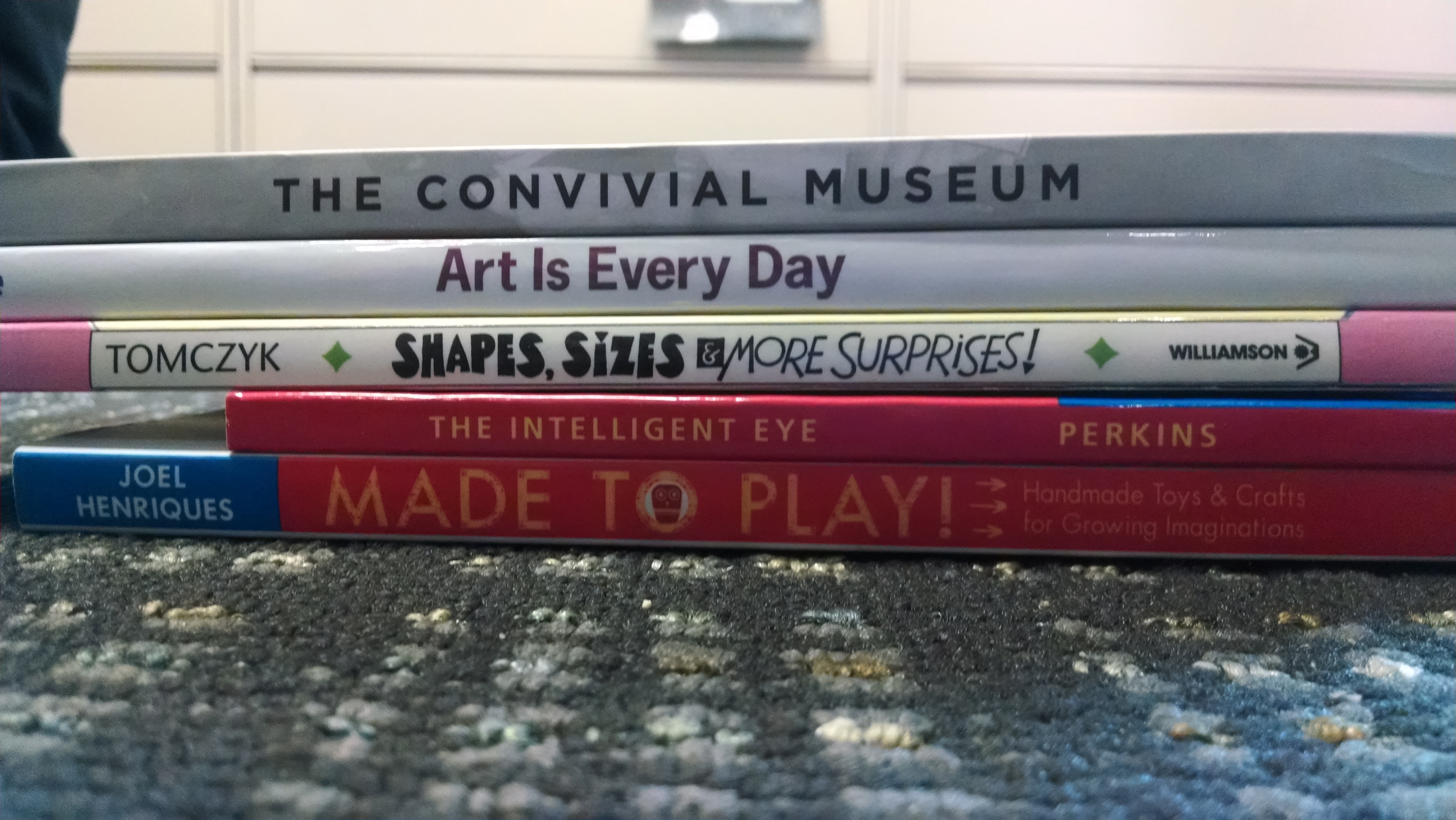
A museum book spine poem, by me and my bookshelves
I love Nina Katchadourian’s Sorted Books Project, and so do the folks at the Association for Library Service to Children, who recommend this as a great way to get kids to explore a library during National Poetry Month. Sign me up!
Haiku calculator
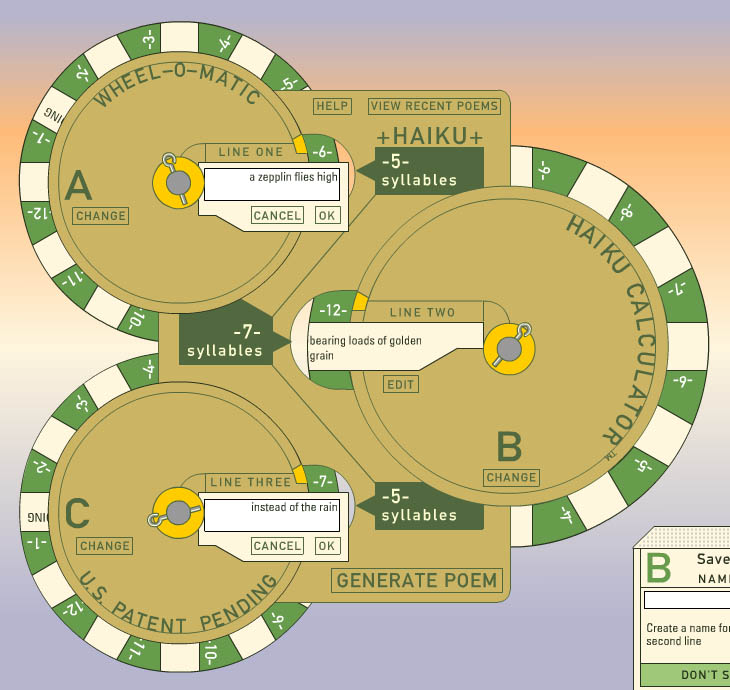
Haiku calculator by Eugene Parnell, sample text by me.
Eugene Parnell describes his “Wheel O Matic Haiku Calculator” as ‘pure cogs-n-wheels fun, a machine-age Nirvana of Modernist production-line assembly techniques applied to to the emerging meta-industry of cultural production.’ That’s a little wordy, but it is, in fact, a fun spin-the-wheel-get-a-random-poem-bit, and could be easily recreated in an analog version. The digital version was a little buggy when I tried it–precreated wheels of poetry options didn’t seem to be loading, but you could create your own easily enough.
Word wheel templates here and here for kick-starting an analog version.
Assorted other National Poetry Month resources:
Lesson plans for K-12 on ReadWriteThinkLesson plans, videos, and printables on Scholastic
NaPoWriMo (write a poem a day challenge)
Interdisciplinary resources for teachers and parents on Reading Rockets
Past National Poetry Month posts on Brain Popcorn:
2010: Popping with Poetry
2011: Poetry and Puddles
2012: It’s the Most Wordiful Time of the Year
Check back in a week or two for a sneak preview of May MA Poetry Fest activities at PEM, as well!
 Brain Popcorn