Twelve Days of Popcorn (Day 1): Seasonal Papercraft

In recognition of the holiday season, I have decided to celebrate with twelve posts of things that make me happy, inspire me, make me think, or otherwise stick alluringly in my brain.  (Expect a bit more humor and a bit less curriculum!)

Today’s Topic: Seasonal Papercraft, with a highlight on origami and snowflake making

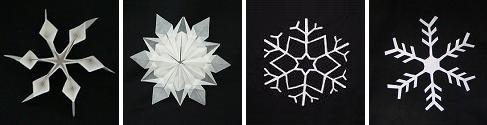
Photos from the Origami Resource Center

Round Up of Origami Snowflakes and Snowmen directions from the Origami Resource Center.  Very cool stuff.  I love the idea of using wax paper or patty paper so that you get the layered translucent snow-like effect.

Decorating the Origami Tree at the American Museum of Natural History:

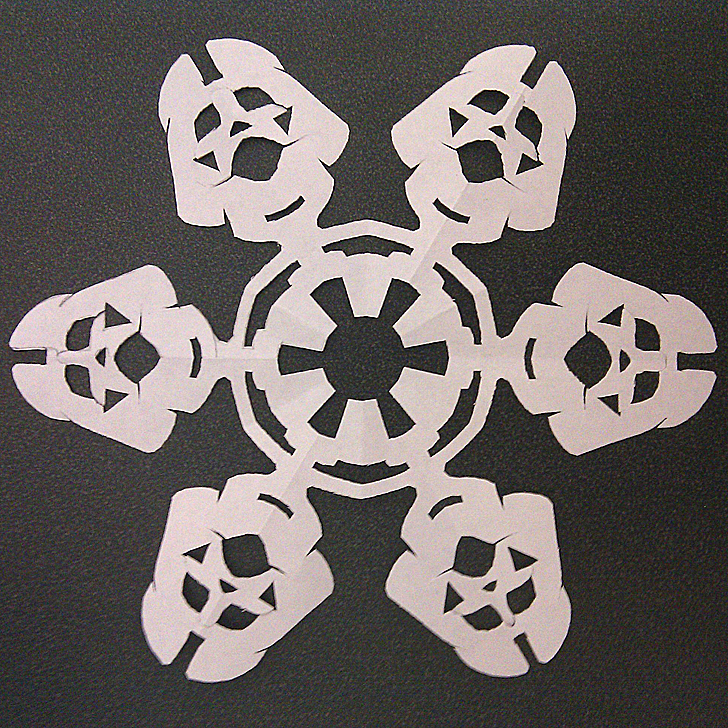
Photo by snowflake designer, see link for details

How to Make Star Wars Paper Snowflakes

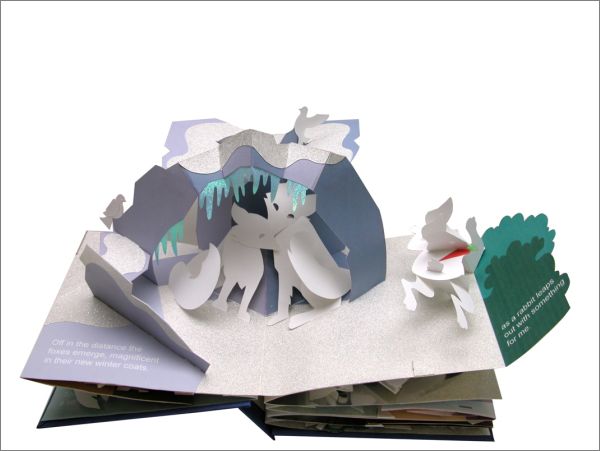
Robert Sabuda’s Winter’s Tale, a pop up book that makes me happy every time I open it.  His site has templates for creating all kinds of cool pop ups as well.

A page from Robert Sabuda's Winter's Tale


On the first day of popcorn, this idea gave me glee–a pop-up folding snow-bedecked tree…


A Welcome Un-Surprise

In January, the UK’s Telegraph reported “Museums ‘should provide more hands-on experiences for children'” with the subtitle “Children are getting bored with ‘interactive’ push-button displays in museums and would rather dress up and touch exhibits, a campaign group claims.”

…And I thought ‘campaign group? Try 9/10 of the museum professionals I have worked with and/or know!’

In fact, what surprised me most about this article was not its findings, but the fact that it provoked so few expressions of vindication in the worlds of museum education where I tread.  Some of us have been saying this kind of thing for a long time.

Movie still from "Night at the Museum"

Okay...so it *might* be possible for exhibits to be too interactive. But I doubt it. Movie still, Night at the Museum, 2006.

While it’s nice to see that some of the best memory-generating (not to mention that buzzword of my museum studies’ days, ‘meaning-making’) experiences possible in museums are finally (occasionally?) getting the lauds and general public attention they deserve, I can’t help but think that it’s not exactly news.  I’ll grant you I’m in a privileged position where true interactivity is concerned: hands-on inquiry is at the heart of The Discovery Museums, where I spent the last three years, and it’s most certainly an organizing principle of PEM’s Art and Nature Center where I am now.  (After all, how many art museums do you know that let you leave your own recycled cardboard and oddity ‘trashimals’ in the same gallery space as ‘real’ professional artists’ works?)

More exciting to me than the Telegraph’s non-news is the advent of The Participatory Museum, written by Nina Simon of Museum 2.0.  She’s graciously making the content of her book entirely available for free online, as well as for paid pdf download if you like the pretty formatting.  Almost all chapters are up as of this post, with the rest due to be available by the end of March.  One of the things that I find most intriguing about the way she approaches participation is that she’s inspired by some of the very cool tech-y projects and possibilities, but is not confined by them.  Things don’t have to involve the internet–or a computer at all–to be fascinating, relevant, memorable participatory experiences.  And she goes many steps beyond the ‘touch a whalebone’ approach mentioned in the Telegraph article, into ways to promote conversation.  I’ve only just started making my way through the chapters she’s posted, but I’m looking forward to several hours’ worth of pondering!

On a related online-resource-note, I’ve collected a number of new and awesome useful links which I’ll be adding to the resources page through the rest of this week, so check back for those soon!

Archaeology in the News

There’s been a lot of fun stuff going on in the world to do with archaeology!

Upcoming local event if you’re in Boston:
Next week is Archaeology Week at the Museum of Science.  Though The Discovery Museums sadly isn’t going to be there this year, we were last year and it was a blast.  I highly recommend the Fair on Friday and Saturday.  Hopefully we’ll see you there next year, too!

Awesome new discovery in England:
Just a few weeks ago, news broke of a hoard of Anglo-Saxon gold and metalwork found in a private farmer’s field by an amateur with a metal detector.  More details on Huffington Post and more pictures on National Geographic.

For kid-friendly background on the Anglo-Saxons, check out the BBC Primary History site here, including activity suggestions on the Teacher Resources page.

There aren’t a lot of metal working simulation activities out there for kids–I intend to do some playing around with aluminum foil to see if I come up with anything fun, and if I do, I’ll be sure to post it.

Buried streetlights surface on Governors Island

Buried streetlights surface on Governor's Island

Archaeology as a Character in Art:
Have you ever heard of Goverthing, the lost New York settlement last seen around the mid-1950’s?  Neither have most other people, but in a really neat confluence of art, imagination, and archaeology, visitors to Governor’s Island witnessed a dig uncovering this buried town.  Playing with the ideas of how we look at history, what we believe based on what’s buried in the ground, and just how gullible people are or aren’t, this exhibition looks like it was a lot of fun.

Windows on the World At Large (And Small!)

Today I bring you a few ‘fun-with-photos’ links.

The Infinite Photograph from National Geographic’s Green Guide — You’ve probably all seen those really cool photocollages: VanGogh’s Starry Night redone through tiny pictures from NASA, Yoda reconstructed with a million Star Wars screencaps, etc.  If you’re anything like me, you’ve wished over and over for a magnifying glass while you were looking at them–fortunately, the folks over at NG seem to be a lot like me.  *wink*  Their Infinite Photograph gives you an opening scene, into which you may zoom to see how it is constructed out of hundreds of other photographs, and keep zooming in until you get an entirely new scene–then start zooming all over again from there.  Not just a really whizbang techno effect, it’s also a collection of incredibly beautiful images from all over the world.  And if you’re lucky, it will also inspire you to pick up your camera and head outdoors.
Miniature_01_camera

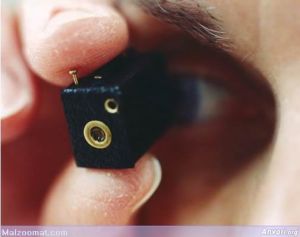
Miniature Art — I happened across this collection of photographs/miniatures by accident while working on an Inventors’ Workshop challenge.  There’s something fascinating about seeing the world from the Brobdignagian point of view, and though some of the pictures in this collection are clearly the work of a somewhat quirky sense of humor and propriety, they’re fascinating, fun, and a great way to start a discussion about scale in math, form, function, and design in science, point of view in literature or art, and ‘just why are the Belgians so fond of Mini-Europe anyway?’ in geography.  🙂

Behind the Scenes at the Harvard Museums — Have I mentioned yet my firm belief that a lot of us who work in museums do so because we really like getting to go through the ‘staff only’ doors to see the cool hidden stuff?  Wired Science brings us some really beautiful photos of some of the strangest, coolest, most random hidden favorites from the Harvard Museum of Natural History.  (I notice they do not include the classroom where I had my Urbanization of Ancient Cultures class.  Which was cool.  And dusty.)

And finally, a graphics resource, just for the heck of it.  You have a pretty cool picture for an exhibit/mailing/program/birthday card, but really don’t know how to frame it or what color scheme to use?

Check out Pictaculous, which allows you to load a picture and then will give you a selection of color palettes from which to choose for further graphic design.  It’s a fun tool, and if you’re feeling really brave you can screencap your favorite palette and drop it right into your photo editing program to have available for your color selection tool.