The Past in Motion

This does not, I suppose, technically qualify as archaeology.

However, in the theme of really-cool-bygone-stuff, I bring you: The Animated Bayeux Tapestry.

This is no substitute for getting to see the real thing–the sheer immensity of this tapestry just does not convey on a video clip.  However, it’s a cunning piece of animation, and the foley artist involved clearly had a lot of fun with everything from the feasting noises to the horses to the ‘guuuuh’ and ‘gack’ sounds of battle.  And if you’re looking for a way to liven up the story of 1066 and the Norman Conquest, this is a fun way to go about it.

Have I whetted your appetite for tapestries, Normans, or movie-making?

Britain’s Museum of Reading has a great site about the Bayeux Tapestry, including an activities page which made me grin.  [Specifically the directions on how to make your own Norman soldier’s helmet.  (Halloween, anyone?)]

If it’s the sounds that really caught your fancy, check out Paul Orselli’s great recent blog post: Exhibit Designer’s Toolkit: Creating the Sounds of Gore and Squidge

And if you’re intrigued by the illustration style of the medieval tapestry, try your hand at the Historic Tale Construction Cit (presumably pronounced ‘kit’ as all ‘c’s are hard).  Write and illustrate your own story using figures, settings, and beasts from the Bayeux Tapestry–careful, this is a hoot and dangerously addictive to those of us who grew up loving computer programs like Storybook Weaver.  The image interface is pretty sound, too–you can resize and flip the image elements, as well as type captions, with the option to create several frames, save them, email them, and submit to a visitor-created gallery.

Archaeology in the News

There’s been a lot of fun stuff going on in the world to do with archaeology!

Upcoming local event if you’re in Boston:
Next week is Archaeology Week at the Museum of Science.  Though The Discovery Museums sadly isn’t going to be there this year, we were last year and it was a blast.  I highly recommend the Fair on Friday and Saturday.  Hopefully we’ll see you there next year, too!

Awesome new discovery in England:
Just a few weeks ago, news broke of a hoard of Anglo-Saxon gold and metalwork found in a private farmer’s field by an amateur with a metal detector.  More details on Huffington Post and more pictures on National Geographic.

For kid-friendly background on the Anglo-Saxons, check out the BBC Primary History site here, including activity suggestions on the Teacher Resources page.

There aren’t a lot of metal working simulation activities out there for kids–I intend to do some playing around with aluminum foil to see if I come up with anything fun, and if I do, I’ll be sure to post it.

Buried streetlights surface on Governors Island

Buried streetlights surface on Governor's Island

Archaeology as a Character in Art:
Have you ever heard of Goverthing, the lost New York settlement last seen around the mid-1950’s?  Neither have most other people, but in a really neat confluence of art, imagination, and archaeology, visitors to Governor’s Island witnessed a dig uncovering this buried town.  Playing with the ideas of how we look at history, what we believe based on what’s buried in the ground, and just how gullible people are or aren’t, this exhibition looks like it was a lot of fun.

Windows on the World At Large (And Small!)

Today I bring you a few ‘fun-with-photos’ links.

The Infinite Photograph from National Geographic’s Green Guide — You’ve probably all seen those really cool photocollages: VanGogh’s Starry Night redone through tiny pictures from NASA, Yoda reconstructed with a million Star Wars screencaps, etc.  If you’re anything like me, you’ve wished over and over for a magnifying glass while you were looking at them–fortunately, the folks over at NG seem to be a lot like me.  *wink*  Their Infinite Photograph gives you an opening scene, into which you may zoom to see how it is constructed out of hundreds of other photographs, and keep zooming in until you get an entirely new scene–then start zooming all over again from there.  Not just a really whizbang techno effect, it’s also a collection of incredibly beautiful images from all over the world.  And if you’re lucky, it will also inspire you to pick up your camera and head outdoors.

Miniature_01_camera

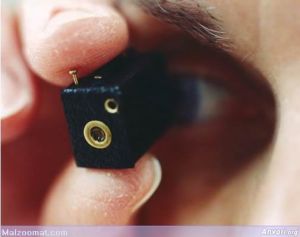
Miniature Art — I happened across this collection of photographs/miniatures by accident while working on an Inventors’ Workshop challenge.  There’s something fascinating about seeing the world from the Brobdignagian point of view, and though some of the pictures in this collection are clearly the work of a somewhat quirky sense of humor and propriety, they’re fascinating, fun, and a great way to start a discussion about scale in math, form, function, and design in science, point of view in literature or art, and ‘just why are the Belgians so fond of Mini-Europe anyway?’ in geography.  🙂

Behind the Scenes at the Harvard Museums — Have I mentioned yet my firm belief that a lot of us who work in museums do so because we really like getting to go through the ‘staff only’ doors to see the cool hidden stuff?  Wired Science brings us some really beautiful photos of some of the strangest, coolest, most random hidden favorites from the Harvard Museum of Natural History.  (I notice they do not include the classroom where I had my Urbanization of Ancient Cultures class.  Which was cool.  And dusty.)

And finally, a graphics resource, just for the heck of it.  You have a pretty cool picture for an exhibit/mailing/program/birthday card, but really don’t know how to frame it or what color scheme to use?

Check out Pictaculous, which allows you to load a picture and then will give you a selection of color palettes from which to choose for further graphic design.  It’s a fun tool, and if you’re feeling really brave you can screencap your favorite palette and drop it right into your photo editing program to have available for your color selection tool.

IdeaBox: Altoid Tins

ideabox altoids

In a past life, I must surely have been a magpie.  (Oooh, shiny!)  I have always been an irredeemable collector, and in my current job, I have all the excuses I need to keep bits and pieces around for inspiration.  The areas on, around, and under my desk contain feathers, stones, LEGO’s, rubber ducks, silly putty, macaroni flowers, solar powered toy cars, and a whole box of interesting shaped containers, foam pieces, springs, and whatnots.  From these pieces of rubber tubing, marbles, fabric swatches, and more, I get program and exhibit ideas all the time.

altoids

And so I bring you the fun and funky ideabox links for today: Five Reuses for Altoid Tins.  Planet Green’s top five include building tiny speakers, a solar gadget charger, a wallet, a survival kit, and a geocaching box (think I might have to try some of those!).  Or, for the more artsy among us, a watercolor traveling kit, and create your own travel candle.  (Though I wonder about the heat–I’d recommend putting it on a plate or coaster before burning!)

Here are a few other (less technical!) idea starters:

– Altoid tins are magnetic!  Turn one into a tiny on-the-road game box with magnetic pieces.  What else might you be able to do with magnets and an Altoids box (or two, or three, or more?)
– Glue a mirror in the lid and keep your kleenex in the bottom.  (Don’t you hate how those little plastic packets let your tissues get all shredded in your pocketbook?)
– Sound shakers and mini-cymbals for the extremely young musician, when you’d rather save your pans. (The round tins are particularly good for this one!)
– Start seeds in the world’s tiniest window-boxes.
– Make a fold-out mini-storybook, photo album, or travel journal with accordion-style pages.