Twelve Days of Popcorn (Day 2): Underwater Art

It’s far too nippy here in New England to dig out the SCUBA gear, but a girl can dream, especially when faced with some truly beautiful marine-inspired artworks.

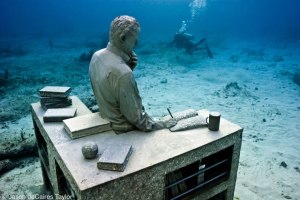
British sculptor Jason deCaires Taylor creates artificial coral reefs, not by submerging old train cars, buses, and other mechanical detritus as is often done elsewhere, but instead by creating beautiful sculptures which evolve over time as they are colonized by marine creatures. These underwater sculptures can be beautiful, spooky, or strange, but are always compelling, from their pristine state to their eventual end as the heart of a new kind of natural beauty.

The Dream Collector, by Jason deCaires Taylor. Click for link to original image.

And for those of you who prefer to keep your feet dry while checking out marine art, there is the incredibly cool collaborative crafting of the Hyperbolic Crochet Coral Reef, currently on display at the Smithsonian.  Based on the brain child of mathematician/professor/artist Daina Taimina, who first figured out how to use crochet to create this kind of mathematical form, others have gone on to build huge reefs including the Smithsonian’s Community Reef, which took contributions from interested participants in the DC, Maryland, and Virginia area.

On the second day of popcorn, these ideas gave me glee — two coral reefs and a pop-up folding snow-bedecked tree…

Twelve Days of Popcorn (Day 1): Seasonal Papercraft

In recognition of the holiday season, I have decided to celebrate with twelve posts of things that make me happy, inspire me, make me think, or otherwise stick alluringly in my brain.  (Expect a bit more humor and a bit less curriculum!)

Today’s Topic: Seasonal Papercraft, with a highlight on origami and snowflake making

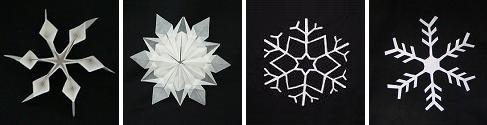
Photos from the Origami Resource Center

Round Up of Origami Snowflakes and Snowmen directions from the Origami Resource Center.  Very cool stuff.  I love the idea of using wax paper or patty paper so that you get the layered translucent snow-like effect.

Decorating the Origami Tree at the American Museum of Natural History:

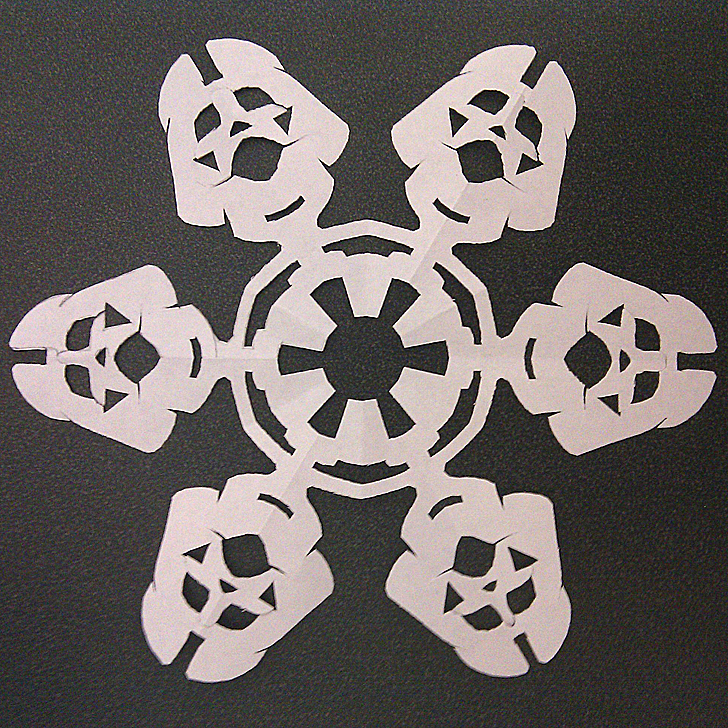
Photo by snowflake designer, see link for details

How to Make Star Wars Paper Snowflakes

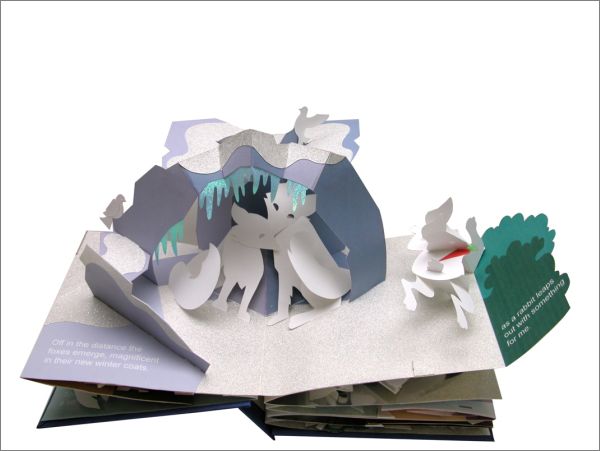
Robert Sabuda’s Winter’s Tale, a pop up book that makes me happy every time I open it.  His site has templates for creating all kinds of cool pop ups as well.

A page from Robert Sabuda's Winter's Tale


On the first day of popcorn, this idea gave me glee–a pop-up folding snow-bedecked tree…


Why Science Needs Art, and so do we all


“When we try to pick out anything by itself, we find it hitched to everything else in the Universe.”
John Muir

Every so often, when I tell people that I write a blog about interdisciplinary education for museums, schools, and the generally curious, the response I get is a generic “That’s cool!” while their faces say quietly “What?”  and “For heaven’s sake, why?”

Why indeed.  At its most flippant level, the answer is ‘because it’s fun.’   However, there are serious reasons to advocate for interdisciplinary learning, and every so often I feel the need to point out just how many people agree with me.

For instance, graphic designer, computer scientist, and author John Maeda (who also happens to be the founder of Second Life) claims that “Innovation is born where art meets science.” In answer to the question “Why does science need artists?” he replies

We seem to forget that innovation doesn’t just come from equations or new kinds of chemicals, it comes from a human place. Innovation in the sciences is always linked in some way, either directly or indirectly, to a human experience. And human experiences happen through engaging with the arts – listening to music, say, or seeing a piece of art.

For this reason, he advocates for turning the tenets of ‘STEM (science, technology, engineering, and math) education’ into ‘STEAM,’ including the arts to promote innovative thinking and a greater acceptance of ambiguity.  (For more good background on the whats and wherefores of STEM Education, check out this excellent New York Times article, “STEM education has little to do with flowers.” Unsurprisingly, this article also points out the many benefits of looking at the connections between these subjects as opposed to the ‘silo’ approach.)

The Common Core Standards, which are slowly being adopted nation-wide, are also supportive of interdisciplinary education, though the standards are of necessity organized currently under the major umbrellas of English language and literature, and Mathematics.  Consider this benchmark for third grade, located under the ‘comprehension and collaboration’ strand in the English standards:

Determine the main ideas and supporting details of a text read aloud or information presented in diverse media and formats, including visually, quantitatively, and orally. [emphasis mine]

Visually–the reading and comprehension of artwork, symbols, photography, and motion pictures.
Quantitatively –the reading of charts, graphs, and numerical results.
Orally — the comprehension of spoken words, theater, lyrics, music, etc.

These are true interdisciplinary skills, necessary in all fields and for life in general.  And beyond the development of life skills, interdisciplinary education and exploration has been shown to promote creativity.
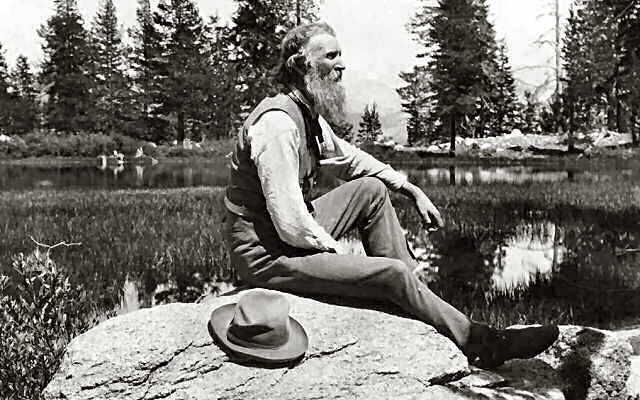
John Muir, environmentalist

The power of imagination makes us infinite.
~John Muir

Miller Mc-Cune reported this spring that studies have shown that experiencing different cultures can make you more creative, as can thinking of yourself as a seven year old.    (As I regularly travel and visit toy stores, this is good news for me all around.)

Check out The Walters Art Museum’s two interdisciplinary classroom units at their teacher resource page, Integrating the Arts, for some examples of how this could be done in connection with a museum or in  your own space.
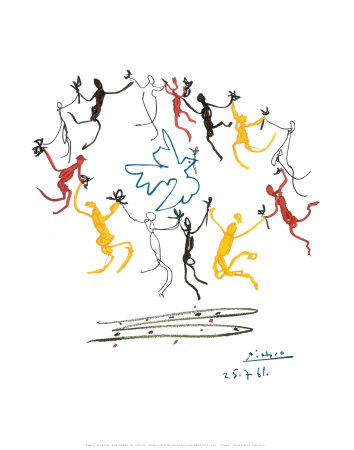
The Dance of Youth, by Pablo Picasso

“All children are artists.  The problem is how to remain an artist once he grows up.”
~Pablo Picasso

What steps can be taken, once we’re ‘grown up,’ to keep that creativity alive?  (Other than visiting museums and giving ourselves permission to play?)  The Idea Hive has some suggestions: The Subtle Art of Provoking Serendipity , including gathering diversity and making connections.  Interdisciplinary learning in the workplace as well as the school and the museum.  I love it.

‘The most exciting phrase to hear in science, the one that heralds new discoveries, is not “Eureka!” but “That’s funny.”‘
~Isaac Asimov

Has all this put you in the mood for some fresh ideas?  Open up the multimedia Moodstream created by Getty Images and let your brain start popping.
Cool and Creepy Archaeology in October

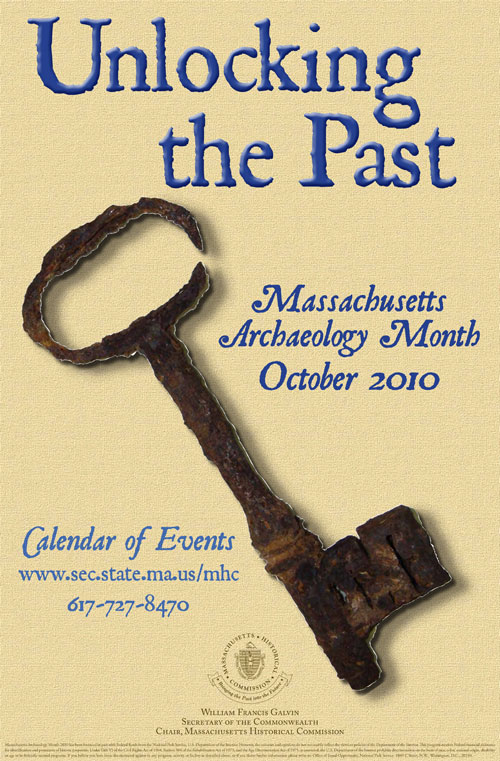
The month is almost over, but I can’t let it go completely by without tipping my hat to Massachusetts Archaeology Month.

Since life here at PEM has been very focused on the amazing Emperor’s Private Paradise exhibit, I have to admit I’ve been more tuned to archaeology stories from that corner of the world recently, including this incredibly cool discovery which may make people reevaluate historical trade routes: Could a Rusty Coin Re-Write Chinese-African History?

In celebration of which I give you Mint Your Own Coin from the American Museum of Natural History’s OLogy page, which also features fun interviews with archaeologists, make-your-own archaeological stationery, artifact features, and more.

If you’re looking for other online archaeology interactives, check out the extensive list at Fun Archaeology For Kids.  The list includes lots of different cultures and time periods, with a great many of the interactives created by museums and other reputable sources.

And now for the creepy. (It is, after all, the week before Halloween, and I’m not entirely immune to the Salem atmosphere.)

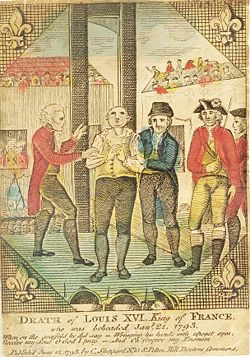
Royal blood may be hidden inside decorated gourd.  (eeurgh!)  An intricately decorated gourd bears traces of blood which may very well have come from a handkerchief soaked in the blood of the beheaded King Louis XVI of France.

Personally, I prefer my blood 100% Pure Fake, as in the book reviewed by exhibit interactive wizard Paul Orselli.  And if that’s not enough gross and gucky exploration for you, check out Wastewater: Sewage in your face! from the San Diego department of public works, which, among other more educationally rewarding activities, has recipes for making soda and cake that look like sludge.

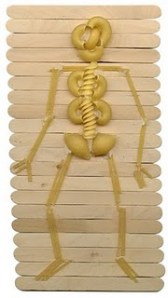
All creeped out?  Build an Egyptian tomb, uncover a prehistoric burial, or just make a pasta skeleton, courtesy of artist Kathy Barbro, directions here (or click the picture).

Pasta skeleton designed and photographed by Kathy Barbro. Click for link.

Holograms, Impossible Objects, and Floating Furniture

An impossible shape, the Penrose triangle, in Gotschuchen, Austria, erected in 2008 by the "physics meeting" association as part of the project "Physics on Spielplatz" Used with a creative commons license. Click for source.

Impossible Objects

In one of my recent posts I mentioned that studies have shown that we start recognizing impossible objects when very young.  Fortunately, they continue to be fascinating, and have led to amazing art, interior design, and stories like DB Johnson’s Escher-inspired Palazzo Inverso.  (I’m still holding out for a closet that’s either Narnia or a TARDIS, but while they are working on making tractor beams a reality, pocket dimensions to increase the size of my apartment are not on next year’s Christmas list.)

…Though I might want to talk to this guy: Jerry Andrus’s Illusions.  The warping clouds are enough to give you a headache, but the bolt-through-the-impossible-nuts is pretty impressive.  Even after seeing it repeatedly my brain still gets tricked.

Check out other life-sized impossible sculptures like the one above from Austria here.  Almost all of them are the sort that require you to look at them from one particular perfect vantage point: if you’re feeling inspired, there are directions on creating your own impossible triangle sculpture at Cool Optical Illusions: Penrose Triangle.

Holograms

If they’re working on tractor beams, surely holodecks aren’t far behind.  Eye Spy featured artist Betsy Connors is a holographer here in Boston, and likes to work with whole-room holographic installations, though her works currently showing at the Peabody Essex Museum are discrete elements instead of a single larger piece.  Her route to holographic creations includes lasers, a giant sand table, mirrors, film, and a multi-step developing process (see the PEM interview with her here).

If you’d like to try a similar effect without the heavy-duty equipment, William Beatty’s got detailed instructions and a lot of related links on creating what he calls a “Scratch” or “Abrasion” hologram.

Through the Looking Glass

Optical illusions are a great inspiration for unusual decoration.  These designers have gone beyond painting the roses red, however, to create chairs and couches that seem to (or maybe even will) float, exploding bureaus, room-lengthening curtains (aha!  there’s my pocket dimension after all!) and invisible tables.

Still here? After all those cool ideas?  Fine, have a book trailer for the aforementioned Palazzo Inverso, a very entertaining story you read front to back, and then upside down back to front.  And when you’re done with that, go read Mirror Mirror, which is a set of fairy tale poetry from two points of view, read down the page and then up it again.

Art, Astronomy, and Alien Adaptations

On my recent vacation in Maine, I spent a mesmerizing half hour or longer on the dock in front of our cabin, head tipped all the way back to take in the wealth of stars and splash of Milky Way, unsure whether I was feeling dizzy because of the depth over my head or the lake under my feet.   Add in the fact that it was during the Perseid meteor shower, and you had the recipe for perfect wonder that reminded me why I spent several years growing up convinced I was going to be an astronaut.

Fortunately for those of us who are sadly earthbound, there are folks up there willing to share the wealth: Twitpics from Space.  Not to mention NASA Spots Signs of Life…On Earth, in which some of those nifty NASA folks have figured out how to search for bacteria trapped in ice by satellite.  Next stop, Mars!

I love reading stories about what life is actually like on the International Space Station or for astronauts in general, but I get an almost equal amusement and fascination out of what people *thought* life in space could be…and how many of those ideas are still around in slightly altered forms, like eco-designer Vincent Callebaut’s floating water-purifying resort and eco-refuges for when we lose the battle with climate change (dystopic design at its prettiest).

Hear Auden read “The More Loving One” and read the text of the poem at NPR’s 100th anniversary article on Auden’s birth here.

The night sky has a kind of mystery that sometimes only artists and poets seem to be able to capture…and sometimes science helps solve those mysteries, more than a hundred years later!  Forensic astronomer solves Walt Whitman mystery (Always nice to see those interdisciplinary learners in action!)

Feeling inspired to do some stargazing?  Keep your eyes open and antennae out…the BBC reports that “Alien hunters ‘should look for artificial intelligence'” while scanning the sky.  While you wait for ET to ring the doorbell, bring the search for alien life to your classroom with the web-quest Design a Space Alien, designed for middle school students, and give your studies of earth science and evolutionary biology an extraterrestrial twist.

Happy International Literacy Day

International Literacy Day, according to the calendar hanging in my office, was technically September 8th, but as I have been having inexplicable glitches attempting to access WordPress, I’m a little behind.  (But the Salem LitFest isn’t for another week, so I’m still in the running!)

Therefore, in the name of celebrating cool stuff, which today is reading (who am I kidding?  We celebrate reading all the time in my world), I bring you neat thoughts about literacy, and a handful of reading-related activities.

First of all, good news for those of us who have more books than shelves to put them on: Book owners have smarter kids from Salon.com

And next, hear about how educators at the Eric Carle Museum focus on ‘reading the pictures’ in their storytimes as much as reading the words, improving comprehension and engaging kids and adults in the art of illustration: Noggin video

Looking for good books to read?  Ask your local librarian or check out some useful lists on Reading Rockets, helpfully organized by theme.

Also, don’t forget to check out the awesome interdisciplinary lesson plans available at the Kennedy Center’s ArtsEdge–many of them have literacy themes.  One of my favorites is the Adjective Monster, a ‘paper sculpture’ art and geometry project built around Go Away Big Green Monster by Ed Emberley.

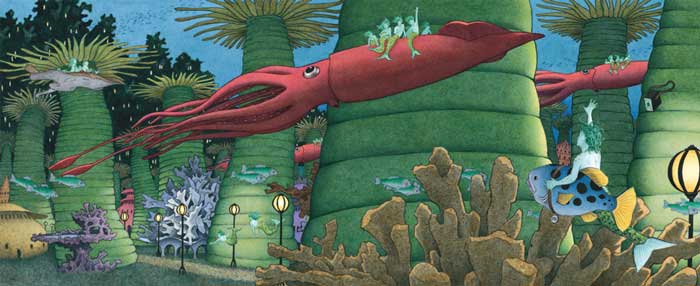
Illustration from Wiesner's Flotsam

Inspired by the ‘reading pictures’ video?  Everyone loves a good wordless book, and David Wiesner has created several.  Try out this very cool classroom photography project featured in School Library Journal and inspired by Flotsam, with neat tie-ins to science and history.  Kudos to my Anonymous Tip-Master for pointing this one out! I love how crazy and beautiful his illustrations are, and part of a long tradition of fish-exaggerations.  In 1719, the first full-color illustrated book of fish was published, including several fish that were figments of the illustrator’s imagination!  (See The Fantasy Fish of Samuel Fallours for the scoop.)

For more science tie-ins, read Flotsam paired with Tracking Trash, a very cool book about ocean currents and the problem of the ocean as ‘plastic soup’ [National Geographic].  Sector 7 is also a personal favorite, and great for teaching story-boarding or introducing a unit on clouds.

And lest we think all literacy only has to do with kids old enough for words, a neat article about visual literacy that begins developing in infancy: Escher-Themed Nurseries?  Even 4 month olds can recognize impossible objects from Cognitive Daily.  (You thought I’d manage not to include a reference to Eye Spy in this post, didn’t you?  Tune in next time for more cool stuff to do with impossible objects and how to create your own scratch holograms!)

Dinosaurs, Art Photography, and…Toddlers?

Though you’d never know it from my last several posts, there are actually numerous cool and exciting things happening at the Peabody Essex Museum which are not related to Eye Spy.  However, since the Art & Nature Center is all about things interdisciplinary, we are frequently invited to come play in other departments’ sandboxes.

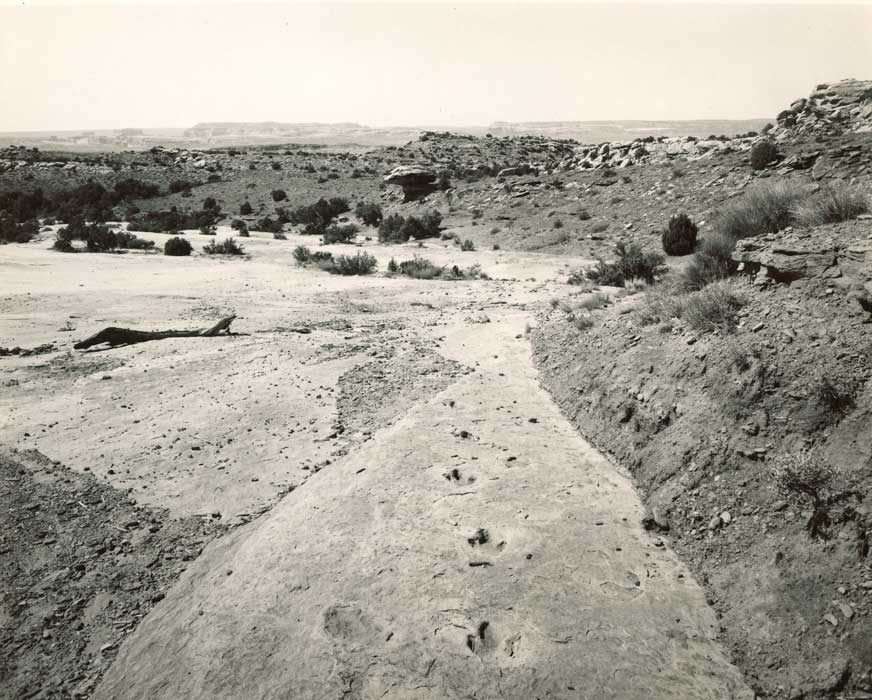
One great example was yesterday’s program planned by our Family Programs staff– “Dinosaurs at the Museum.”  Capitalizing on young folks’ interest in all things dinosaur, this program tied in to the current photography show on exhibit, Imprints: Photographs by Mark Ruwedel.

Klondike Bluffs Trail Site, #15 1999; Mark Ruwedel; Gelatin Silver Print; Collection of the artist, courtesy Gallery Luisotti (Santa Monica, CA)

A screening of the cartoon classic Land Before Time kicked off the morning, followed by make-your-own dinosaur feet (which tie on over your shoes, adorable!).  The program finished up with a trip upstairs to Imprints to see the very cool photographs, and yours truly in a pith helmet, hanging out with a pair of real dinosaur footprints in stone (three-toed carnivorous, 215 million years old), and a fossilized dinosaur tooth, both from PEM’s natural history collections.

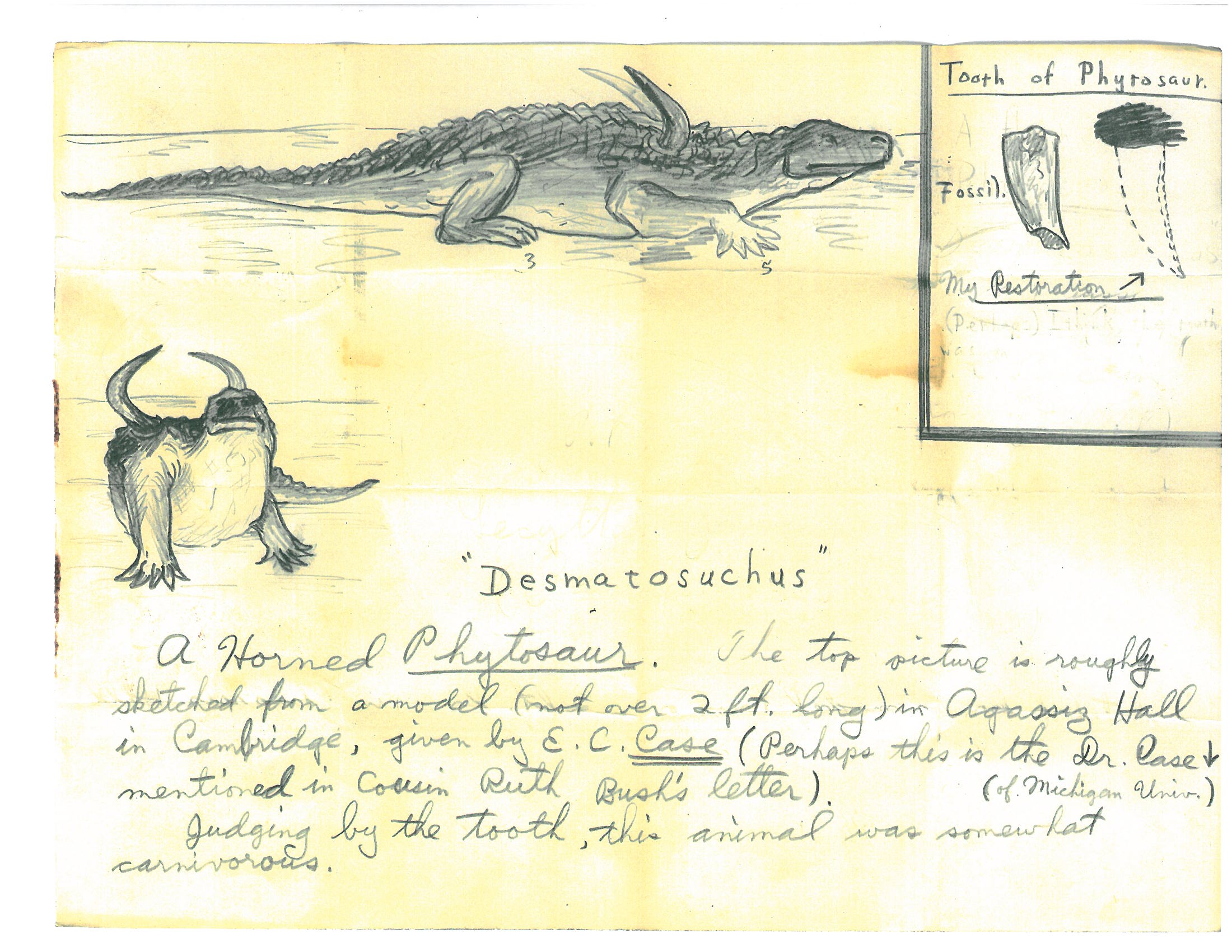
The dinosaur tooth was my favorite story of the day: donated to the museum in a ladies’ scissors box from the  1800’s, it had with it a calling card and a sketch of a model from Harvard’s museum of natural history, back when it was called Agassiz Hall.  Interestingly, the card claimed it was a phytosaur tooth, but the sketch also identified it as belonging to a desmatosuchus.

Sketches from one of the fossil's owners which was donated with the probable-phytosaur tooth.

When my research on phytosaurs turned up nothing that looked like a desmatosuchus, I dug a little deeper to find out that while both are ‘archosaurs’ — precursors to the dinosaurs and looking rather like crocodiles — desmatosuchus was a plant eater and phytosaur a carnivore. I then got to present all the clues to our smallish (and even tallish) visitors and ask them which dino *they* thought our mystery tooth belonged to.  Great fun all around, and at least three short visitors, two of them girls, informed me that when they grew up they were going to find out for sure.  It made me smile (and think about the book Boy Were We Wrong about Dinosaurs, a fun read).

What did we decide about our mystery tooth, after all that?  Given the pointy nature of PEM’s mystery fossil, I’m throwing in my vote that our tooth once graced the mouth of a phytosaur, and the majority of yesterday’s visitors agreed with me…but I’d be happy for an actual paleontologist to come by and prove me wrong.

And so today I offer you some more ways to share the dinosaur-joy.

The World of Dinosaurs

National Geographic: Prehistoric World — Want to know what’s new in the world of dinosaurs and their neighbors?  Great articles, artistic reconstructions, and meaty issues here.

Jurassic Gardens — Create a terrarium populated with your favorite model dinos!

  • Useful list of supplies and possible plants from National Geographic here.
  • Inspiration for an outside dinosaur garden at Lucy’s Garden here.
  • Go organic with some of the other plant and compost suggestions from Organic Flower Gardening with Kids here.
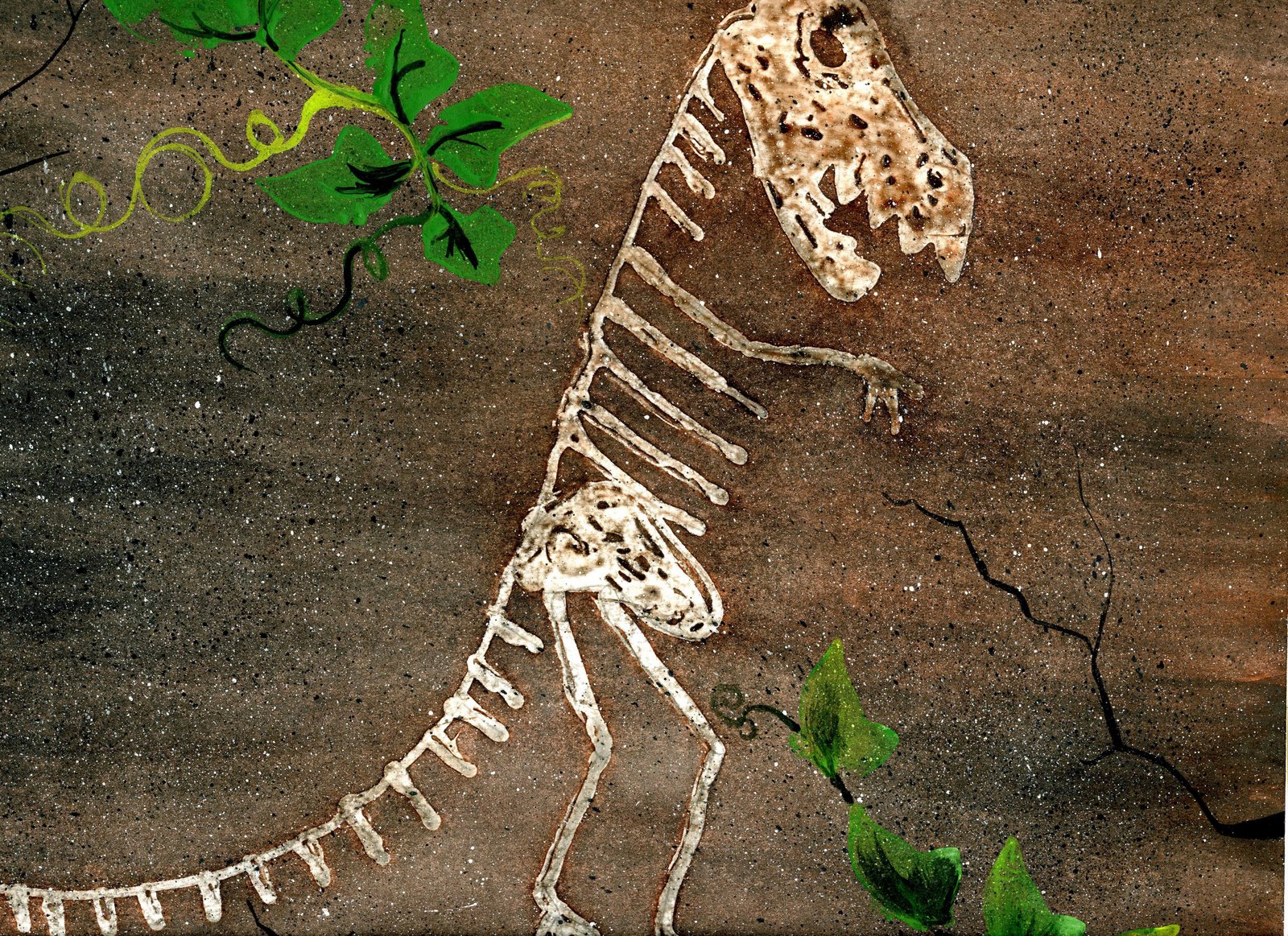
Dinosaur fossil art created with the 'glue-resist' technique.  Credit to Gail Bartel. See link below.

Dinosaur fossil art created with the 'glue-resist' technique. Credit to Gail Bartel. See link below.

Fossils!

  • Making fossil-impressions with salt dough and coffee grounds from Kaboose here.
  • Pteranodons and T-Rex skulls from milk bottles directions here.
  • Glue-resist dino bones art directions  here.

Dinos Walking

  • See Sue run!  Make your own T-Rex flipbook, downloadable from the Field Museum here.
  • Songs and Fingerplays from AtoZkidsstuff.
  • Origami Dinosaurs, from simple to complex, with information about their species, here.

Light, Shadow, and Trees

It’s been blinking hot, which means that everyone I know has been in search of and grateful for even a tiny scrap of shade when forced to be outside the last few days.

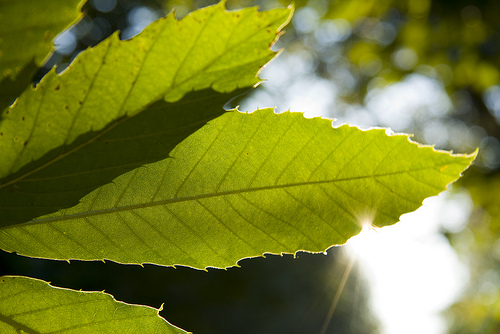
One of the things I love about shade on a sunny day is looking up through the leaves to see the patterns and variations of green that you get from the overlapping leaves.

Photo credit to chamberlain_tim

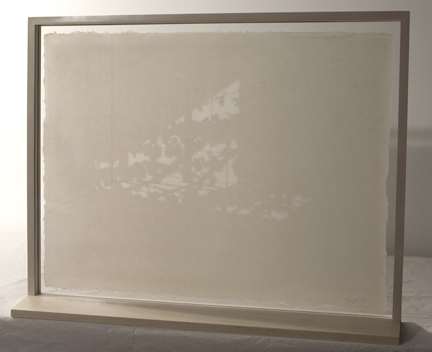
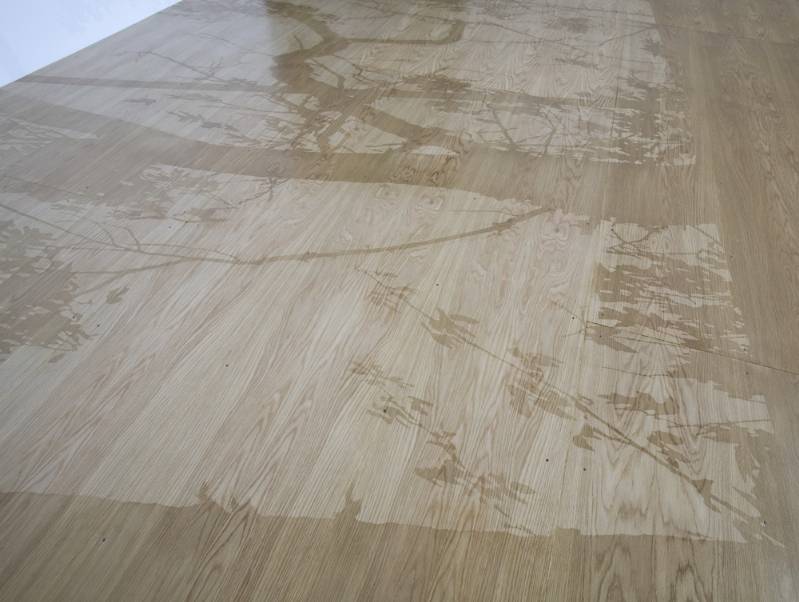
One of the artists featured in Eye Spy clearly feels the same way.  Mary Temple is an artist who works primarily with concepts of light and shadow — tree shadows falling on buildings, through windows, across floors, etc. Many of her works are either photocollage or painted to the sharpness of a black-and-white photograph, but one of my absolute favorites of hers is neither.

Corner Light (Grape Arbor), 2006 by Mary Temple

In Corner Light (Grape Arbor), the image you see is actually part of the paper–sections of it have been washed or scratched away to create a translucent window within the paper which the light then shines through.  Though this piece is a lot less in-your-face whiz-bang-wow than a lot of the works in Eye Spy, in the early mornings when the Art & Nature Center is quiet it’s one of my favorite pieces to just savor for a little while.

If you’d like to make your own light garden piece, try out my Layered Light Quilts activity.  It’s creation by addition instead of subtraction to make it easier for kids and also easier to find the supplies–but if you hang one in your window you’ll get some of that same dappled-leaf glow.

Download the pdf directions here:  Layered Light Quilts directions

Raise (detail) from the series "Light Installations, 2002-present", 2008 by Mary Temple at Western Bridge, Seattle WA

Hunting Reflective Surfaces: Eye Spy Opening Day Preparations

As some of you may have realized, my longer-than-usual break between posts has been occasioned by the looming approach of Saturday’s opening day for the Art & Nature Center’s new exhibition, Eye Spy, Playing with Perception.  This show features a variety of artists, techniques, and ways of thinking about how and why we see and perceive the world the way we do.  As this is a year-long show, I’m going to limit myself today to talking about some of the very cool pieces that use mirrors, and one of the activities I have planned for opening day.

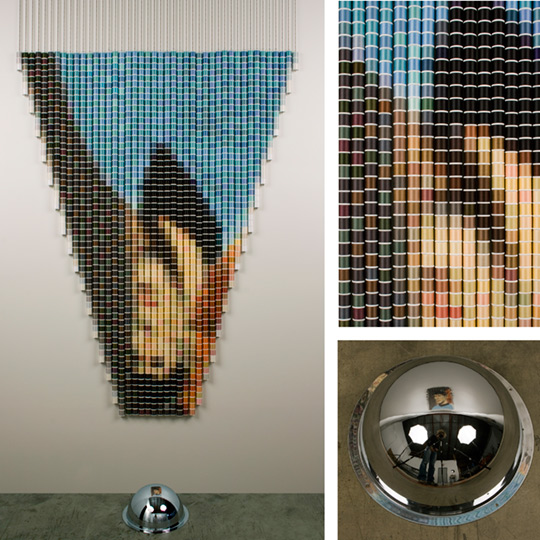
One artist featured in Eye Spy whom I’ve mentioned before is Devorah Sperber, who does remarkable things with thread.  We have three of her works in Eye Spy, one of which is not only pixellated into thread spools and hung upside down, but is also an anamorphic distortion, meaning that it is warped to a very particular angle so that it can only be deciphered through looking at a half-spherical mirror.

Sperber's anamorphic Spock

Sperber's Spock 2 (anamorphic), 2007, *1,702 spools of thread. Not the anamorphic work we have in the show, but awesome in its own right. Click to see more of Sperber's "Mirror Universe" works.

Another artist who does remarkable things with mirrors is Daniel Rozin, whose pieces Self-Centered Mirror and Mirror Number 5 are featured in Eye Spy.  (You can see a shot of Self-Centered Mirror on the PEM Eye Spy exhibition page linked above.)

Therefore, one of the activities we’ve planned for Saturday involves sketching your own anamorphic portrait.  Not only will we have two funhouse mirrors to play with your reflection, but we also wanted smaller, cool ‘shiny’ stuff that you could hold and examine your reflection while sketching your warped self.  (No judgment in that adjective, merely a comment on the convex and concave!)

Photo credit to "Brendan Alexander's Perplexing Times." Click for link.

Here’s the question…where do you find shiny stuff that will give you those cool reflections, clearly enough that you have a prayer of sketching the result?  The secondary question is…how do you do that without spending oodles of money?

Having discovered to my dismay that not all spoons are anywhere near reflective enough, I embarked on a shiny-surface hunt, accompanied by one of the most creative people I know, who prefers to remain anonymous.  Our first stop was the local dollar store, which was not as helpful as I hoped–however, we did locate some reasonably shiny spoons, 4 for a dollar, a kid’s pair of mirrored sunglasses, and two cosmetic mirrors that had a normal side and a magnifying side.  Total output, about 8 bucks.  Not bad, but not anywhere near enough.

Next stop, thanks to my creative consultant, was the local hardware store.  Two women walking into a hardware store is a perfect opening for any number of well-meaning and only occasionally condescending offers of assistance from the folks who work there, and this trip was no exception.   Imagine, if you please, my utter delight in telling the clerk who offered his assistance that I was looking for ‘shiny stuff.’  He looked at me like I had three heads–and when I went on to explain what I needed it for, he continued to look at me like I had three heads, and had also hit him over the head with a 2×4.  (I love getting reactions like that.)  Meanwhile, while he was telling me that they were really more ‘focused on practical stuff’ and that he doubted I’d find anything, my creative consultant was peering around into the next aisle and beginning to call out all kinds of cool stuff she was finding.

Score one for the educators.

Final haul from the hardware store (after regretfully passing over some very cool and very expensive chromed faucets and other fascinating bits and pieces) included concave drawer handles, stovetop reflectors of a few different sizes, and a few lengths of chromed pipe, including one that is shaped like a U.  (I’m looking forward to handing that to some kid and saying ‘look, you’re on U-tube!’ tomorrow.)  So now I have a basket of stuff–come and sketch tomorrow!

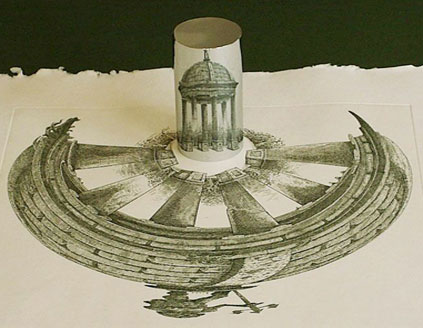
…And if you’re not feeling up to that, check out our custom-made anamorphic puzzles, in which you can’t assemble the warped puzzle pieces and make sense of the image that results without using a cylindrical mirror.

One of the historical anamorphic sketches that was the inspiration for our Anamorphic Puzzlers!