Found Poetry in Altered Books

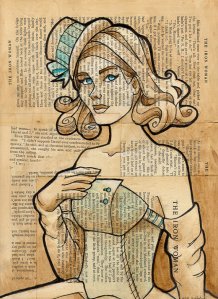
"Iron Woman" steampunk print by Karen Hallion

“Iron Woman” steampunk print by Karen Hallion

As a librarian’s daughter, an avid reader, and an English major, I am always attracted to wordy art projects, and I often find artworks made out of recycled print absolutely beautiful while simultaneously wincing over the fact that one must deface books to create them.  After all, books are meant to be read, and what are they when they are no longer readable?
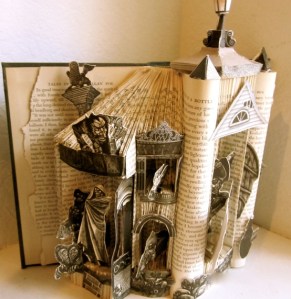
Poe's Short Stories, altered book art by Susan Hoerth
Poe’s Short Stories, altered book art by Susan Hoerth

book_roses

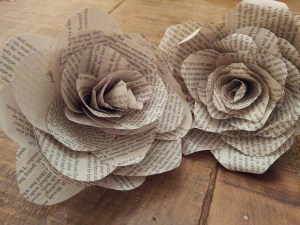
Paper roses made from book pages by Twigg Studios

For some artworks like the roses above, one could easily substitute with magazine pages or old maps (about which I feel decidedly less squeamish), and for others newspaper will also work.

However, I have finally lit upon a type of altered book artwork that bothers me less than others, because while it still alters the original intent, the book still gets ‘read’ in a new fashion.

Found Poetry in Altered Book Pages

As with the roses, this is an activity that can be done using other forms of the printed word (newspapers, magazines) and can also be done without altering the original text at all (words captured and written down in a new form from museum object labels, etc.)  However, it combines both poetry and the visual arts in a way that is perfect for the programming that we do at PEM for the Massachusetts Poetry Festival.  (Guess what’s going in this year’s program?)
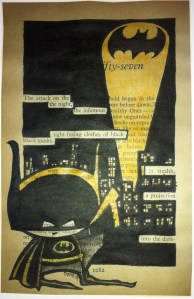
The image I saw on Pinterest that started it all: A Batman poem out of some other detective/adventure story

The image I saw on Pinterest that started it all: A Batman poem out of some other detective/adventure story

How does Illustrated Found Poetry work?

  • Pick a piece of text with a decent amount of wording to it.
  • Read through it for the sounds of the words and not necessarily the narrative or the original author’s intent.
  • Find a theme to the words that inspires you.  Use as many or as few as you like: cherry pick a word here, a phrase there, etc.
  • The one limit to working on the original sheet is that you cannot rearrange the words to your own liking–the poem flows in the same direction as the original text did.
  • Pencil boxes around the words you want.
  • Pencil in any illustrations (doodles, sketches, details) that help to give your new poem mood, shape, or further depth.
  • Use marker to darken the boxes around your poem and color in the details of your illustration.  You may want to use highlighter within the boxes for your poem to help pick it out of the illustration, depending on how much color there already is in your drawing.
  • Use black marker to cross out any words left that are not part of your poem or are already obscured by your illustration.
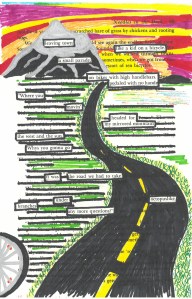
"Leaving Town" by Meg Winikates, originally from a page of The Walk West by Peter and Barbara Jenkins

“Leaving Town” by Meg Winikates, originally from a page of The Walk West by Peter and Barbara Jenkins, click to read in full-size

The plan is to have a bunch of genres of books available from which to select pages: sci-fi, mystery, classics, memoirs, maybe even some more technical books.  Hopefully this will show people that poetry can be found absolutely anywhere.  The 2013 festival will be held May 3-5 in numerous venues around Salem–I’ll be sure to let you know how it goes!

Links for images in this post: Karen Hallion’s Etsy Page
How to make Book Roses
Poe’s Castle Short Stories Altered Book
Batman Altered Book Poem Illustrated
In Search of Alternative Art Making Materials

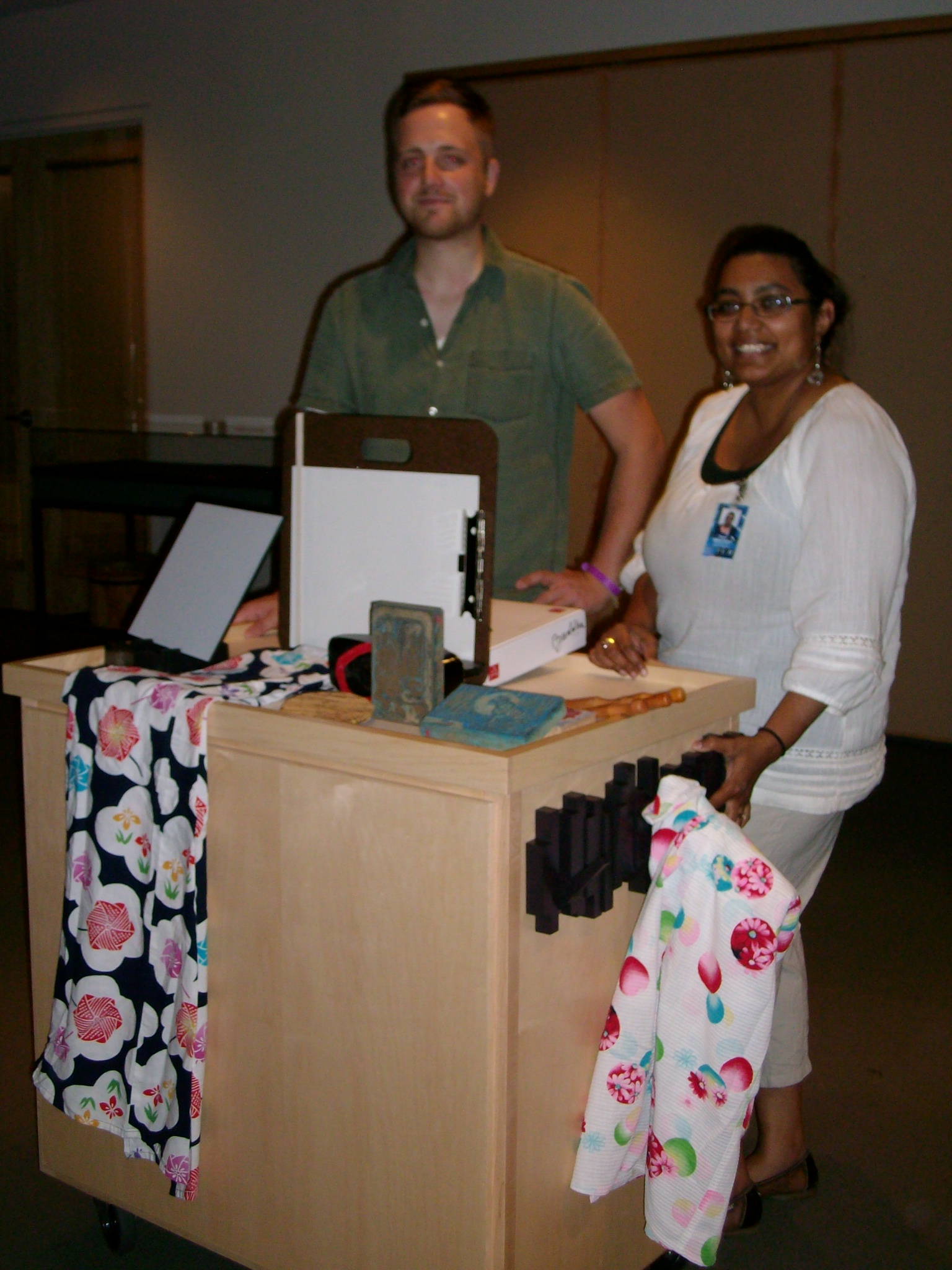
Art making in the gallery, solution 1: interactive art cart with touchable materials, sketching, and ‘safe’ art-making alternatives like sumi-e water painting and scratch art

PEM is undergoing an exciting construction phase which means our art studios are currently out of commission, a grave sadness to those of us who are in love with messy art projects.  Many of the materials we’ve used in the past are on the “I seriously doubt it” list when talking about doing art activities in alternate spaces like galleries or the museum’s atrium.  Such materials include recycled make-up, a variety of paints (though the atrium space can take a few more of those than galleries obviously can), liquid glue, melted wax, silk screening, glitter anything, anything with sharp tools (for stamp cutting, some clay tools), and even most clay is on the iffy side.

So what to do?

Fortunately, I’ve been collecting fun ideas in preparation for this whimsical construction period, so here are a few I’m looking forward to trying out in the near future:

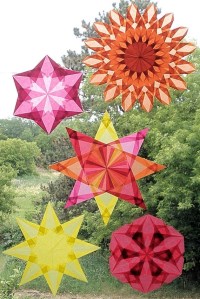
Multicolored translucent paper folding (click the inspiration image to go through to the artist’s site)

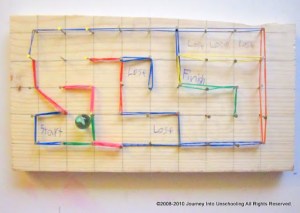
Kinetic Rubber Band Art (click the image to go to the directions)

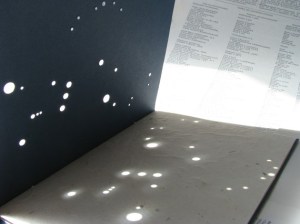
Holepunch Art (click the image to go to the artist’s site)

Teaching Activist Art

A few weeks ago for PEM’s Arts Adventures Club, I got the opportunity to play ‘guest artist’ and lead an afternoon session focused on art with a message. I had the chance to work with several different sets of kids, and found that (unsurprisingly) it worked best with the oldest group, who ranged from 12-15. I used the following set of slides with all groups, just using slightly different language to carry the examples, and even in the group of younger kids, they turned out some fantastic works of their own.

The structure of the lesson started with a recap of the tour of public art and a reference back to the artist they’d been introduced to in the morning, and then a discussion of the motives behind activist art, using the slideshow and examples of works by Banksy and Shepard Fairey. Then we brainstormed possible topics for artworks of their own based on what interested or concerned them in their own lives: at school, at home, in their communities and in the wider world. Topics ranged from bullying and terrible school lunches to global warming and marriage equality. Next they sketched ideas and brainstormed words or quotes they wanted to include, recording it all in their art journals, and finally went on to create the finished product.

Educator shows group of students a sketchbook with a multimedia drawing/painting of a submerged city and overtaking sealife to express concerns about global warming.

Showing off the layered approach to creating a multi-media artwork

Inspired by the multi-layered prints and other works by Shepard Fairey, the camp coordinator and I decided to introduce the students to a few techniques to create a visually dense multimedia art piece.

Here are the steps we outlined for the kids, though we gave them the choice to depart from the steps as their own inspiration dictated.

1) Cover the page with a watercolor wash.

2) Add basic details in pencil.  Color as desired.

3) Create your own block print out of styrofoam or use the provided stamps to add depth, words, or repeated patterns.

4) Use mod-podge and a bone-folder to do newspaper transfer of print or simply collage black and white imagery to the top layer.

The final products were as varied as the kids that created them, and it was very fun to see them included in the “exhibition” the kids put on at the end of the week.

It’s the Most Wordiful Time of the Year

Happy National Poetry Month, Everyone!

As you know from previous posts (2010, 2011), I love this month.  I like seeing poems pop up on my RSS and Twitter and assorted other feeds; I like having excuses to talk about poetry (even more than I usually do), and I like giving myself time to read poetry in a more concentrated way.  This year,  I also liked developing a raft of new family-friendly art&poetry events for the museum.

The Massachusetts Poetry Festival is happening in Salem again this year, at the end of this week (Friday-Sunday).  PEM is a host for a number of reading and concert events from the larger festival (I’m particularly looking forward to the Typewriter Orchestra), but I’m also spearheading a collection of activities tying the visual to the verbal arts for kids and families, including a collaborative paper mural “Grow a Poet-tree,” make your own magnetic poetry, illuminated capitals word-art, a docent-led poetry tour, and a self-guided Poet Quest.

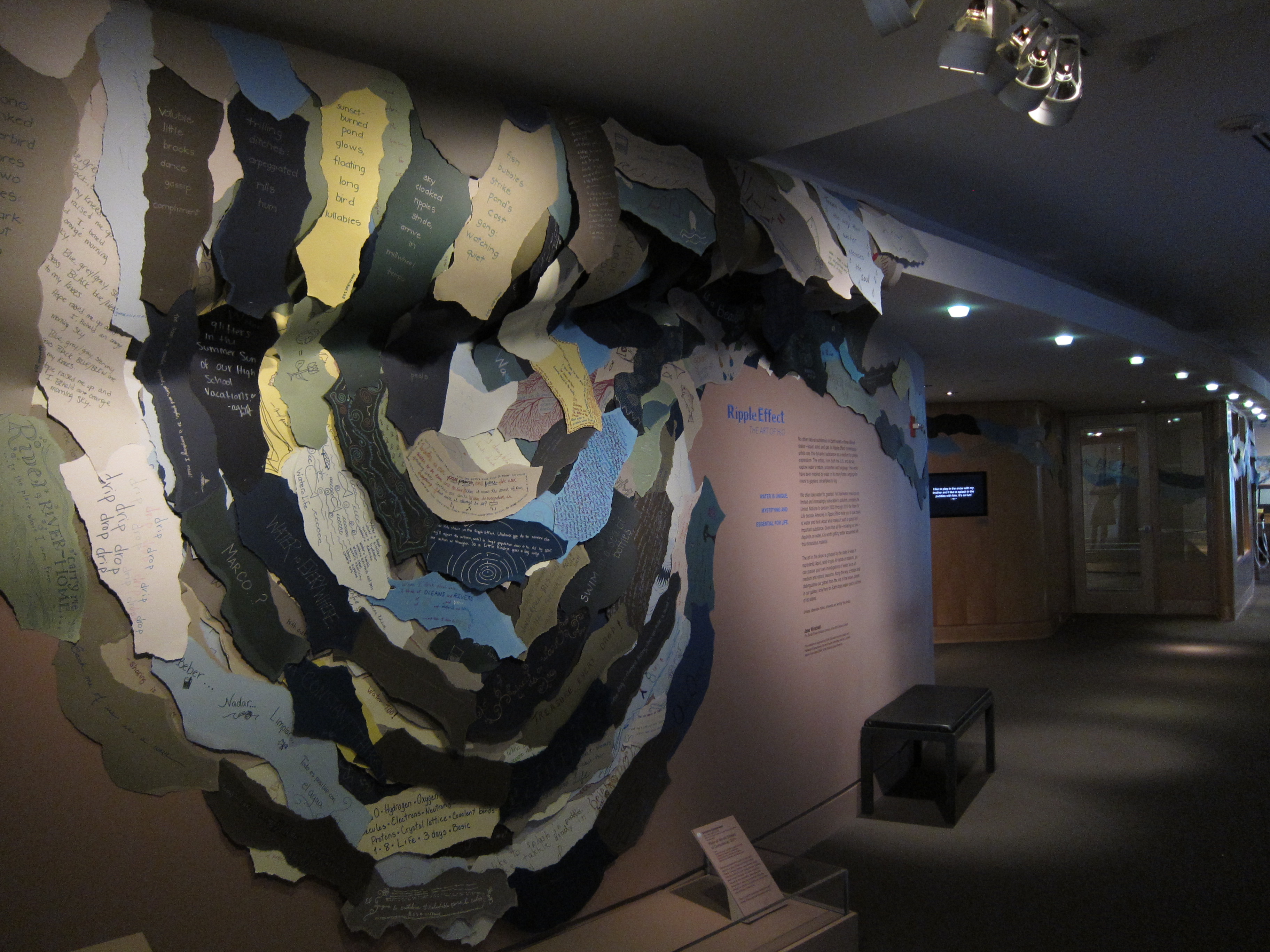
"River of Words: Stream of Conscience" as installed in Ripple Effect, the Art of H2O at the Peabody Essex Museum. Photo by me.

We also have the talented and charming artist Christine Destrempes back to talk about her “River of Words” project (featured in Ripple Effect), and invite visitor participation in the next installment of same, and the highly entertaining David Zucker who will be reciting and performing “Poetry in Motion.”

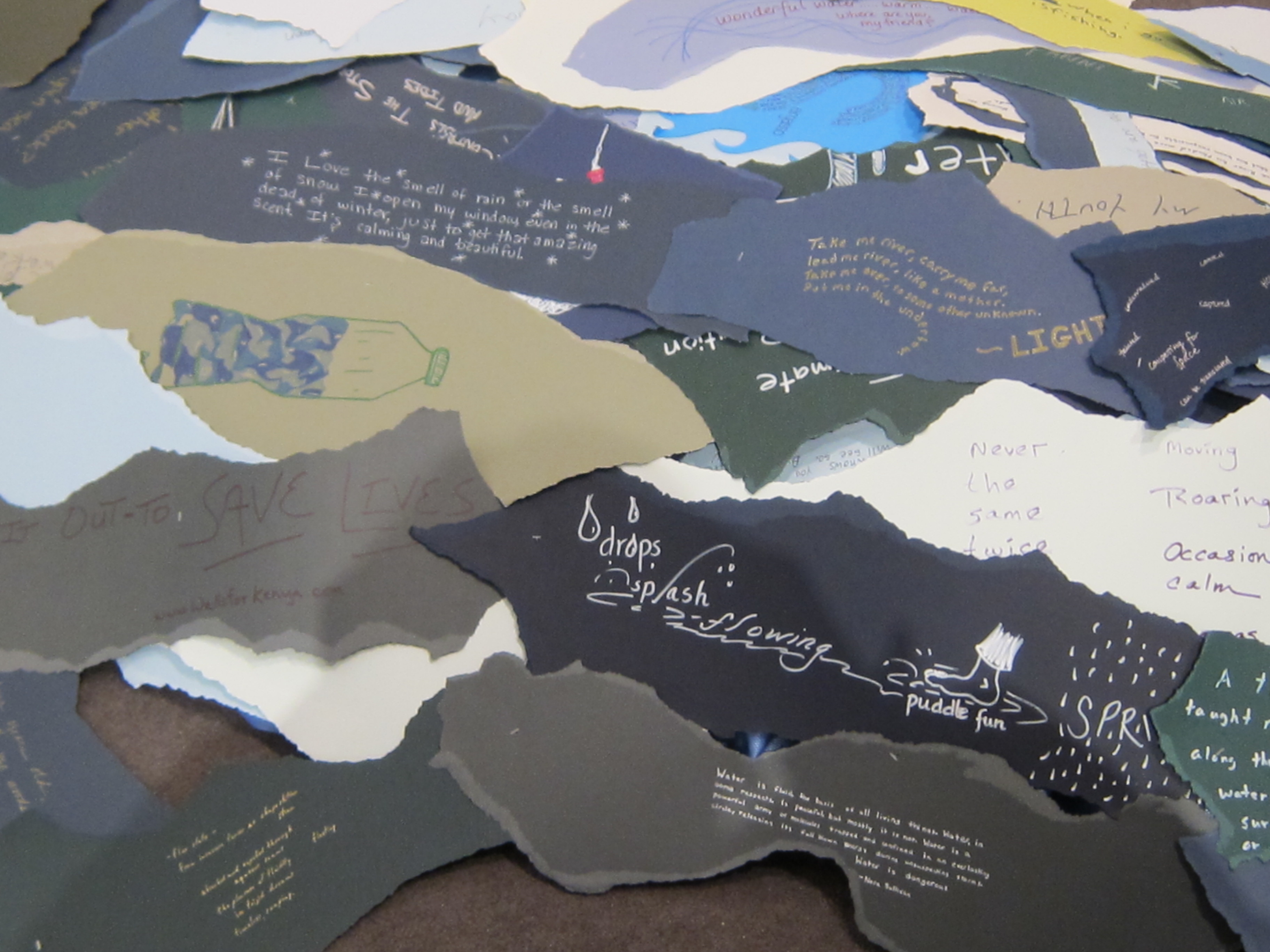
Detail from the "River of Words: Stream of Conscience" project by Christine Destrempes. Photo by me.

For more info, check out the MA Poetry Fest’s spotlight on PEM’s involvement with the MA Poetry Festival this year, and another article featuring my family-focused events.

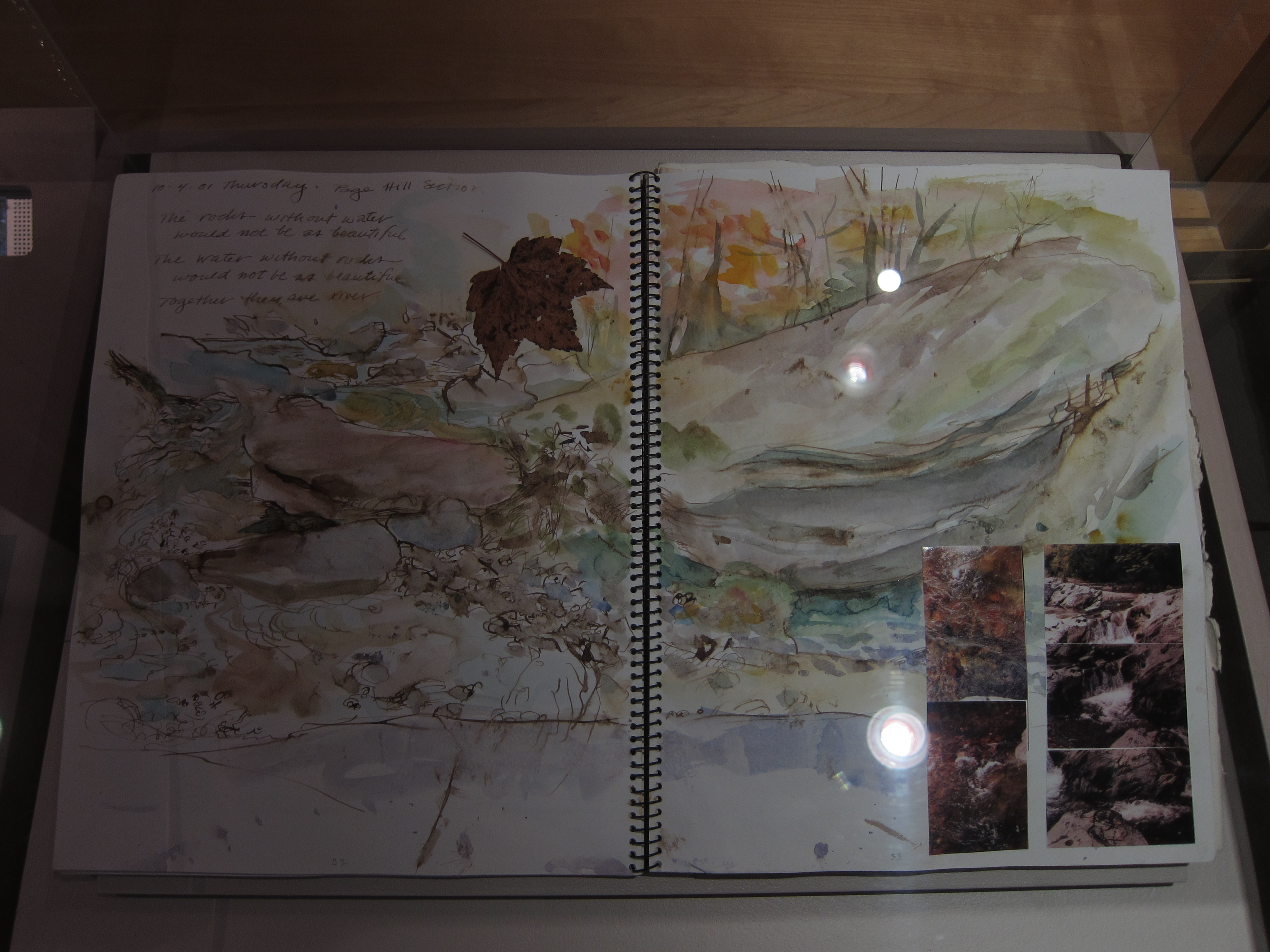
Sketchbook belonging to Ripple Effect featured artist Janet Fredericks, who writes poetry in connection to her "Tracings" river drawings, also featured in the exhibition. Photo by me.

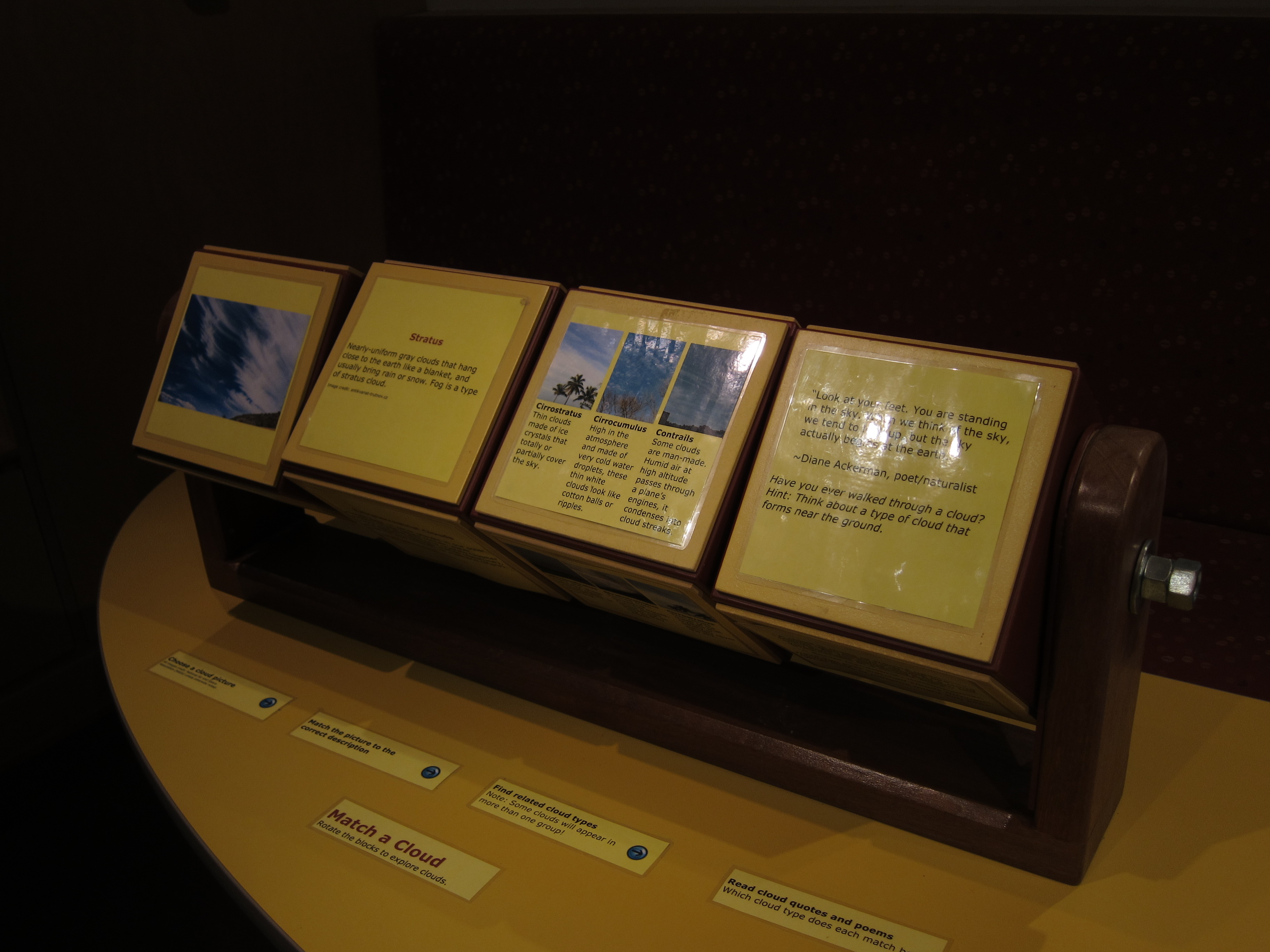
Spot poetic influences throughout the Art & Nature Center! In our clouds and vapor room, for instance...
"Look at your feet. You are standing in the sky." ~Diane Ackerman, poet/naturalist
Photo by me.

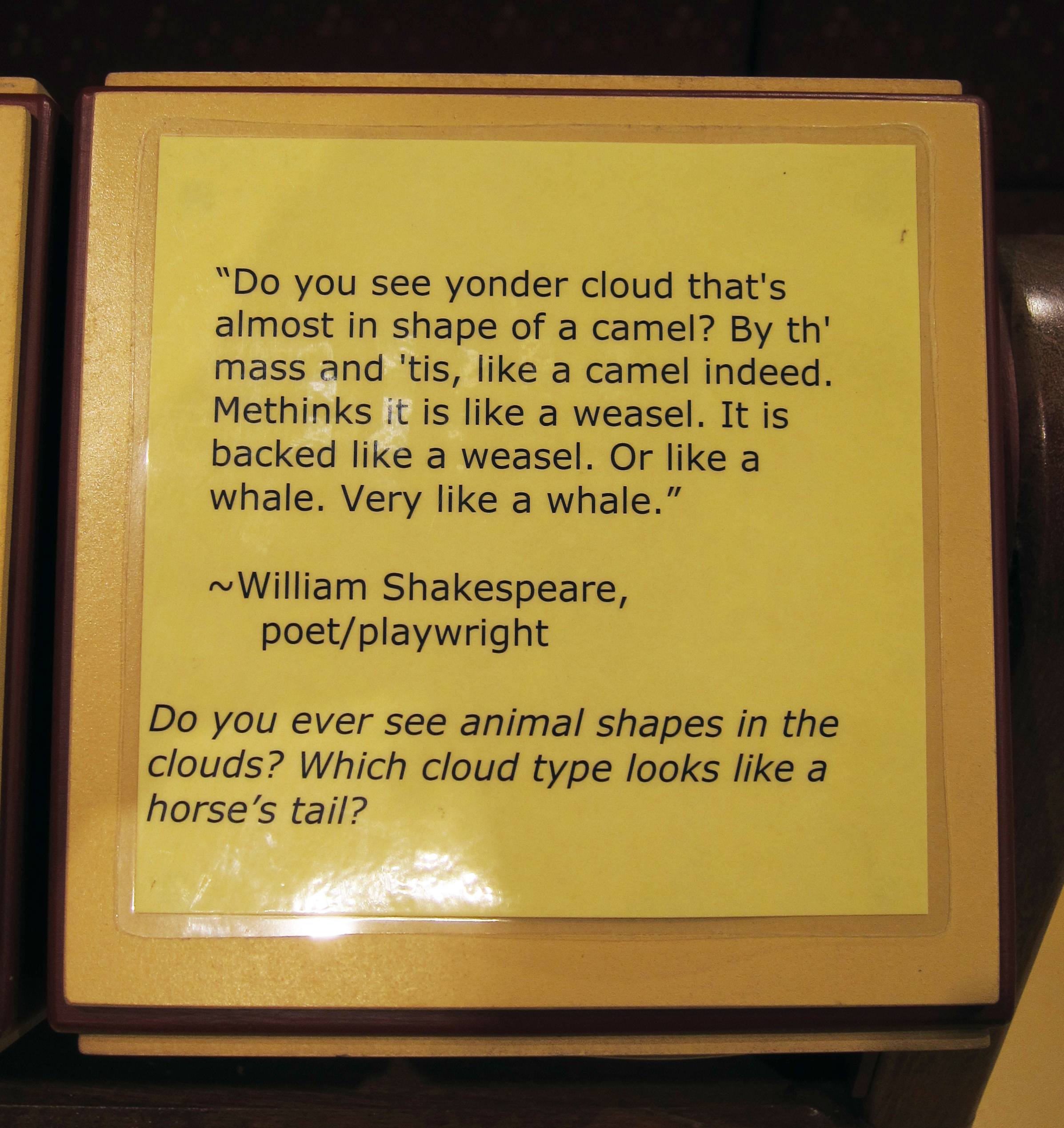
Methinks that cirrus cloud is ruffled like your shirt collar, Master Shakespeare. Photo by me.

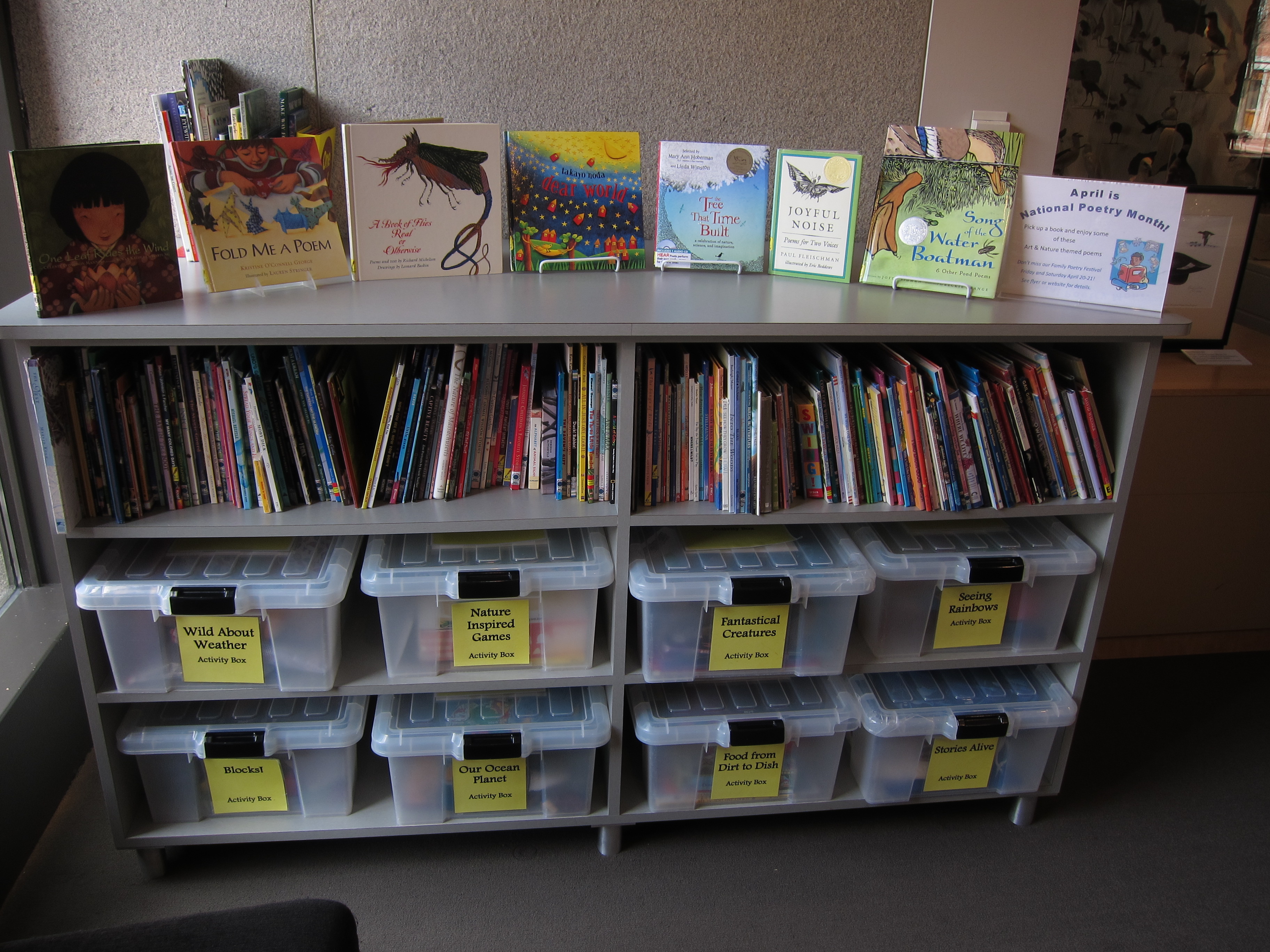
We’re also highlighting poetry in the Art & Nature Center’s popular “Books and Boxes Zone”–come by to check out some of our fantastic books!

Plenty of fun things to read, by many of the ANC's favorite writers! Pull up a couch, grab a puppet or a friend, and enjoy. Photo by me.

Surfing, Tumbling, and Pinning

I run across a lot of fun stuff surfing the wilds of the internet, much of which I stash away to share with you here in an eventual Brain Popcorn post.  Sometimes it’s from an article on my reader (and blessings on the day I decided to invest in upkeeping my RSS feeds, or I’d miss so much cool and wacky content!), and sometimes it’s a neat link on Twitter, but recently there’s been a fair amount of it on tumblr and Pinterest.  I initially resisted both sites because I need more ways to fritter away time on the internet like I need a ten-ton elephant standing on my head, but between a few influential articles and blog posts from people I admire, not to mention a few sessions at the recent National Art Educators Association conference in NYC, I decided to jump straight in.

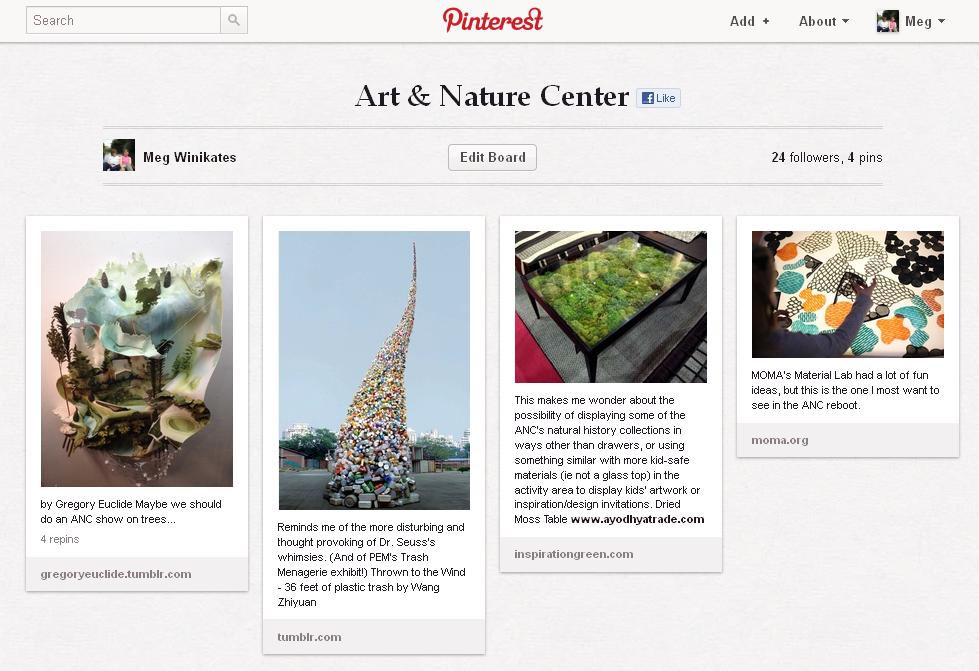
art & nature center pinboard

Museums on Pinterest

If you search Pinterest users for ‘museum’ you get a fairly large number of results, which I initially found surprising, especially the heavy concentration of children’s museums, though in a lot of ways the art museums are a perfect fit.  I haven’t looked at all their boards, but here are a few folks doing interesting things on Pinterest:

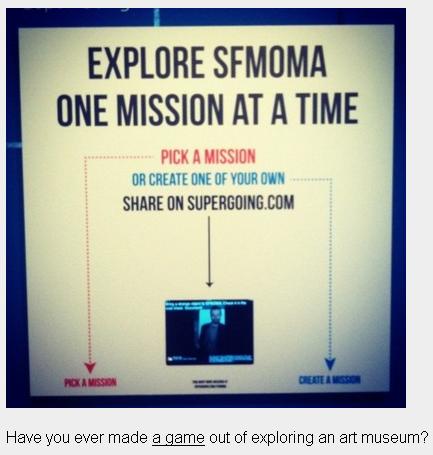
SFMOMA – Thematic collections of elements of their collection, and one cool and self-referential board that highlights where they turn up in the press.

Metropolitan Museum of Art – More thematic collections, and I’m particularly fond of the way they used a quote in the description section of their ‘cat’ board.  (also a great resource to get to other cool museum boards: check out the list of who the Met’s following! I’m particularly keen to see what ends up on the crowdsourced Future of Museums board.)

Met Teens – The museum’s teen advisory group runs this set of boards, which they use to highlight student work (both written and visual) especially in response to museum collections, draw correlations between historical fashions and modern, and advertise upcoming teen-focused events at the museum.  Very cool!

Not convinced?  Right before I was putting this post out into the world, fellow museum enthusiast Colleen Dilenschneider over on Know Your Own Bone wrote a fantastically well-researched set of arguments about why Pinterest is a useful investment for the extended museum community: 5 Reasons for Museums to get on Pinterest right now.

Museums on Tumblr

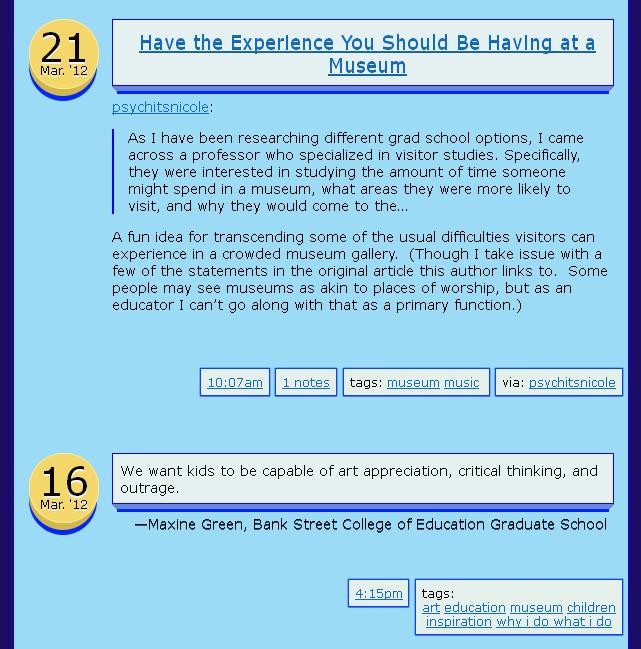
This is a bit more of a stretch: I don’t actually find Tumblr to be as easy a site to navigate or search.  Simply tracking the ‘museum’ tag gets you interesting photos from people’s vacations, but locating specific museum projects on Tumblr is harder.

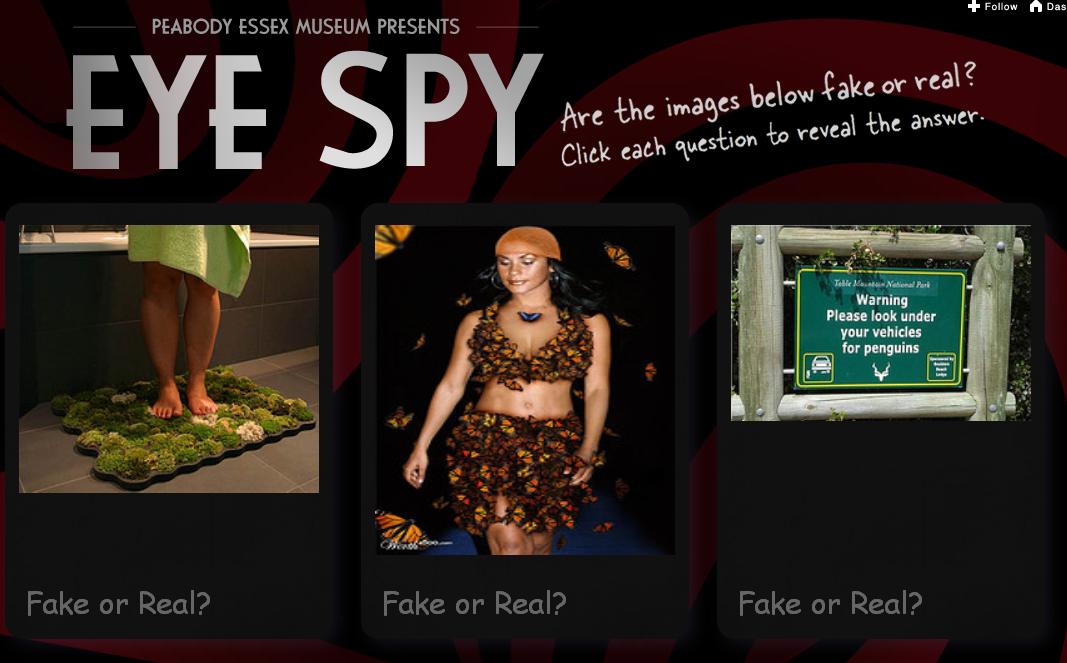
Eye Spy: Fake or Real? – This was actually the project that introduced me to Tumblr, which was a game we designed to go with our “Playing with Perception” show at PEM last year.  I really liked the format that our team put together, and I haven’t seen any similar game-style Tumblr projects out there.  (But I’d love to, so if you know of any, do tell!)

SFMOMA (again) – Their general feed is interesting, but I particularly like their ArtGameLab tag, where they share visitor photos etc. from their visitor-designed game projects accessible online and in the galleries.

Have you run across any cool organizational projects on Tumblr or Pinterest?  Share them here! 

Or, of course, you could just come find me there! (fair warning, what you see there is often what happens in my brain before it makes it into a coherent Popcorn post)

Brain Popcorn on Tumblr
Brain Popcorn on Pinterest

Ideabox: Plastic Bottles

Everybody loves to hate plastic bottles, and yet somehow it’s impossible to be rid of them, even for the most conscientious reusable-bottle carrier.  Here are a few incredibly cool artists who have figured out fun ways to repurpose the ever-present plastic bottle, and a few ways you can do the same.

ideabox plastic bottles

Art from the Ugly

Here are a few artists I admire, who work with plastics and make thought-provoking and beautiful objects from less-than-sightly leftovers.

David Edgar – makes impressively beautiful marine life sculptures from discarded detergent bottles.  He was a featured artist in the PEM/Art & Nature Center show, Trash Menagerie.

Miwa Koizumi – Her PET project created stunningly ethereal jellyfish and coral forms out of plastic bottles.  While not the most eye-catching of the pieces in Trash Menagerie, they were still among my favorites.

Christine Destrempes This artist is currently featured for her River of Words project in Ripple Effect, the Art of H2O, but one of her best known pieces is an installation of bottle caps, each representing a person who dies for lack of clean drinking water. 

Stuff You Can Do

Cool Project Links

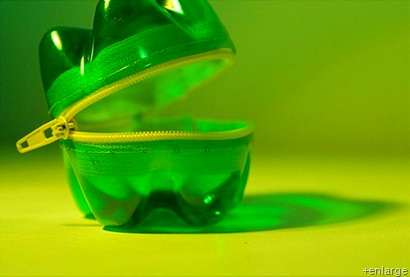
Photo credit to the site linked below

Plastic Bottle Zippered Purse/Box – Upcycle those unredeemable bottles into handy containers.  (I’ve always been a fan of Winnie the Pooh’s ‘useful pot to put things in’ theory of birthday presents.)

Wave Bottles — One of my favorites, and you can find lots of suggestions for how to fill them.  (I use water with food coloring and baby oil because it’s perfectly clear, but some people recommend vegetable oil as well.)  I like adding a layer of glitter to lie on top of the waves, too, and gave people the option of also adding floating beads, or sinking shells, sea glass, and pebbles.  When I did this activity with a group at the museum, I went for a purpose-bought set of bottles with sealable leak proof tops instead of recycling, so that I didn’t have to worry about getting the label glue off.

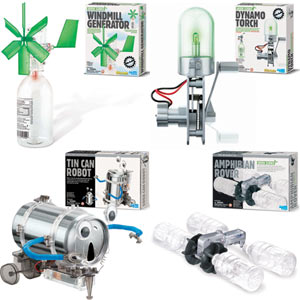
Photo credit, Educational Innovations at teachersource.com

Science Kits — I don’t usually advocate for things one has to buy, and I haven’t actually tried any of these, so I don’t know how well they work, but they sure do look like fun.  (I really want to build a tin can robot!)

Plastic Bottle Bracelet Directions

It’s almost spring (or at least I can pretend it is, right?) and one’s thoughts naturally turn to the pleasant days to come when it isn’t imperative to wear three layers of sweaters on a constant basis and can bear to bare one’s wrists.  I was simply stunned at the variety of directions for making bracelets out of plastic bottles: these two cuff-style bangles are fabric-covered and felted, while this one (typos and all) recommends giving your bangle some twisted appeal by heating it over a candle.  I think anything involving not only exacto blades but heat and needles has the potential for tragedy, but then I gave myself a foot-long scratch with a sewing pin this weekend, so caveat crafter.

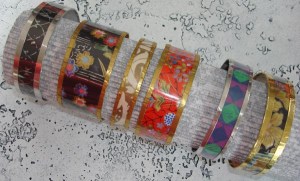
Photo credit Cool2craft.com Click the picture for directions!

My favorites, therefore, are these simple plastic and paper bangles, using two layers of bottle-rings to sandwich a particularly cool artwork, illustration, magazine cutout, or seasonal wrapping paper.  These directions recommend using metallic tape, which looks classy, but electrical tape works just as well, comes in a variety of fun colors, and stretches as you wrap it so you actually get very few problematic wrinkles.  The version I’ve made also cuts both rings at one spot so that the bangle can adjust to any size wrist: very helpful if you’re starting with a small bottle!

Hello, My Name is Curiosity

To my extreme sorrow (and no doubt that of any number of my colleagues at PEM), our Museum Action Corps internship program is drawing to an end.  To celebrate some of the incredible work of the program’s coordinator, Rosario, and her many teams of impressive interns, I thought I would use a few BrainPopcorn posts to highlight my favorite recent intern projects.

Exploring Personal Connections Across Artworks, Curators, and Visitors

Exhibit openings usually have a number of common denominators: VIPs, staff with shiny nametags, refreshments, people mingling with more or less conversation focused on the art.  Maybe there’s some music, there are pretty much always a few minutes of speeches–it’s a fairly predictable pattern.

Which is why, when the museum staff was invited to an intern-created temporary exhibition event, “Connecting Cultures,” I was beyond pleasantly surprised to see the pattern rearranged.

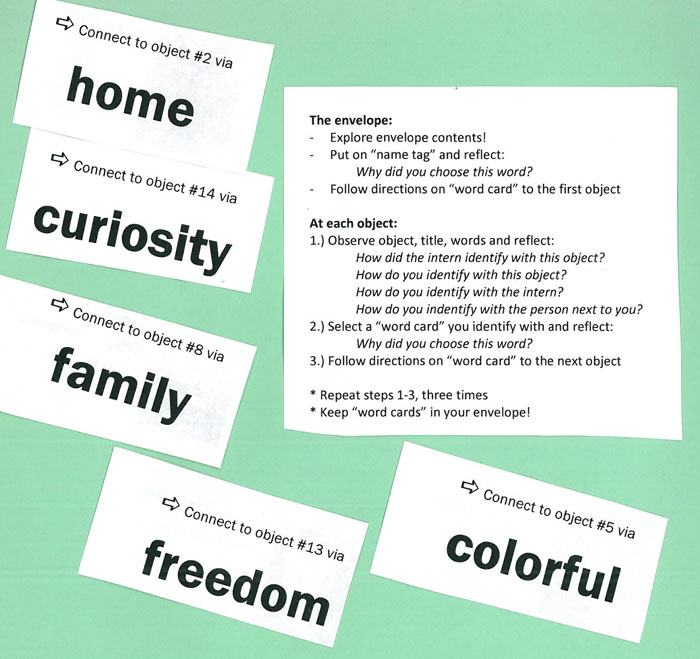
First, we were invited to pick up a name tag–not with our name on it, but instead with a noun we found appealing, or which we felt applied to us.  There were lots of choices: hard work, creativity, entertainment, emotion, etcetera.  Unsurprisingly, I chose

And with our name tag came an accompanying envelope with instructions and a slip of paper inside.  The instructions suggested that we consider and then do these things:

1) Why did you pick your name tag?  (Easy, that.  I don’t think they had ‘Hello, my name is Imagination’ or that would have been more of a battle.)

2) Find the artwork listed on our initial slip, talk to the intern who picked it, make connections between his or her experience and our own, as well as that of any other person visiting the artwork at the same time (This turned out to be very cool, as I learned things about my coworkers which would  never have come up in everyday conversation.)

3) Pick another word associated with that artwork from the group on the table and follow it to the object indicated.  Then think about how that word applied to both artworks.

4) Repeat step 2 until you’ve gone full circle or the time runs out and it’s time for speeches.

As you can see from my list, there were any number of neat themes to choose from: some had to do with the ideas expressed in each artwork chosen, others to do with the physical aspects of the artwork itself.  I did find myself redirected to the same object once or twice, so deliberately picked other words instead so that I’d have the opportunity to talk to different interns about their choices and experiences during the MAC semester.

My favorite take-away thoughts from this activity were these:

1) The level of staff or ‘visitor’ participation in this exhibit was very high, and conversations tended to be more on point than I’ve seen in some other intern exhibitions or final project presentations.

2) People tend to clump with others from their department or with whom they usually work closely, but the unusual name tags were a fun way to start a conversation with someone new.  (Or to stare surreptitiously and wonder why someone picked a certain term as their new ‘handle.’  Some were glaringly obvious, others were more of a head-scratcher, and that was fun.  It’s a great ice breaker and one I’d definitely like to re-use when I get an opportunity.)

3) Some of the staff members found the directions confusing or convoluted, presumably because they missed one of the group introductions to the activity which were provided by the interns themselves.  A little more signage outside the exhibit might have helped those who didn’t realize they had instructions in their envelopes as well.

4) The idea of ‘tagging’ a group of artworks with similar ideas or physical aspects would be a great way to talk about themes and looking at art with kids, either using examples from museums or their own artworks generated in class.

Poetry and Puddles

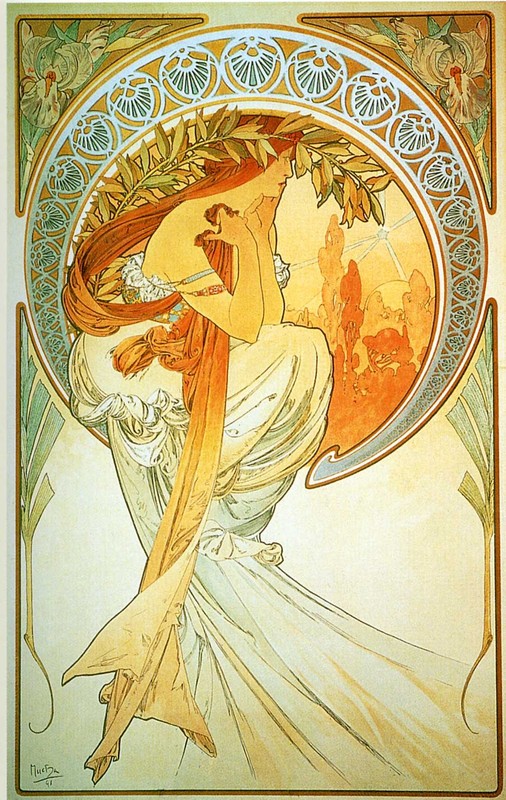
"Poetry" by Alphonse Mucha

Happy National Poetry Month, all!  April is always one of my favorite months, not only because it rescues New England from the bitter drear that is March, but because there are suddenly people talking about poetry all over.  Here’s a collection of some of my classic links and a few new fun opportunities:

Reading Poetry

30 Poets, 30 Days Blogger and author Gregory K. features a new poem a day by well-known poets on his kids’ literature blog, Gotta Book!  Always a fascinating read.

Famous Poets in 140 Characters The New York Times asks 4 poets to write poems that would fit in a tweet.

Writing Poetry

Your Ode to the Big Blue run by the Smithsonian in connection with their Ocean Hall.  Submit an ocean-inspired poem at the link or on their facebook page.  Selected poems will be posted on the Smithsonian blog at the end of the month.

Poem a Day Challenge run by Robert Brewer, a poet and blogger for Writer’s Digest.  Fun, challenging, eyebrow-raising, and entertaining, he’s posting  a poem writing prompt every day this month.

Upcoming Poetry Events

Massachusetts Poetry Festival, May 13-14

Poetry Events by State at Poets.org

A Bit of Inspiration

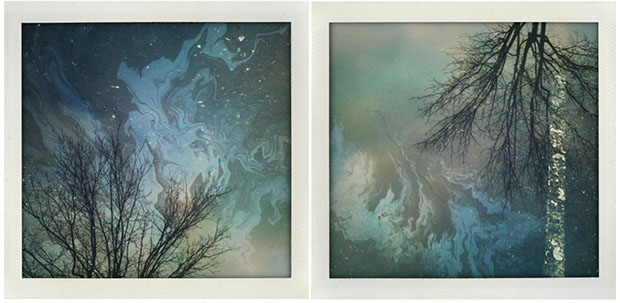
from the series "Pavement Trees" by Ingrid Nelson

See the world from upside-downish!  Check out these beautiful photographs of puddle reflections by photographer Ingrid Nelson.

in Just-
spring       when the world is mud-
luscious the little
lame balloonman 

whistles       far       and wee 

and eddieandbill come
running from marbles and
piracies and it’s
spring 

when the world is puddle-wonderful 

the queer
old balloonman whistles
far       and       wee
and bettyandisbel come dancing 

from hop-scotch and jump-rope and 

it’s
spring
and
the 

goat-footed 

balloonMan       whistles
far
and
wee 

e.e. cummings

Twelve Days of Popcorn (Day 5): All the World’s a Stage

I’ll save my thoughts on the importance of an educator’s being a ham for another day, but for today I’d like to highlight the magic that is live theater, from playing ‘dress-up’ in your backyard to setting King Lear on the Moon (okay, that I’ve never seen, but wouldn’t you like to?).  Here’s a collection of fun and fascinating links for you on theater, puppetry, and the Bard:

Make Your Own:

Jim Henson on making Muppets from things you find around the house.

A lesson plan on making shadow puppets in the classroom.

A video tutorial on making joints for shadow puppets (which has proved very useful for Eye Spy art activities this year!)

A historical make-your-own: 19th century children’s paper theaters on exhibit at the Bruce Museum in Greenwich, CT.

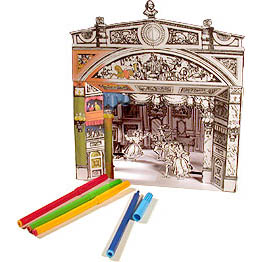
Download a pdf of a paper theater to color and construct yourself from London's V&A. Click for link.

Or try a modern equivalent with one of Robert Sabuda’s Peepbox PopUps.

Make You Laugh:

‘Superclogger’ commits random acts of theater from the back of a truck on LA’s crowded freeways.

A Christmas Carol re-envisioned…in Klingon.  (You’ll never appreciate Dickens until you’ve read him in the original…)

Call for Submissions: A Steampunk Shakespeare Anthology (Maybe I’ll get that King Lear on the Moon after all…)

On the fifth day of popcorn, these ideas gave me glee: five puppet theaters, four juicy questions, three chugging trains, two coral reefs, and a pop-up folding snow-bedecked tree…

Twelve Days of Popcorn (Day 3): Trains

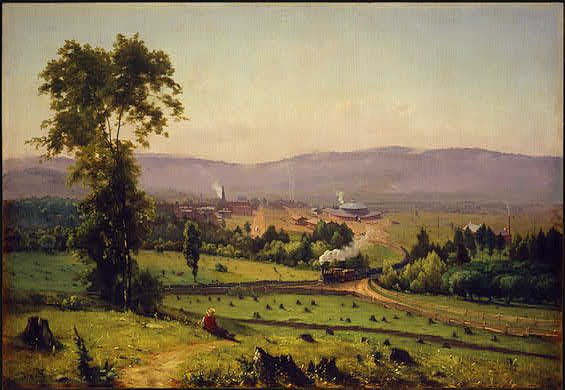
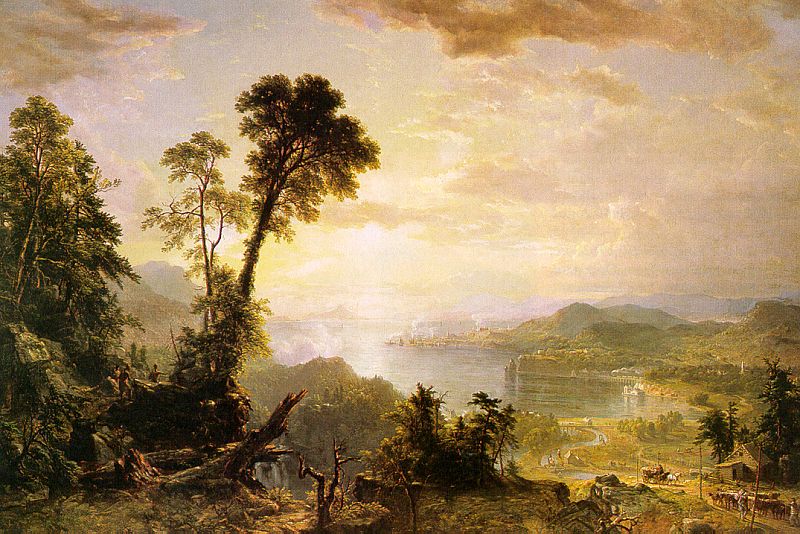
We set up the HO trains under the family Christmas tree this weekend, which is always fun and knocks about twenty years off my apparent age.   It’s amazing how enduring a fascination trains can hold, whether they’re models or massive machines, still or belching smoke and whistling like a time machine.  Trains even make good bait for getting a small child through an art museum (those luminists and Hudson River types often had creeping inroads of steam power in their paintings, after all, and you can enjoy the brushwork and color while the kiddo bounces around looking for train tunnels).

George Inness’ Lackawana Valley

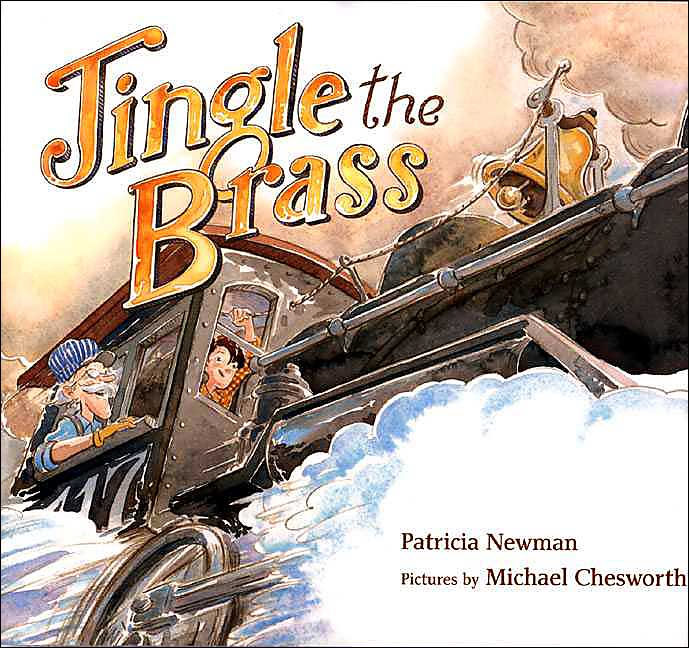
So it was with great delight that I discovered OurStory, a website hosted by the Smithsonian’s National Museum of American History.  The site is a family- and teacher- friendly resource for approaching history from the ‘story’ angle.  There is a searchable booklist, a great thematic list of activities to do at school or home, and one of their current features on the homepage is a downloadable packet of ideas and activities to explore the world of trains in your own backyard, from the local train station to the nearest rail museum.  (And even more book suggestions and activities on the thematic ‘trains’ page.)

One of NMAH's recommended reads

The NMAH has, of course, an impressive transportation collection of its own, but I love the fact that they’ve created resources which reflect the geographically wide-spread nature of visitors to a website.  “Can’t get to the NMAH?  Here’s how to find cool similar stuff near you.”  Fabulous.  Site specific materials can be fantastic, but accessibility is key.

Asher Durand, Progress (The Advance of Civilization), 1853