A Welcome Un-Surprise

In January, the UK’s Telegraph reported “Museums ‘should provide more hands-on experiences for children'” with the subtitle “Children are getting bored with ‘interactive’ push-button displays in museums and would rather dress up and touch exhibits, a campaign group claims.”

…And I thought ‘campaign group? Try 9/10 of the museum professionals I have worked with and/or know!’

In fact, what surprised me most about this article was not its findings, but the fact that it provoked so few expressions of vindication in the worlds of museum education where I tread.  Some of us have been saying this kind of thing for a long time.
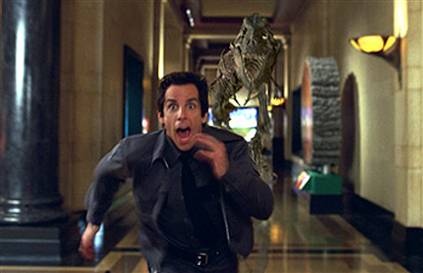
Movie still from "Night at the Museum"

Okay...so it *might* be possible for exhibits to be too interactive. But I doubt it. Movie still, Night at the Museum, 2006.

While it’s nice to see that some of the best memory-generating (not to mention that buzzword of my museum studies’ days, ‘meaning-making’) experiences possible in museums are finally (occasionally?) getting the lauds and general public attention they deserve, I can’t help but think that it’s not exactly news.  I’ll grant you I’m in a privileged position where true interactivity is concerned: hands-on inquiry is at the heart of The Discovery Museums, where I spent the last three years, and it’s most certainly an organizing principle of PEM’s Art and Nature Center where I am now.  (After all, how many art museums do you know that let you leave your own recycled cardboard and oddity ‘trashimals’ in the same gallery space as ‘real’ professional artists’ works?)

More exciting to me than the Telegraph’s non-news is the advent of The Participatory Museum, written by Nina Simon of Museum 2.0.  She’s graciously making the content of her book entirely available for free online, as well as for paid pdf download if you like the pretty formatting.  Almost all chapters are up as of this post, with the rest due to be available by the end of March.  One of the things that I find most intriguing about the way she approaches participation is that she’s inspired by some of the very cool tech-y projects and possibilities, but is not confined by them.  Things don’t have to involve the internet–or a computer at all–to be fascinating, relevant, memorable participatory experiences.  And she goes many steps beyond the ‘touch a whalebone’ approach mentioned in the Telegraph article, into ways to promote conversation.  I’ve only just started making my way through the chapters she’s posted, but I’m looking forward to several hours’ worth of pondering!

On a related online-resource-note, I’ve collected a number of new and awesome useful links which I’ll be adding to the resources page through the rest of this week, so check back for those soon!
Setting off Sparks (of Imagination)

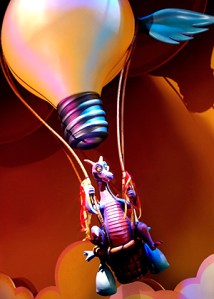
I read a truly fabulous article today which  made me dance for joy in my seat.  (And then have flashbacks to my first trip to Disney World and the song Figment sang in the Imagination Pavilion.  Which has now been stuck  in my head for several hours.)  This article, “Fresh Approaches to Sparking Creativity” reports on the findings of two studies into engaging the imagination and giving it more scope, first through exposure to and comparison of multicultural information (photos, video, music), and second through putting oneself in the mindset of a child.

“seeding the imagination is as simple as allowing yourself to think like a 7-year-old” -Tom Jacobs, “Fresh Approaches to Sparking Creativity”

Now, as an avid advocate for the world of interdisciplinary learning, I read the first half of the article with a great amount of pleasure.  In fact, I said “Aha! Vindication!” because my travel-minded mother has always advocated for exposure to other cultures, and consequently so have I.  In fact, the incredibly strong multicultural collections of the Peabody Essex Museum are one of its main attractors to me from a programming standpoint.  There’s just so much source material!  (And by the way, the Sensational India festival is coming up soon, if you’d like to put this imagination-sparking theory to the test!)

However, the second study report went straight to the heart for me.  Childlike thinking?  I’m all over that.  🙂

When working with the Explorers at The Discovery Museums, one of my favorite training exercises was called “When I was a child.”  In this exercise, we gave each Explorer a sheet asking them to write down what they remembered from specific ages (4-6, 7-8, 9-10, 10-12): whom did they play with?  what kinds of games or activities did they like?  what were their favorite things to do?  and then gave them somewhere between 5-10 minutes to jot down their answers before offering them the opportunity to share some of their favorite memories, one age at a time.

Not only was it great fun to participate (why let the trainees have all the fun?), but it was fabulous to watch people’s faces and voices change, to see them grin reminiscently and light up with enthusiasm.  Keying into that energy  helps us to understand what a museum’s visitors are all about at certain ages.  It’s a fabulous way to talk about child development and visitor interaction without ever getting into the psychobabble or technicalities.

Plus it’s good for your brain.

"One little spark--Imagination--Is at the heart of all creation!"

Passing along a Job Opportunity

I’m not usually in a position to help pass such things along, but a friend asked me to share this one, and it does sound pretty darn cool.  Plus, the folks I met from ECHO at last year’s NEMA conference were awesome.

ECHO Lake Aquarium and Science Center, located at the Leahy Center for Lake Champlain on Burlington’s waterfront, seeks a creative, upbeat individual to serve as its Public Education Coordinator. The Public Education Coordinator has primary responsibility for designing and
coordinating the delivery of exceptional daily experiences and programs to ECHO’s family and public audiences.
The position includes performing regularly for large public audiences, training and supervising volunteer, intern and staff educational interpreters, and managing systems and materials  related to public programming. The public education coordinator is required to work regular weekend and holiday shifts as part of a 40-hour/week schedule.
The ideal candidate will have strong stage presence, experience using technology to enhance educational programming, and experience supervising educational interpreters. The successful candidate must have a bachelor’s degree in ecology, biology, science education or a related field, minimum 3 years experience designing and implementing educational programs and strong public speaking and communication skills.
To apply, e-mail a cover letter and resume to: jobs@echovermont.org with Public Education Coordinator in the subject field. You also can apply via “snail” mail at ECHO – Public Education Coordinator Job Search, One College St., Burlington, VT 05401. For a detailed job description, visit our website at http://www.echovermont.org/visitors/jobs.html. The deadline for applications is March 8, 2010.

Sliding, Rolling, and Gliding

Downhill skiing is fast.  Ice skating’s got those nifty blades.  Bobsleds are faster and those runners are longer, and they make that awesome ‘whooshing’ sound.  What’s not to love?  (Okay, so I was maybe influenced a little a lot by Cool Runnings as a kid.  I’m not the only one.)

Bobsleigh Homepage at Olympic.org — full of fun stuff!  Current photos and videos from the ongoing games, equipment and history, techniques, etc.

Physics of Bobsledding at Howstuffworks

Team USA’s Bobsled page

Want to try building a bobsled course at home?

There was a tree at the base of the best side of the house for sledding when I was a kid.  A really big pine tree that you didn’t want to hit, if at all possible.  So my brother and I, assisted by our parents, got pretty decent at packing up snowbanks so that we would curve around the tree, around the corner of the house, and out into the backyard.  It worked enough of the time to be worth it.

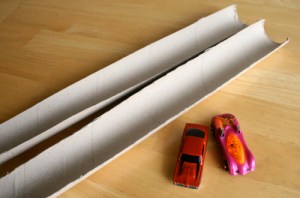
However, there are safer, smaller ways to build a bobsled course that don’t involve pine needles down your jacket collar.  My favorite is the paper-towel-tube bobsled run.  The simplest of indoor Olympic sports, all you need are paper towel tubes (wrapping paper tubes, mailing tubes, toilet paper rolls, you get the picture), marbles or toy cars (I’m more of a marbles fan, myself.  Run 4 at a time for a four-man sled!), masking tape, and a whole lot of books, furniture, and boxes to form your ‘hill.’  Cut, tape, and go wild!

(To make ‘curved’ sections, I recommend cutting out triangular pieces from the paper towel rolls [which end up looking like diamonds once you’ve made the two angled cuts] and bending and taping them together.  This takes some practice to get a reasonable variety of angles that aren’t going to make your marbles stick in the turns!)

For other examples, check out some of these snazzy runs for ideas!

Patriotic Marble Run

Courtesy of Marie at MakeandTakes.com

Winter Olympics Games for Kids from MakeandTakes.com (for very young children)

A 3 floor marble run and you want more?

For the truly Olympic oriented educator, Kathi Mitchell’s impressive Olympics for Kids round-up page, with lesson plans, interactives, and assorted links galore.

Warming up for the Winter Olympics

Vancouver Olympics 2010

I love the Olympics–talk about an interdisciplinary event!  Theatrics, costumes, sport, science, art, international themes, history…a brain popcorn extravaganza if ever I saw one.

To get you in shape for the Vancouver 2010 Olympic celebrations and competitions, here are links to gear up your brain!

Official Websites of the Vancouver 2010 Olympics

Official Site of the Vancouver Olympics, including a fun interdisciplinary nod to native legends and local ecology with the three kid-friendly mascots, Quatchi, Miga, and Sumi.  Have to admit that Miga is my favorite — how can you not love a ‘sea bear?’  Part orca, part endangered Kermode ‘spirit bear’, and relentlessly adorable.

US Olympic Team Official Site

NBC Coverage of the Olympic Games

Olympic History

70 Years of Olympic History, from the Washington Post’s coverage of the ’98 Nagano Games

Science of Sport

Winter Olympics Sport and Science from Montana State University

Science of Hockey, part of the Sport Science feature on the Exploratorium website (gotta love those guys!)

Ice is Nice

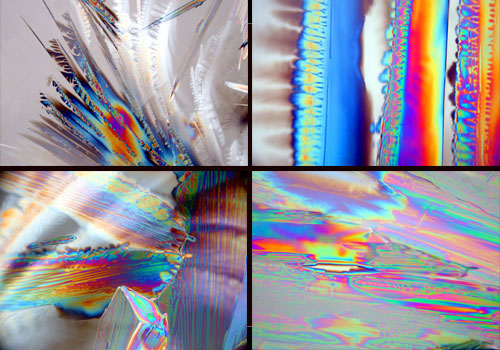
ice photography

Images above: This collage shows four of Dr. Wasilewski's art compositions. Credit: Dr. Peter Wasilewski

Olympic Ice is Different in a Frozen Light from NASA.  Very cool photography in this one.

##Current News!## Scientists Keep Water Liquid Far Below Zero Degrees from NPR, reported Feb. 5

Clever snow conservation going on in Vancouver these weeks running up to the games… Spinning Straw into Snow from CNET

Do Try this at Home*

For those who find it too cold to climb trees this season, try some House Gymnastics.   Or at least enjoy the pictures of people hanging precariously in their stairways.

*maybe.  Some of these activities are a little dubious on the safety-meter.  Clamber over furniture, etc. at your own risk!

Coming up next…

Having fun with bobsled/bobsleigh and other things with runners — links and activities!

Plum Blossoms, Bamboo, and Pine Sprigs

Welcome in Lunar New Year with the spirit of friendship (as represented by the flower arrangement above) and with an arrangement of my own suggestions for cool resources and activities.

Lunar New Year

Lunar New Year Parade, Chinatown, New York City 2009, photo by ho_hokus

History and Culture

A brief but interesting collection of information on the New Year as celebrated in China, from the University of Victoria

A nice resizeable map of China, with or without more detailed information, from National Geographic

Asia-Art.Net, a collection of really beautiful examples from several cultures, organized by medium or by culture.

Science

Why is it Lunar New Year?  Observing the Moon, from Science NetLinks

Arts and Crafts

Disney’s family activities offer up some fun and easy decorations for the holiday: a festive ribbon dragon, a beautiful lacy banner, and a good-luck goldfish.

The Smithsonian strikes again!  (I love these guys as much as I love National Geographic!) The Sackler and Freer Museums are home to the Smithsonian’s Asian collections, and they have both Chinese centric and Across Asia teacher resources as part of their larger set of Online Guides.

Theater and Music

Two fabulous resources from the Kennedy Center’s Artsedge:

Puppets on the Move: China and the Silk Road and

The Sounds of China Pod Page, with music to listen to and connected information and activities.

Literature

Also from the Kennedy Center, Chinese Calligraphy and Ink Painting

And finally, from Read-Write-Think, which is run by the National Council of Teachers of English, a very cool Fairy Tale Autobiographies lesson plan, which uses Chinese tales but could be adapted for pretty much any culture.

Not enough?  Then come celebrate with the Peabody Essex Museum, on Saturday February 27! (Chances are very good you’ll find me making paper lanterns in East India Marine Hall…)

More ‘Brain Art’

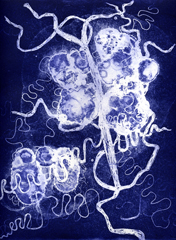
Susan Aldworth (British, b. 1955) Brainscape 18, 2006

Yes, there are more fun and fabulous examples of brain-inspired art coming to a Massachusetts museum! Landscapes of the Mind: Contemporary Artists Contemplate the Brain is running at the Williams College Museum of Art from January 30–May 2, 2010.  (See the full press release here.)  Being who I am, I’m particularly excited about their family day with student-led tours and art making activities in March, as well as intrigued by the fact that this exhibit, which is all about what is literally inside your head and therefore something we never see of ourselves, is tying in with the museum’s ‘year-long focus on art and landscape.’   I think there are a lot of fun parallels people could draw with other ways artists, writers, and scientists have imagined, described, and mapped what goes on in the brainscape.

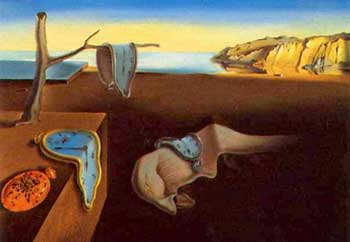
Historically, for instance, there’s all the wackiness associated with phrenology, (very popular in Victorian times).  Art-historically there are those fabulous surrealists (or insert adjective of choice depending on your own opinion) like Salvador Dali.  Scientifically we have all those brain-mapping studies, and virtual reconstructions through forensic anthropology, and Einstein’s brain in a jar (more than one jar, apparently).

Persistence of Memory by Salvadore Dali

Persistence of Memory by Salvadore Dali

Back to Lunar New Year and other fun multicultural stuff in the next post, I promise!

Review: Emperor Qin’s Terracotta Warriors at National Geographic Hall

Disclaimer: I totally love National Geographic.  You, my astute readers, will have figured that out already.

= = = = = =

My family and I spent the long weekend in Washington DC, enjoying a little respite from New England snow, and taking in (as one does, when one lives in a museum-mad family and works in a museum) the cultural sights.  Though I’d love to give detailed reviews of everything (kudos to the US Holocaust Memorial Museum, for instance, for a fascinating exhibit design in “State of Deception: Nazi Propaganda” which I wish I’d had more time to explore), I’m going to focus on the original impetus for the visit, which was National Geographic’s Terracotta Warriors: Guardian’s of China’s First Emperor.

Sadly, there were no pictures allowed inside the exhibition, so I have no photos of my own to share.  Fortunately, they bent the rules for their own bloggers, so there are some fabulous pictures of objects in the exhibition and at least some small sense of the layout available here.   One of the things I thought they did best in this exhibit was that each element was allowed its own space: the exhibit areas weren’t over crowded, which was important given how many people were trying to view them, and where two or three statues or other artifacts were placed together, it made sense and helped advance the ideas and context which the audioguide and interpretive panels were trying to convey.  It seems like a very basic and obvious thing to get right, but it’s noticeable in the traffic flow and the overall feeling and satisfaction of the visit if artworks or other objects are placed awkwardly.

There was a lot of overlap between the text panels and the audioguide, but enough difference that for the slow-paced intent studier like myself, it was worth listening and reading both.  I appreciated the context provided regarding the period especially immediately before the rise of Emperor Qin, but thought (as I have thought about many exhibitions before, including the MFA’s Tomb 10A exhibit) that it would have benefited from a timeline somewhere early in the exhibit, possibly also including reference points to western/European events of the same time period, to provide that extra hook for those of us who had largely Eurocentric history educations. (For the record, NG does apparently have a video segment not featured in the exhibit anywhere which mentions a little of what was going on in Rome at the same time period, which I’ve embedded below.)

Overall, however, I loved it.  I thought it was fascinating, the figures themselves were stunning displays of individuality and craftsmanship and technique, and the overwhelming impression that I left with was one of a man who commanded immense power and influence, and who, like many strong rulers in other cultures, created an infrastructure that allowed the arts to flourish.  Very cool.

(Video: A reconstructed flyover of what they think the complex around Emperor Qin’s burial mound would have looked like.)

= = = = =

More fun Chinese themed posts to come as we approach Lunar New Year, but for now I leave you with the events listing for Lunar New Year at the Peabody Essex Museum, which promises to be a huge amount of fun.

New Year, New Job, New Adventures!

I have exciting news to share with you all as a kickstart to 2010!  As of tomorrow, January 11th, I will be the new Program Specialist at the Peabody Essex Museum’s Art and Nature Center!

At the Art and Nature Center

PEM's Art and Nature Center, photo by }{enry (click for link)

I’m really looking forward to rolling up my sleeves and delving into a new set of skills and stories to learn, and bringing my hands-on experience to developing new programming and helping to design exhibit interactives and discovery boxes for the gallery space itself.

The Art and Nature Center at PEM does a huge amount of interdisciplinary education, working with contemporary artists to create year-long exhibitions which incorporate art, science, history, and culture.  The current exhibition (up until late May)  is called Trash Menagerie, and focuses on works of art depicting animals and other life on Earth using recycled materials.  (Check out the online exhibit interactive here, which provides a world-wide look at what artists, communities, and governments are doing with green-inspired art!)

And, in celebration of my new gig, I bring you a mini concert by the Vienna Vegetable Orchestra:

2009 Wrap-Up

Welcome back, folks!

Before we launch into all the cool and exciting new stuff planned for 2010, I wanted to take a chance to wrap up some leftover business from 2009.   I posted my own contributions to the New England Museum Association conference in November, and promised the slideshows from my co-presenters, Mike Adams of Boston’s Museum of Science, and Nancy Jones of Longfellow National Historic Site.  Mike’s fabulous talk focused on the ways in which the MOS adds to existing programs, reworks older programs, and invites in local experts from numerous other institutions to host Archaeology Week every October.  Nancy’s marvelous contribution brought art, literature, and history to the discussion, with examples of hands-on crafts, teen involvement projects, music, and a dash of poetry.