Bugs are his Paintbrushes

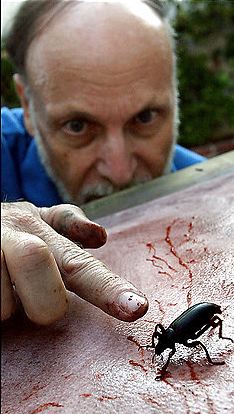
Steven Kutcher working on a piece made by applying watercolor paint to the feet of a darkling beetle, which he directs with his finger Original photo by Jonathan Alcorn for The Washington Post, courtesy of the artist

Steven Kutcher working on a piece made by applying watercolor paint to the feet of a darkling beetle, which he directs with his finger
Original photo by Jonathan Alcorn for The Washington Post, courtesy of the artist

Check out the results of my fun conversation with Beyond Human participating artist, Steven Kutcher over on PEM’s Connected blog: Painting with Bugs.

Paws Up for a Good Book!

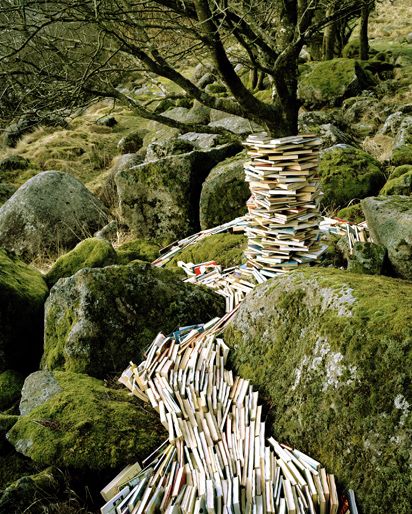
"It's Common Knowledge" by Rune Guneriussen, 2009

“It’s Common Knowledge” by Rune Guneriussen, 2009

One of the perks of my job is that each new exhibition that comes through the museum gives me an excuse to read and/or research something new.  I’ve come across a number of fascinating and occasionally hilarious books during the planning of Beyond Human (opening in October), and I’ve blogged about some of my favorites over on PEM’s Connected. Find reviews of fiction, poetry, and non-fiction for kids and adults, from haiku cats to people who fly with whooping cranes.

Check it out and let me know if you have any suggestions for other artist/animal-related good reads!

Museuming in the Maritimes

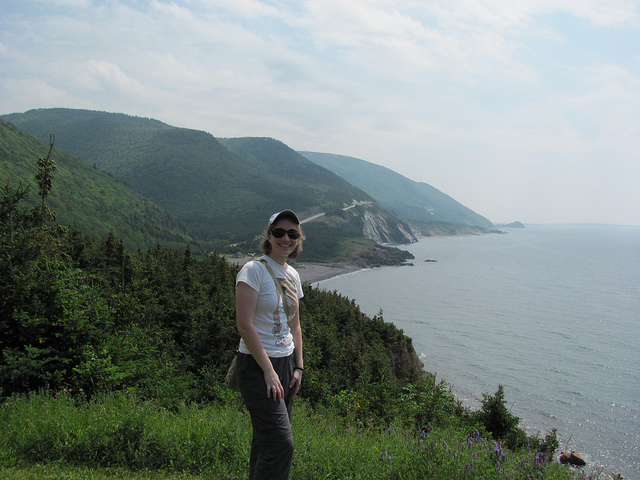
The author on the Cabot Trail, Cape Breton, NS

The author on the Cabot Trail, Cape Breton, NS

“Look at that sea, girls–all silver and shadow and vision of things not seen. We couldn’t enjoy its loveliness any more if we had millions of dollars and ropes of diamonds.”
L.M. Montgomery, Anne of Green Gables

Mine is a traveling family.  As often as I say I grew up in museums, so too did I grow up in national parks, historic houses, cathedrals, theaters, and the luggage-piled backseat-turned-X-wing of whatever the family car was at the time.

These days, travel for me is often a busman’s holiday–I still go to museums for fun, but end up thinking about more than merely the exhibits’ contents.  (Ask me about an exhibit while I’m still in it and I’m as likely to talk about label copy, lighting design and interpretive choices as ‘gee, what a cool patent model’ or ‘I never knew that about tapestry cartoons.’)

This summer’s trip was two weeks in Nova Scotia, Prince Edward Island, and New Brunswick.  Compared to a trip to Florence or Washington DC, this trip was a lot more about natural beauty (scads of it!) and appreciating quieter, more localized traditions of artisans, architecture, and histories than Smithsonians and Uffizis.  That said, there were still a number of great (and small!) museum moments to share.

 Maritime Museum of the Atlantic, Halifax, NS

I am one of the happiest versions of myself when on boats, so an afternoon in the Halifax Maritime Museum put plenty of wind in my proverbial sails.  The museum is ambitious, covering many aspects of humanity’s connections and fascinations with the water, spanning many periods and significant points in history, including remarkably heartbreaking and well-done coverage of the Halifax explosion and the Titanic rescue and recovery attempts.  They made a lot of consistent and interesting interpretive choices in those two exhibits in particular, placing the focus less on finding out  who was to blame, and more on the human reaction to the tragedy: rescue, recovery, rebuilding.

Other galleries have clearly not been updated in a while.  For instance, the Age of Sail gallery (a favorite era of mine) still featured a lot of mismatched typewritten labels, which admittedly had a charm of their own when paired with some of the hilarious products of an early tourist society (see below).
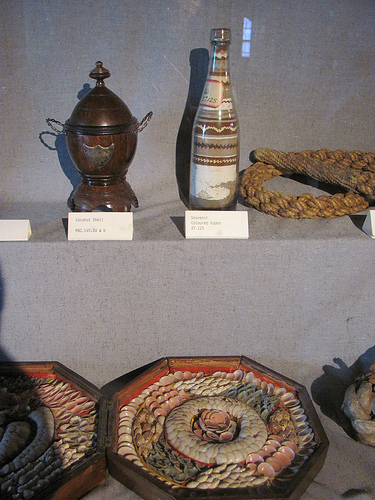
Sailors' valentines, guano bottle art, and a coconut shell decorative dish at the Maritime Museum, Halifax. Photo by the author.

Sailors’ valentines, guano bottle art, and a coconut shell decorative dish at the Maritime Museum, Halifax. Photo by the author.

Much as I enjoyed picking out my dream sailboat in the small sailcraft hall, or running my fingers over steel bolts like the ones used to connect Titanic’s hull-plates, and especially checking out the extensive and alarming exhibit of the many hundred shipwrecks that have taken place around Nova Scotia in recorded history, there were a few other museum moments on this trip that also deserve some attention.

Joggins Fossil Center and Cliffs, NS
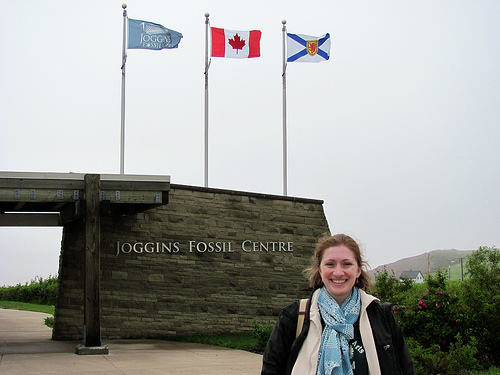
In front of the Fossil Center, in the fog

In front of the Fossil Center, in the fog

This small (but very green-engineering) center packs a lot into its one exhibit hall.  It’s fairly text-heavy in some places, but the timeline, dioramas of the area at different times in its geologic past, and magnifier to examine the ‘fossil of the day’ are all well worth it, if you can even be bothered to spare some wonder after climbing down the cliff to check out the fossils themselves lying on the beach and embedded in the cliffside.  We were there just after the super-moon, when a new section of prehistoric tree trunk had just been uncovered by the unusually high tide, making us ‘practically the first people to see it in 300 million years!’ (Okay, so the tour guide was actually really instrumental in making this an awesome experience, and I’m a very jaded former tour guide myself!)
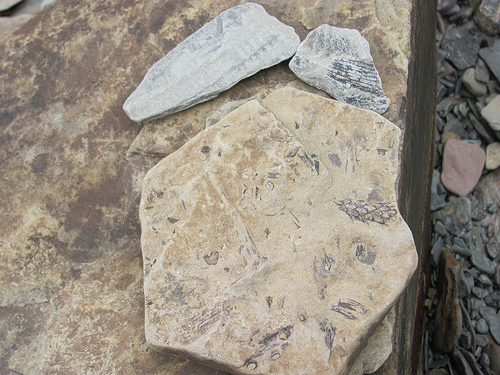
joggins2

300 million year old fossils on the beach at Joggins. Photo by the author.

Citadel, Parks Canada, Halifax NS

We saw a *lot* of Parks Canada sites on this trip, and though there was an awful lot of the Halifax Citadel that seemed familiar (Castle Island in Boston, anyone?) the living history approach here was great.  Even after seeing a stadium full of bagpipers earlier in the week at the Royal Nova Scotia International Tattoo, watching these reenactors drill and hearing them play really made a difference in experiencing the fort.  At AAM this year there was a discussion at the “Real or Fake? Who Cares?” session about reenactors–but I am firmly in the camp of the pro-theatrics.  Seeing those bayonet drills made my quads hurt in sympathy in a way just hearing about it never would have.
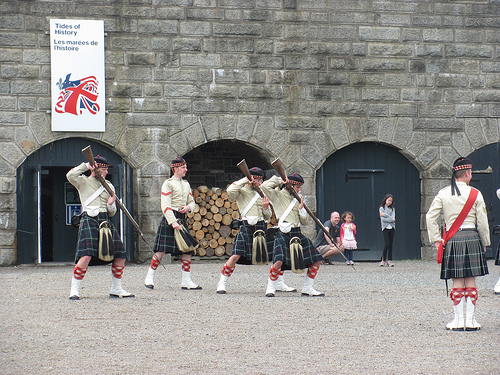
citadel1

Bayonet drills at the Halifax citadel. Photo by the author.

Louisbourg Fort, Louisbourg, NS

Speaking of living history, there’s nothing like chowing down on French toast in a jam-packed tavern in 98 degree heat with only a gigantic pewter spoon as an implement, wearing half a table cloth for a napkin tied around your neck.
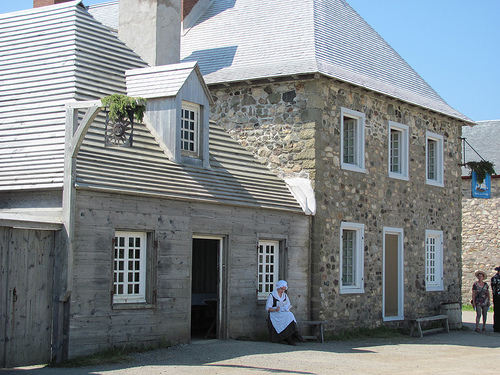
Rubbing elbows with the lower class tavern patrons for lunch in Louisbourg.

Rubbing elbows with the lower class tavern patrons for lunch in Louisbourg.

Heat exhaustion made me wish for a little less of the historical accuracy, but this summer was the 300th anniversary of the founding of the fort at Louisbourg, and there was a lot of awesome stuff going on while we were there, including an archaeology fair.  Parks Canada staff were on hand to talk about the marine archaeology in the harbor and were also actually doing a dig out on one of the further reaches of the point.  I also got to participate in a historic dance demonstration, which was also fun and would have been even better in air conditioning.

Alexander Graham Bell Museum, Parks Canada, Baddeck, NS

Even as someone who has worked in two different science museums, I hadn’t expected to have as much fun at the Alexander Graham Bell museum as I did.  I clued in a little when I discovered they had kites available in the lobby to go fly on the front lawn overlooking the lake (so beautiful!), and they had a (sadly deserted at the time) fairly well designed kids’ games and experimentation area right up front as well.
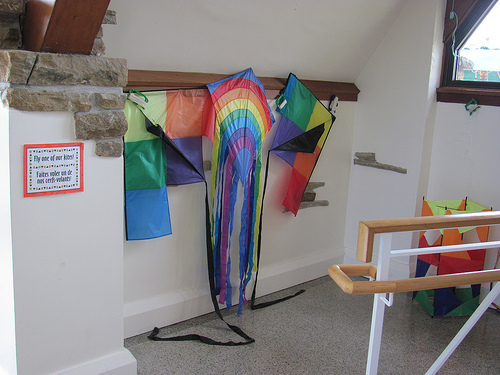
Kites in the Alexander Graham Bell museum in Baddeck, NS.  Photo by author.

Kites in the Alexander Graham Bell museum in Baddeck, NS. Photo by author.

I expected to hear the same info about the invention of the telephone that one gets in elementary school, but it turns out there was a lot more to the man, and also to his rather impressive wife and their circle of brainy, crazy, flight-mad friends.  Of particularly impressive impact in the lower exhibit hall were pieces of the original HD-4 record-setting hydrofoil boat, and also the full-size reconstruction.  This was also a site that, much like the Maritime Museum in Halifax, used film very well.
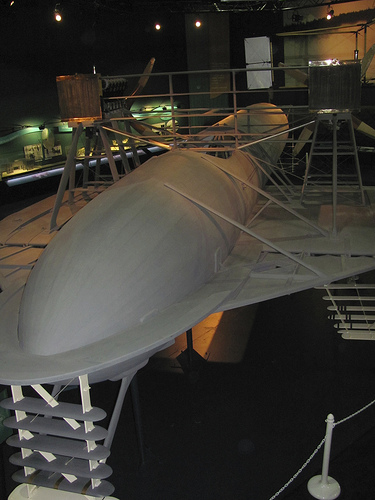
Reconstruction of the HD-4 hydrofoil craft.

Reconstruction of the HD-4 hydrofoil craft.

Green Gables, Parks Canada, Cavendish, PEI (and neighboring MacNeill Homestead and Silver Bush Museum)
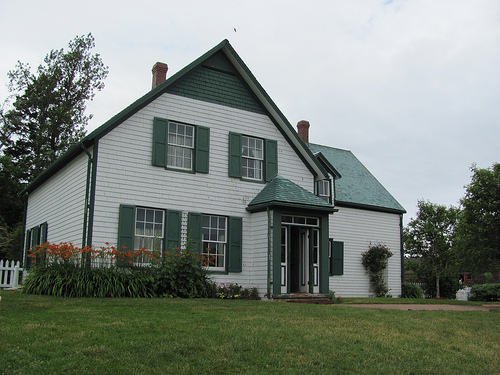
Green Gables Heritage Place, the family farm that inspired Montgomery.

Green Gables Heritage Place, the family farm that inspired Montgomery.

Younger me felt a certain connection with Miss Anne Shirley of Green Gables, and current me enjoyed a day in ‘Anne Country’ thoroughly–though this time it was Lucy Maud Montgomery who felt like the kindred spirit.  Parks Canada has an interesting line to walk between presenting the truth of the history of the area and of LMM’s life with the expectations of legions of fans who are hoping to see as much Anne as Maud in the places described.  They do this quite cleverly by presenting within the house historically accurate furnishings, etc, and then layering in details recognizable to readers: in one room, for instance, there hangs a brown puffed-sleeve dress and a thoroughly cracked slate is casually tucked in a corner.  Out on the grounds, Anne’s names for places reign supreme (“The Haunted Wood” and “Lover’s Lane,”) but along the paths there are plaques of Montgomery’s personal reactions to these places, a trend which spills over to the nearby MacNeill homestead (where LMM grew up with her grandparents), and at Silver Bush, another family home and inspiration to Montgomery further down the road.
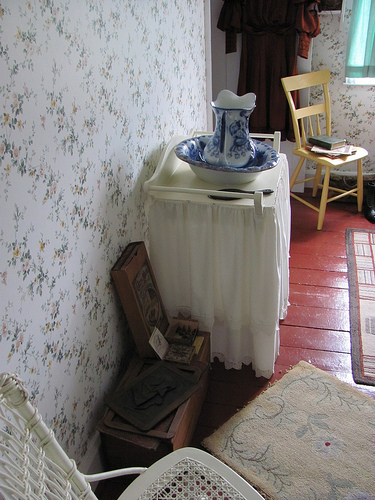
"Anne's Room" at Green Gables, complete with physical details from the first book's plot. Photo by the author.

“Anne’s Room” at Green Gables, complete with physical details from the first book’s plot. Photo by the author.
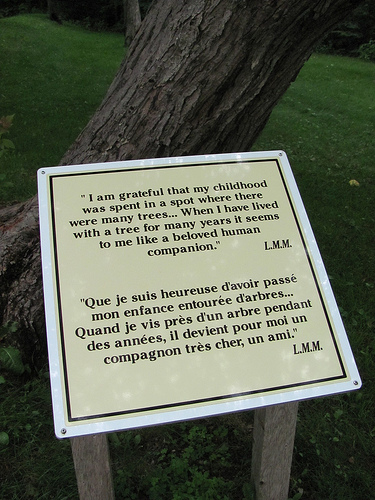
Quote from Lucy Maud Montgomery at the MacNeill Homestead in Cavendish. Photo by the author.

Quote from Lucy Maud Montgomery at the MacNeill Homestead in Cavendish. Photo by the author.

I could keep going, but I’d be likely to drop into rhapsodizing about being within feet of a pod of 20 pilot whales off the coast of Cape Breton, or being head-to-toe silty after a rapids ride thanks to the tidal bore on the Shubenacadie River, or even being driven to tears on back-to-back nights at the productions of Anne of Green Gables: The Musical and Evangeline: The Musical in Charlottetown.   Suffice to say that indoors, outdoors, in museums, and in the wild places, I found a lot of inspiration in the Canadian Maritime Provinces, and I’ll definitely be going back.

Did you come across any interesting interpretive choices in a museum trip this summer?  I’m always looking for new additions to the travel list, so let me know!
Ideabox: Sand

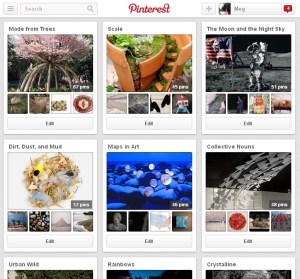
Pinterest is a remarkable tool.  I use it to collect ideas for blog posts, artworks for possible  exhibition topics, creative and professional inspiration, and cute and geeky things that make me smile.  It also, however, has made me really think about the way I do Ideabox posts, since it is so easy to type ‘playdough’ into the search box of Pinterest and find 90 recipes for everything from scented to sparkling to glow in the dark doughs. (See my Ideabox: Dough post for some of my past favorites.)

pinterest_meSo what makes the Ideabox different from losing a few hours to pictures of smoothies and babies in Ewok costumes on Pinterest?  Why keep doing it?  I’ve decided the answer is context and connection, which is still at the heart of why I write here.

And so (because it’s summer and the beach is calling to us all) I present:

ideabox sand

A Grand View of Sand (Geography & Travel)

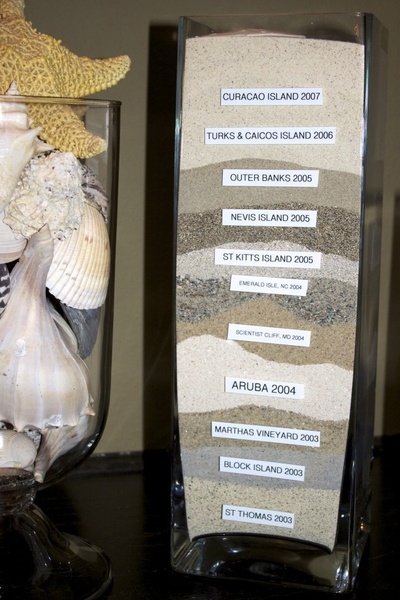
Sand collected from a series of travels as a slowly evolving souvenir. Found on Pinterest

Sand collected from a series of travels as a slowly evolving souvenir. Found on Pinterest

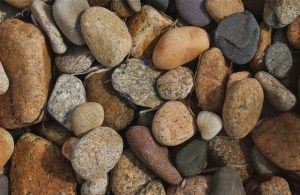
I currently live on Massachusetts’ North Shore, which has an awful lot of pebbled beaches just waiting to churn underfoot and dump you on your rear when you’re carrying 50 pounds of dive gear.

Pebbles on a Martha's Vineyard beach, photo links to source

Pebbles on a Martha’s Vineyard beach, photo links to source

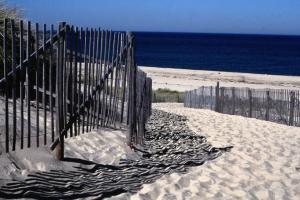
But even here in Massachusetts there’s a lot of variety, such as the purplish sands of Plum Island, or the soft white dunes of Provincetown.

provincetown ma sand

Provincetown, photo from Lonely Planet (photo links to source)

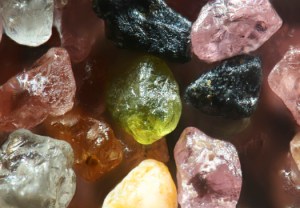
Sand from Plum Island, Rowley, Massachusettes Magnification 250x

Sand from Plum Island, Rowley, Massachusettes Magnification 250x, by Dr. Gary Greenberg, photo links to source

And of course, lots of other places are known for their colored sands: black, pink, etc.  I can imagine a lot of great geography assignments featuring sand samples and postcards with writing prompts from different places, discussing the plants and animals found nearby, what makes for a good travel destination (or not!) and why, and all of it tying back to our next topic, the geology of the area involved.

A Granule of Sand (Geology & Scale)

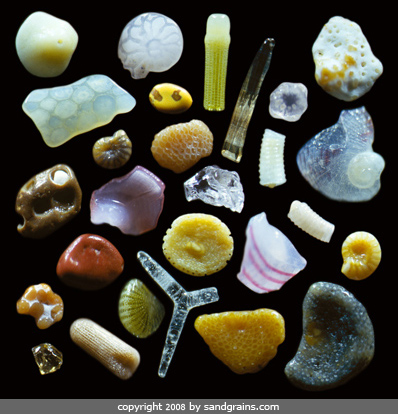
Magnified sand is one of my favorite things to look at through a microscope or as a piece of science/art photography.  Dr. Gary Greenberg has a number of beautiful images here, and I have also seen amazing posters of magnified sand from around the world, though sadly I haven’t found any recently.  I can, however, imagine creating a set of sand cards in the classroom to look at through magnifying lenses or a good microscope.  This would be a great introduction to a study of scale, an opportunity to do magnified drawing practice, a way to further explore the process of erosion, or even a fun comparison with a similar study of snowflakes.

Maui Pieces #2 by Dr. Gary Greenberg, photo links to source

Maui Pieces #2 by Dr. Gary Greenberg, photo links to source

Aggravations of Sand (Architecture, Engineering, Etc.)

Anyone who’s tried to walk on soft, shifting sand knows how aggravating it can be–slippery as snow and with three times the abrasive power, unless you skim the surface like a sidewinder.

So beyond the uses of sandblasting in architecture, how else can you explore sand from an engineering point of view?

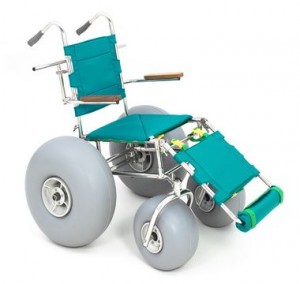
Design Challenges: Build a better beach wheelchair or other adaptive device.  (Sand skis? Apparently these are a thing, but it just looks like an invitation to the world’s worst rug burn to me…)

A beach wheelchair

A beach wheelchair

Explore the effects of sandy ground in an earthquake with a shake-table, tray of sand, and Lincoln Log towers.

Test the efficacy of various kinds of interventions to prevent erosion (breakwaters, jetties, dunes and beach plantings, etc.)

Aggregations of Sand (Art & More)

Second Fig by Edna St.Vincent Millay Safe upon the solid rock the ugly houses stand: Come and see my shining palace built upon the sand.

Second Fig
by Edna St.Vincent Millay
Safe upon the solid rock the ugly houses stand:
Come and see my shining palace built upon the sand.

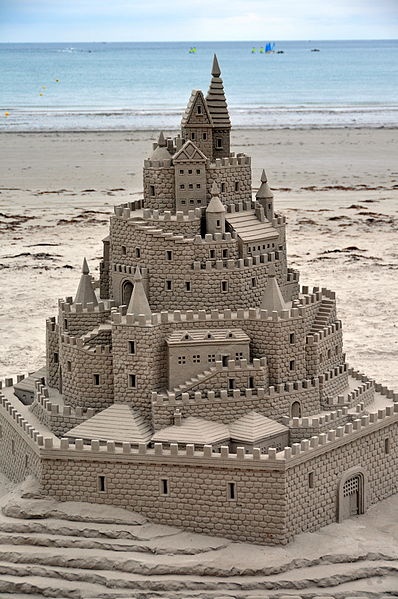
Lots of places have sand castle and sand sculpture festivals (above image from wikimedia commons), but here are a few artists I enjoy, some of whom I’ve come across in working on a proposal for a Dirt themed exhibition.

Sand circles drawn by Jim Denevan

Sand circles drawn by Jim Denevan

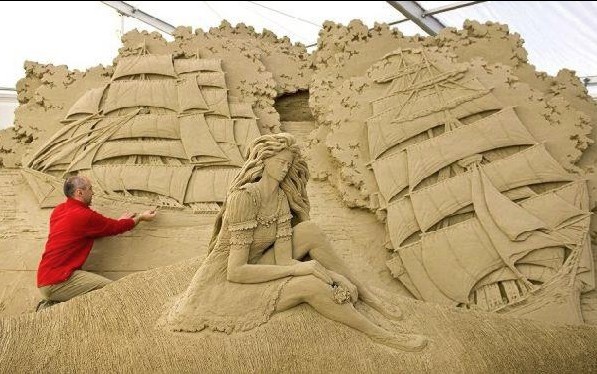
Sea Dreams by Leonardo Ugolini

Sea Dreams by Leonardo Ugolini

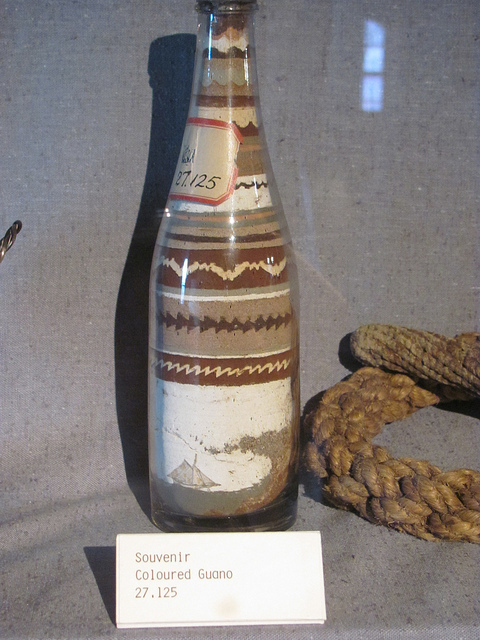
Not actually sand- colored guano bottle art found at the Halifax Maritime Museum in Nova Scotia this summer. Check back later for a 'museum highlights' post from my recent travels!
Not actually sand- colored guano bottle art found at the Halifax Maritime Museum in Nova Scotia this summer. Check back later for a ‘museum highlights’ post from my recent travels!

How else do you suggest exploring sand?  Any good stories, songs, or non-fiction to recommend?

Guess Who?

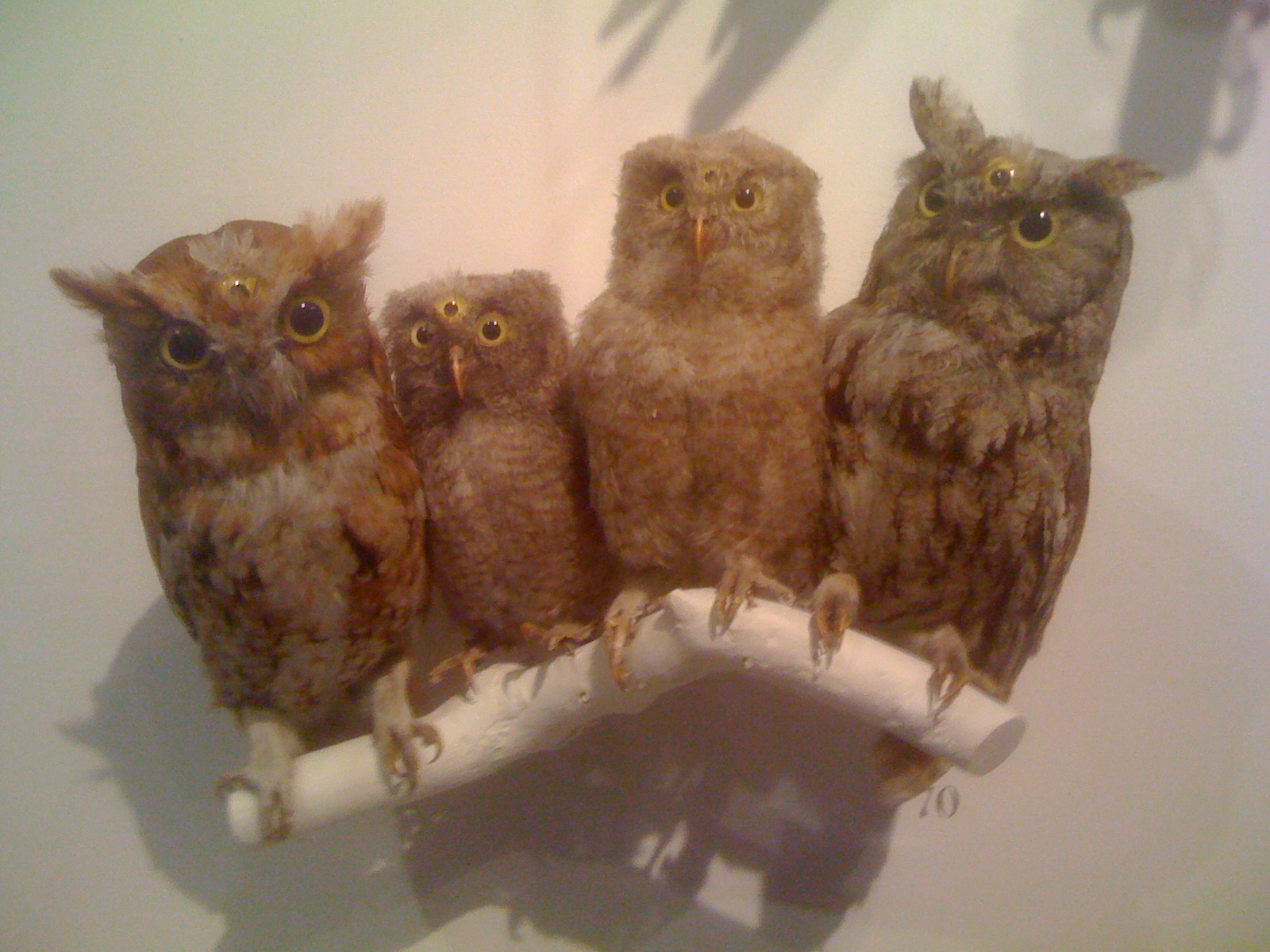
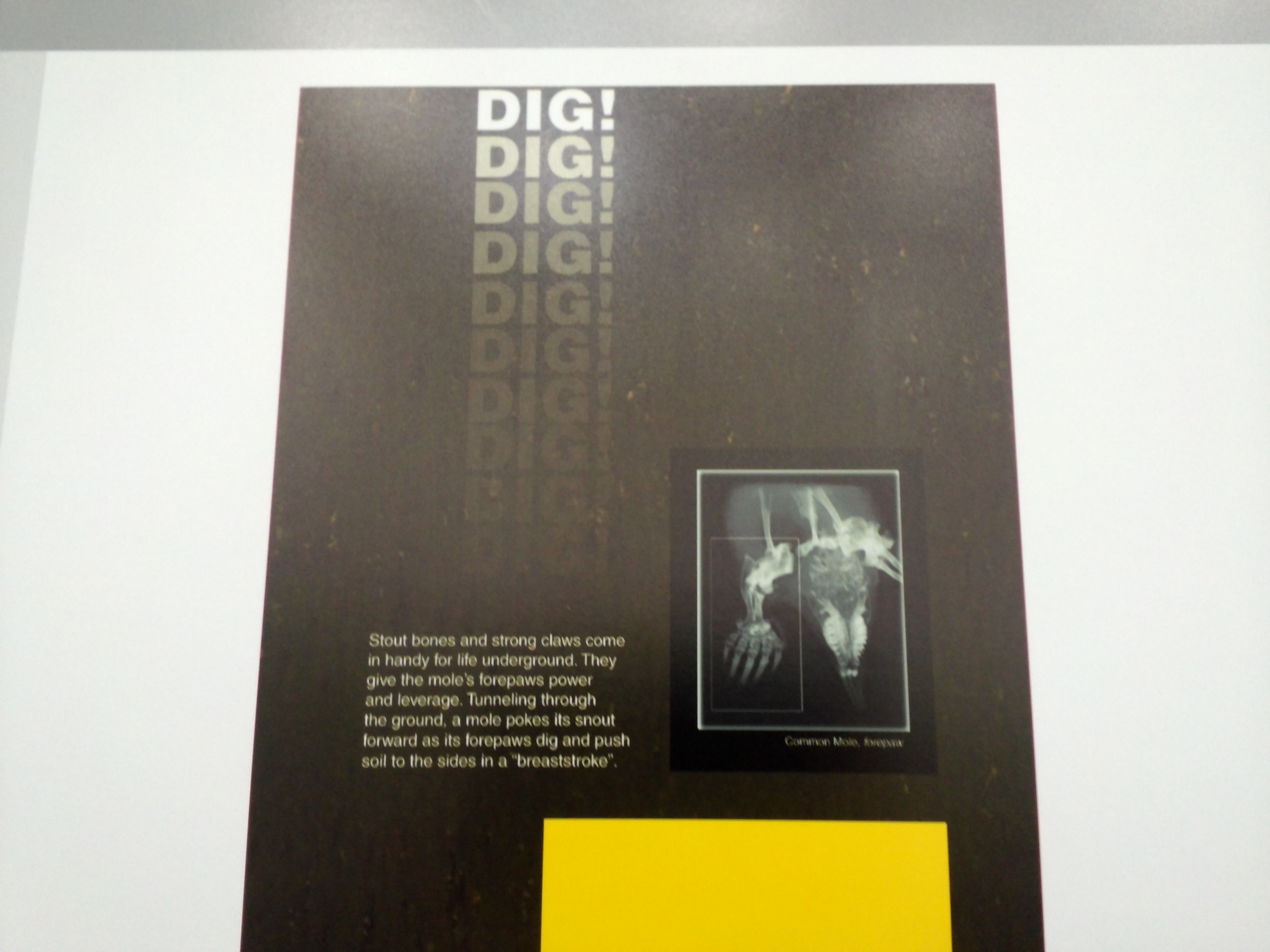
In the years I have worked in the ANC, I have had a lot of people tell me about their favorite pieces of the center—the Build A Bird interactive, the Wrenchophone, the harbor seal that hung out in the mammals case during Eye Spy.  I’ve also harbored a few secret favorites of my own, like the trio of eastern screech owls peering beadily from their crooked branch, or the scrimshaw piece that depicts Ben Franklin.  (Why would you make a scrimshaw portrait of Ben Franklin? These are the stories I want to know!)

Eastern Screech Owls, with an artist intervention during Eye Spy

Eastern Screech Owls, with an artist intervention during Eye Spy

In that time, however, the other ANC staff and I have also heard a lot about things people have loved in the past, and things they wish we could bring back, or do more of, or explore in a different way.  We’ve kept track, and considered all those assorted ideas and favorites in addition to the prototyping and surveying that I mentioned in my last post.  We then worked all of that into our plans for the re-envisioning of the Art & Nature Center’s ongoing exhibition.  Over the last year we’ve been mixing and matching, adding and rearranging, inventing and tweaking, until we were all really happy with the new plans.

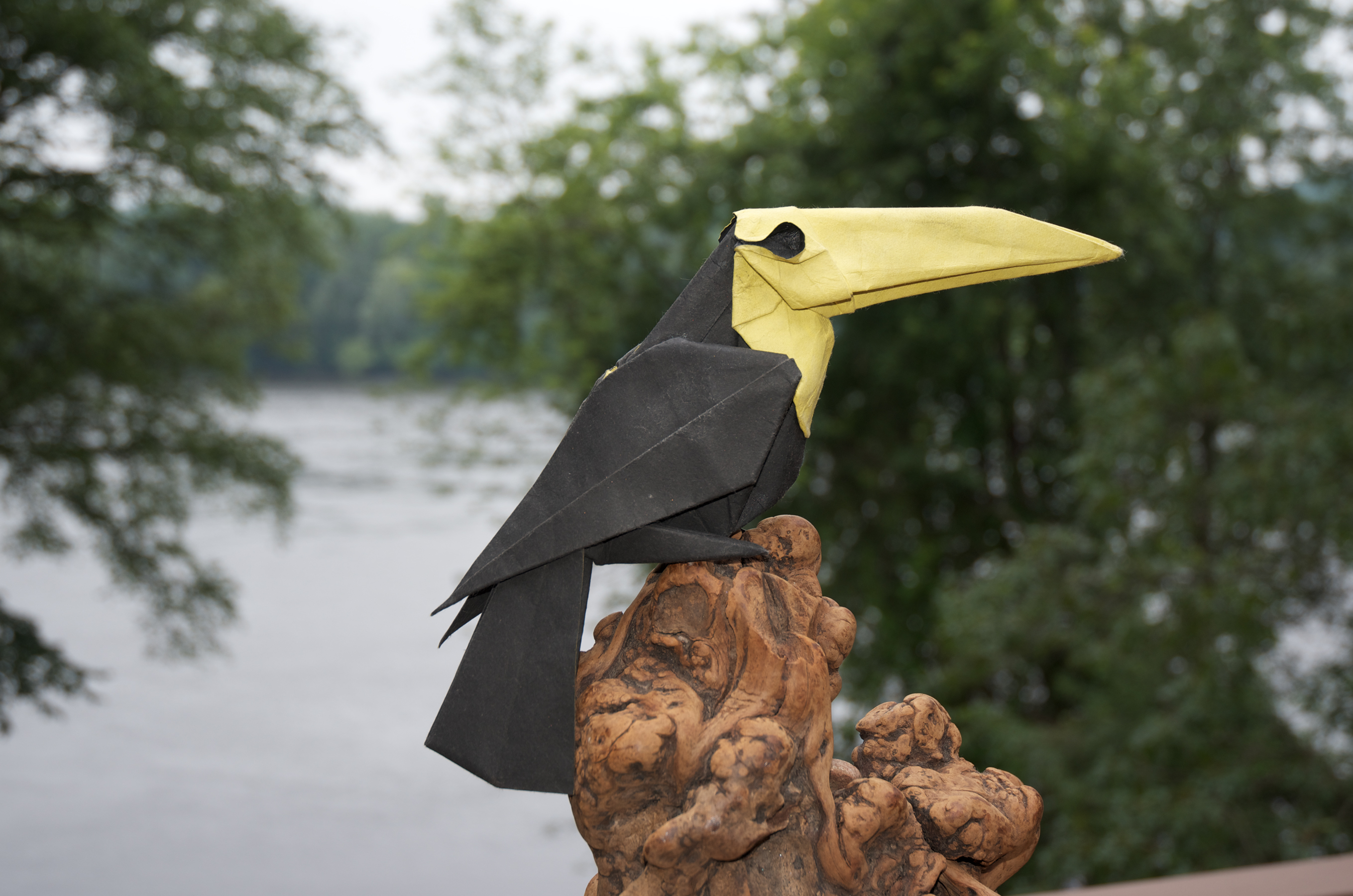
Toucan origami folded by Michael LaFosse

Toucan origami folded by Michael LaFosse

So now, the checklist is set, the floor plans are shaping up, and the artworks are rattling their boxes, eager to leap onto walls and into drawers to be seen and admired by all.

(Okay, so that last part is a little bit of an exaggeration, but only because I can’t prove it’s true.)  In that spirit, here are three sneak peeks at some new wonders to see when the ANC opens in October. 

Take a good look, and make a guess in the comments below.  Do you recognize any materials?  Shapes?  Artistic techniques?  (Go wild, and I’ll post the answers in a few days.)

Mystery Object 1:

bc cropped

Mystery Object 2:

cwq cropped

Mystery Object 3:

pme cropped

Getting Connected

Earlier this month, PEM launched Connected, a museum-wide blog with frequent updates from staff in all kinds of roles.  My inaugural post discusses prototyping, with a few brief peeks at the kinds of work we’ve been doing with visitors as we redesign the ANC for its grand reopening on October 19.  Check it out here: “Kid tested, guest approved.”

Right now we’re prototyping an interactive for Beyond Human, so I’m curious:

Bees direct other members of their hives to flowers using a ‘waggle dance’ that indicates direction and (to some extent) distance from the hive. 

ImageIf you were given the opportunity to mimic this ‘waggle dance’ movement through a full-body game invitation in the gallery, would you do it?  Why or why not? 


The Heart of the Art &Nature Center

I’ve been doing a lot of thinking about what makes my job special, and why it’s generally appealing to get up and go to work in the morning, and why there are so many people who come back to the museum week after week, for special events, for art making on a Sunday afternoon, for building the 75th version of a multicolored wooden bird with their four year old.

Part of it, of course, is that the people I work with are fascinating, fun, committed people, and in my job in particular I’m given a lot of scope to explore new ideas for programming and exhibits and the things that interest me in the world of arts and education.  But what makes the Art & Nature Center special *in particular,* I think, is the way it mixes love of art and love of the world around us with a ladle-full of wonder and a hearty dash of whimsy.

On its best days, working for the Art & Nature Center is like waking up inside a Mary Oliver poem.

Poem of the One world

by Mary Oliver

This morning
the beautiful white heron
was floating along above the water

and then into the sky of this
the one world
we all belong to

where everything
sooner or later
is a part of everything else

which thought made me feel
for a little while
quite beautiful myself.

“Museums are like food-are they part of your diet?” AAM day 3

Another brain-stretching, idea-popping day, with a lot of really packed conference rooms!  I managed to pick several extremely popular sessions today, and fortunately was not one of the folks sitting on the floor.  Nice to see so much determined interest in topics ranging from multi user multimedia interactives to experimental educational programming! Like yesterday, I’m picking my top 3-5 thoughts from each session, but definitely expect to see more from me on some of these topics soon:

Session 1: Learning Together: Developing Multi User Interactives

  • Multi user interactives are more than scaled-up single user kiosks: looking at other kinds of interactives like low-tech tabletops and games can be more useful for developing a digital multi user experience
  • Evaluation from the Field Museum suggests people who work together on an interactive smile 50% of the time, and visitors on their own smile only 10% of the time.
  • Next step in multi-user interactives probably includes motion sensing using elements like the Kinect, which might also help solve design problems like orienting text.

Session 2: Significant Objects

  • Writers recruited to write fiction about yardsale finds, which were then sold on ebay and had a 2700% increase in financial value – what kinds of lessons about storytelling and the perceived value of objects does this hold for museums?  How can we create different entry points for people who might be craving the kinds of stories museums could tell but aren’t telling, or aren’t telling effectively?
  •  Participatory design vs. design for participation — how do you balance it so that content creators enjoy the process and it’s open to a wide range of people, but still end up with a final product that has an appeal to people who weren’t part of its creation?
  • how much can museums play with the truth?  How does this tie in with the conversation from earlier in the conference about real, fake, reproductions, and replicas?

Session 3: Magnificent Masters of Museum Mysteries, Narrative Games in Museum Contexts

  • This panel was full of people I’d really like to spend more time talking to–sadly I had a conflict and couldn’t attend their continued discussion in the hotel bar afterwards, but I’ll be watching their next projects with interest.
  • I’d heard about the Ghosts of a Chance game at the Smithsonian before, but it’s a pretty intimidating example, so hearing about their second attempt that didn’t go so well and their plans for a third was heartening, as was pairing this extreme example with two simpler examples from the Getty and the Cleveland Museum of Art.
  • Getting to play a game during a session on games was a nice touch.

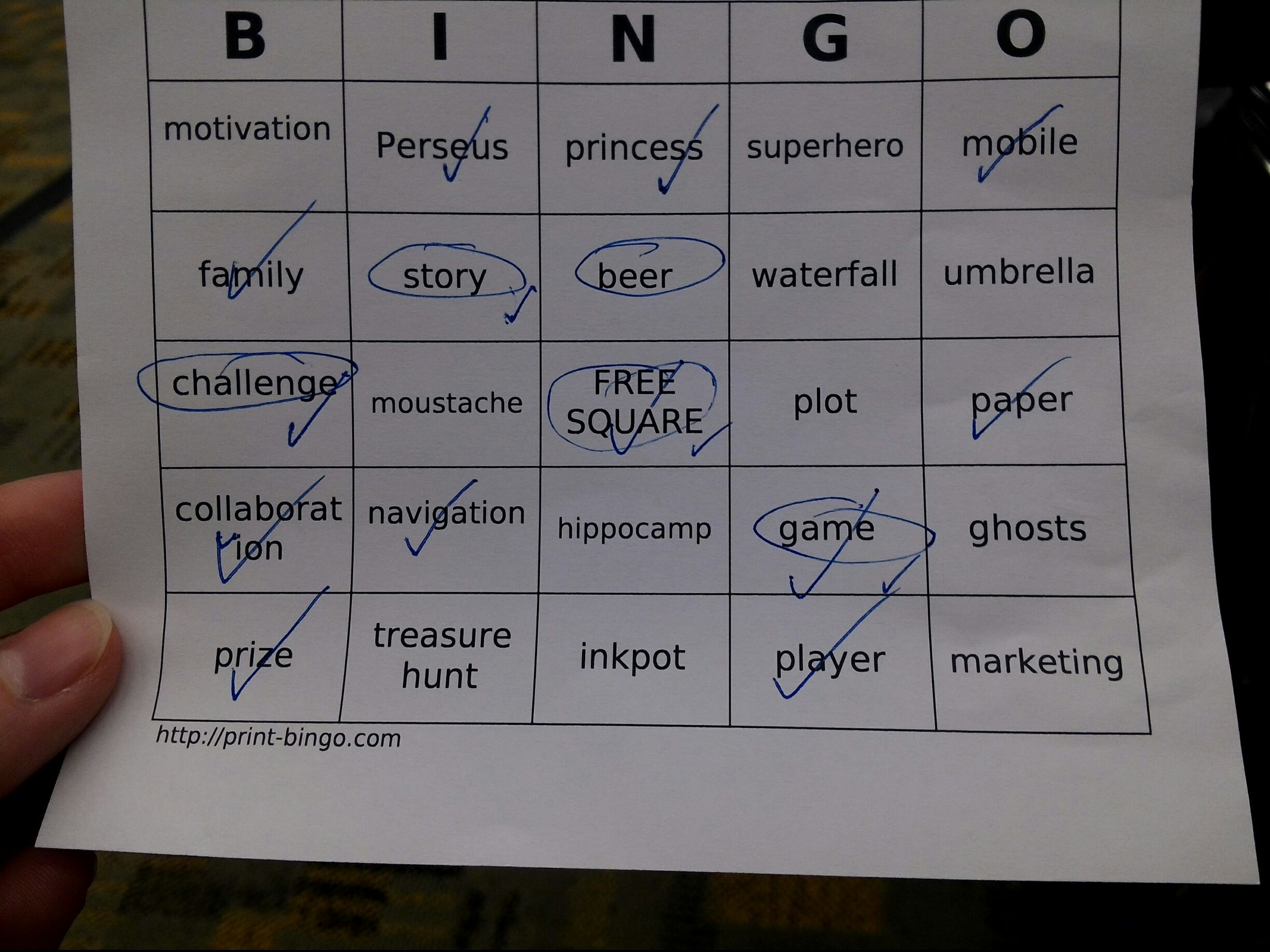
IMG_20130521_140700.617

Session 4: Continuing the Conversation, Experimental Projects in Museums

  • Lots of interesting projects going on with inviting community members, particularly creative professionals, into the museum to offer their own spin on programming.  Requires clear guidelines from the museum and a flexible hands-off policy to allow for individuality and fresh ideas.
  • Interesting initiative from Living Arts Center in Mobile where they run a two month intro or ‘pulse’ mini-exhibit to collect community thoughts on the topics of the upcoming featured exhibit- a glorified (and formalized) type of prototyping mixed with marketing that’s really curious.
  • Community involvement in exhibition planning seems to mean much shorter time spans than when working solely with museum professionals–is that an audience based constraint (short attention spans) or a museum one (resource and space commitments)?

Session 5: “Your Brain on Art” sponsored by Reach Advisors

  • There was a fancier more academic title, but the scientists from Johns Hopkins suggested this title instead and it fit well.  It was a great conversation where each side wanted to find out more about what the others were doing–could have easily run for another hour!
  • Fun to hear people outside the field debating the things that museum pros care so much about: is it all about education?  what do museums have that is  unique to that kind of experience?  what about reflection?  is wonder a jolt of quick there-and-gone energy to the brain, or an opportunity for a deeper connection?  what makes for a useful measurement of success at reaching your audience?
  • Is it possible for parents who love museums to pass that love on to their children?  Some studies suggest that culture changes too fast and peers have too much influence, but yet parental modelling is still one of the best ways to convey values to children.  Museums are like food–if you go to museums the way you have family dinner around the kitchen table, make it a regular part of life, have conversations about it, share thoughts and favorites and encourage your kids to do the same, then  yes,  parents can definitely pass the culture of  museum love along.

IMG_20130521_163255.441   Evening enjoyment: The Owl Bar

  • Incredibly cool and beautiful old bar from the days of Prohibition, with fun stories regarding the blinking owl signal lights over the bar (blinking means the cops aren’t around and it’s safe to order from the speak easy!) and quite tasty food.
  • Worth the 2 mile trek up from the convention center and a fun adventure to a different section of the city.  The worst part about a really interesting conference is that there’s too little time for sightseeing.

“To Help People Dream,” AAM Day 2

I have a feeling that this is the sort of conference that gets exponentially more busy each day, so today I’m going to stick to bullet points: my top 3-5 reactions, quotes, ideas, or experiences from each session.  (You can expect me to go back to some of these ideas in later posts instead.)

Session 1: Stories Alive: The Power of Theater in Conservation Education

  • I respect people who start professional conference sessions with puppets.  Seriously, way to grab attention when half the people in the room haven’t got their caffeine yet because the conference center Starbucks was overwhelmed.
  • This was an interesting balance to yesterday’s session, because it included examples of different kinds of (mostly larger) theater programs, and also discussion of evaluation and figuring out lingering impact and message effectiveness.

Session 2: General Session – Education, Stories, Museums: Transforming Lives, Keynote Speaker Dr. Freeman Hrabowski of UMBC

Image

  • Instead of ‘what did you learn today,’ ask ‘did you ask a good question today?’  Encouraging curiosity leads to great thinkers.
  • Experience in the arts, even if you are not excellent, makes you realize and appreciate what it takes to be excellent.
  • The fundamental purpose of museum and of education is to help people dream.

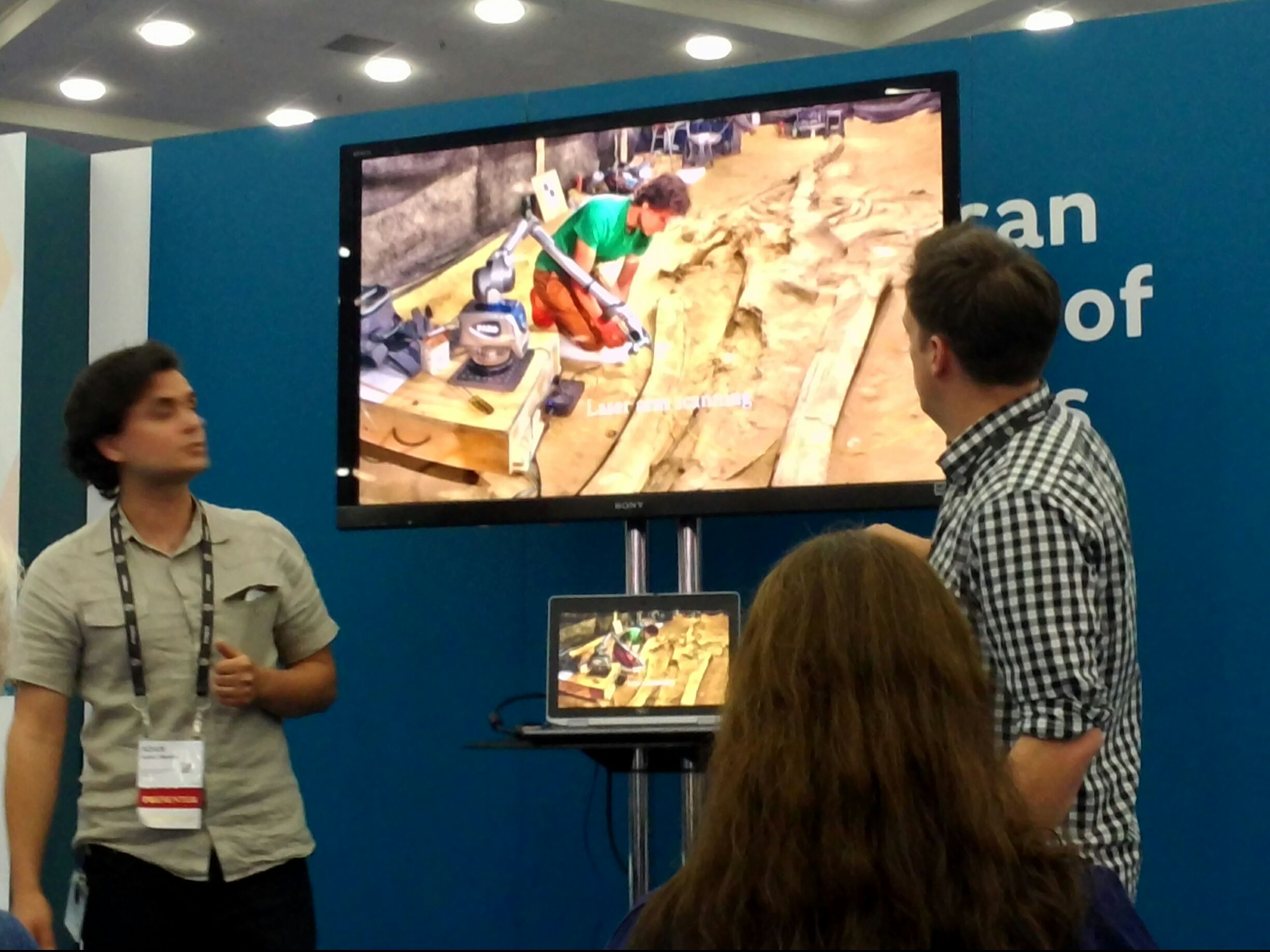
Session 3: 3D Printing from the Smithsonian

  • I feel like museums need to go talk to people at Pixar and Weta and some of the other fields where they’ve been doing more with 3D scans and imagery, like those laser scanned reproductions of various actors for their character busts and replicas.  Because there are cool ideas out there we could be using.
  • I like the idea of reproduced models of archaeological digs and virtual dinosaur bones for study.
  • The Smithsonian has a real advantage in testing out these new techniques given that they have 19 museums and 9 research centers to play around with a range of ideas.

Image

Session 4: Maximizing the Nation’s Common Wealth: Museums and Parks in Partnership

  • Sitting in the same room with the Secretary of the Smithsonian and the Deputy Director of the National Park Service is a little like attending a museum equivalent of a rock concert.
  • The strategic plans (with an emphasis on education for each) are supposed to be available in the session notes on the AAM website.  They sound/look like an interesting read.
  • For all that they have significant and impressive visitation figures, both institutions suffer from the same issues regarding diversity and relevance that almost all traditional museums are currently facing and attempting to change.  It will be interesting to see what works on such a large scale.

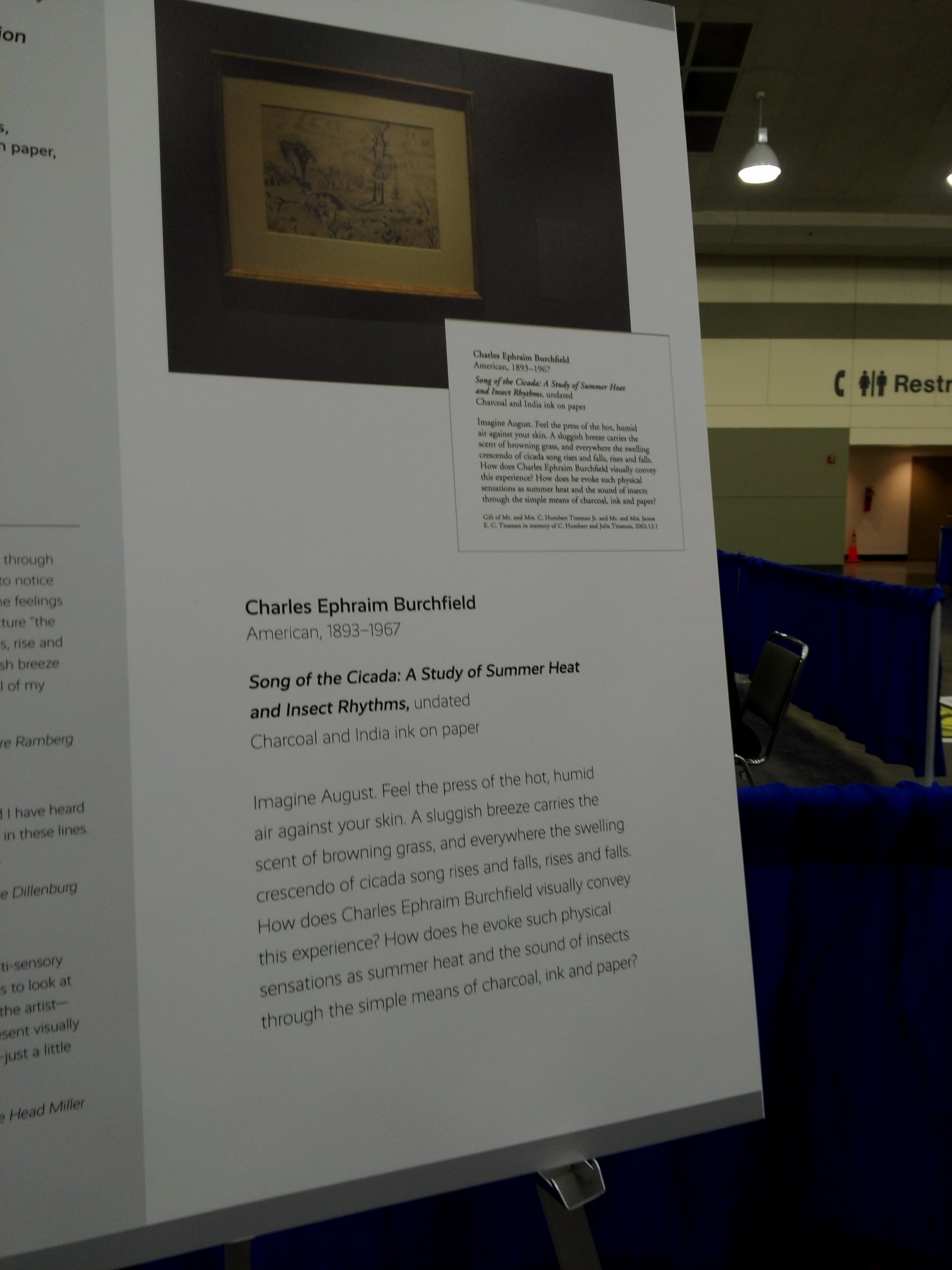
Session 5a: Museum Marketplace: Exhibit Labels competition

  • Definitely a lot of labels that privilege descriptive writing over the purely didactic.  Makes for an interesting read that has either a conversational or reflective cadence.

Image


Image

Session 5b: Museum Marketplace: Education showcase

  • Always nice to see what other folks in my field are up to!  Reading blogs is interesting, conversations are even better.
  • Fun and interesting thoughts about Maker spaces and their uses with school programs.
  • Cool cooperation happening between Smithsonian museums for interdisciplinary approaches to exhibits, especially art & science.  Always nice to see that happening.

Expo Showcase 6: Augmenting Dinosaurs – Augmented Reality Installations 

  • I appreciated the opportunity to hear from museum staff, computer/media designers, and the paleontologist whose research led to the animations used in the augmented reality interactives.  The range of perspectives made it more useful and interesting than a vendor-only session would have been.
  • T-Rex shook its prey like a crocodile does and Allosaurus did the dip and rip move that small raptors like kestrels do.  And they can tell that based on skeletons and the way the muscles would have had to attach to them.  Amazing.
  • Augmented reality seems like a reasonable thing to explore for enlivening the natural history elements in the Art & Nature Center–but I wonder, what would make it compelling for the Art half of that equation?

After Hours Fun 7: Wonders of the Undersea World at the Baltimore National Aquarium

  • Great staff, very personable and willing to answer questions on practically any topic.  Beautiful building,  not unlike Boston’s NEAq (and the central tank was apparently designed by the same person)
  • They have dolphins–7 of them. I am very jealous.  
  • I loved the rainforest exhibit, including the opportunity for visitors to hold a stick with live crickets over the archer fish tank and watch them spit water at the crickets to knock them into eating range.  That was highly entertaining, if unfortunate for the crickets.
  • I will never understand aquarium catering being okay with serving seafood, no matter how tasty the crab dip.

Bonny Baltimore, Day 1 from the AAM conference

Today was my first day ever at an AAM conference, and it started off brilliantly.  It’s going to be a busy several days, according to the amount of orange highlighter decorating my conference booklet, and if all the sessions are even half as interesting as the first few, it’ll be time well spent.

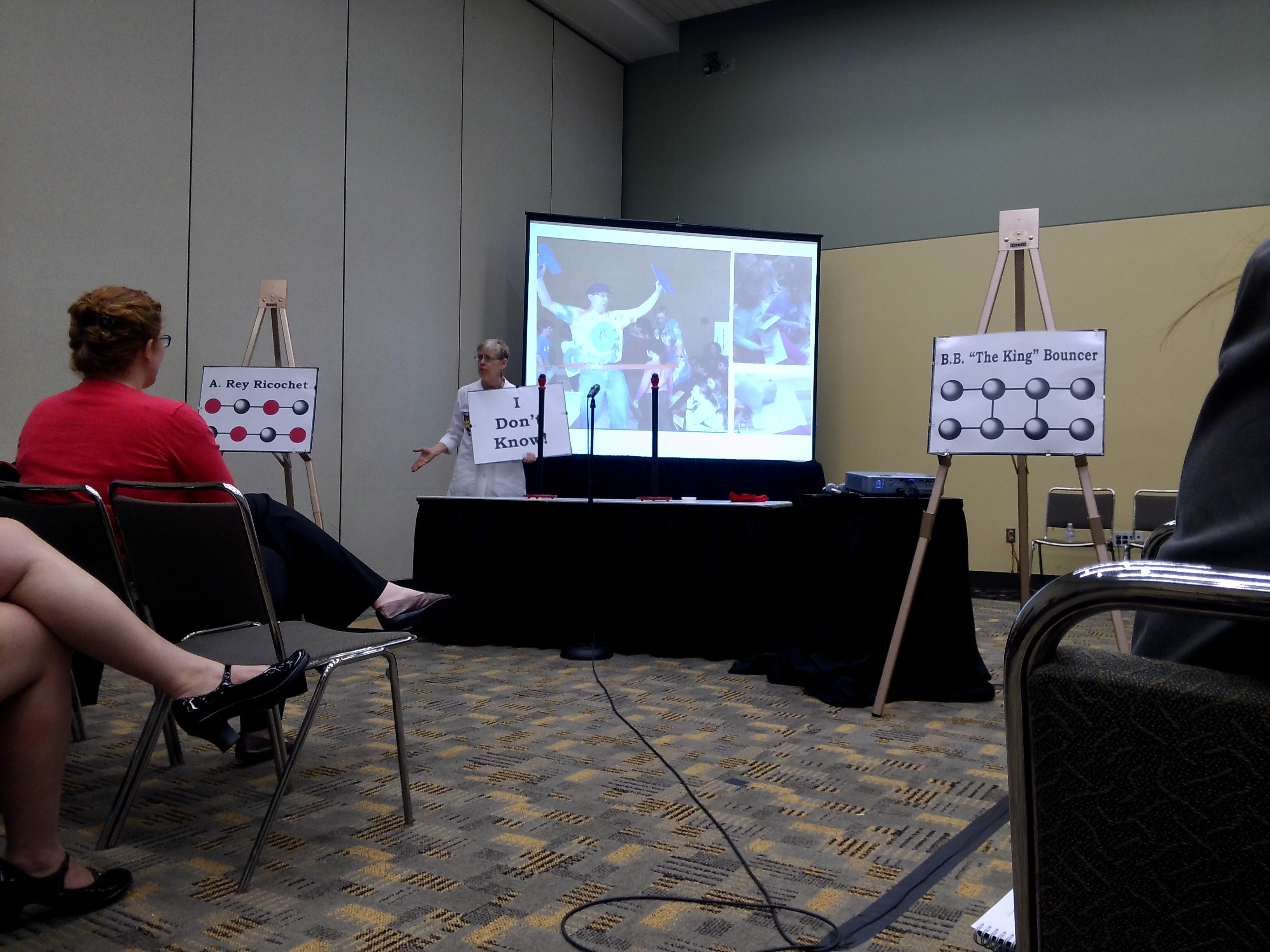
The afternoon’s first session I attended was a showcase of museum theater programs hosted by the folks at IMTAL, with four different museums (2 science, 2 history) offering up snippets of their presentations.  All were family and student friendly, but wildly different in presentation style and a really interesting assortment to hold up against each other.  Most included audience participation, all included humor and an emphasis on finding a connection, emotional or experiential.

The Museum of Science and Industry in Chicago presented “Taste Buddies,” with a lead character in a candy-striped vest who employed a lot of puns and a *lot* of energy, including audience volunteers who gamely ate unidentified jelly beans (you need to know me to understand just how brave that seemed to me, but it was definitely a Bertie Bott’s moment).  Fusion Science Theater worked up a bunch of excitement over the molecular structure of rubber, of all things, using a pair of apparently identical mystery bouncing balls in a pro-wrestling style show down to introduce scientific method and a lot of the related vocabulary.

IMG_20130519_143721

The Missouri History Center presented “Dressing from the Inside Out” with a demonstration of changing women’s undergarments over several decades, and made a point of appealing to the audience by relating the garments involved to everything from Pride and Prejudice and the probable dress-damping tendencies of Caroline Bingley to the structure of sports bras–the presenter was clearly very in tune with what would appeal to her current audience.

And my very favorite was “Love on the Range,” a storytelling performance by an actor from the Smithsonian Museum of American History, that incorporated music, dramatic pauses, and a lot of great colorful language and description.  I like the Smithsonian’s theater program for a lot of reasons, and this was no exception.

IMG_20130519_144619

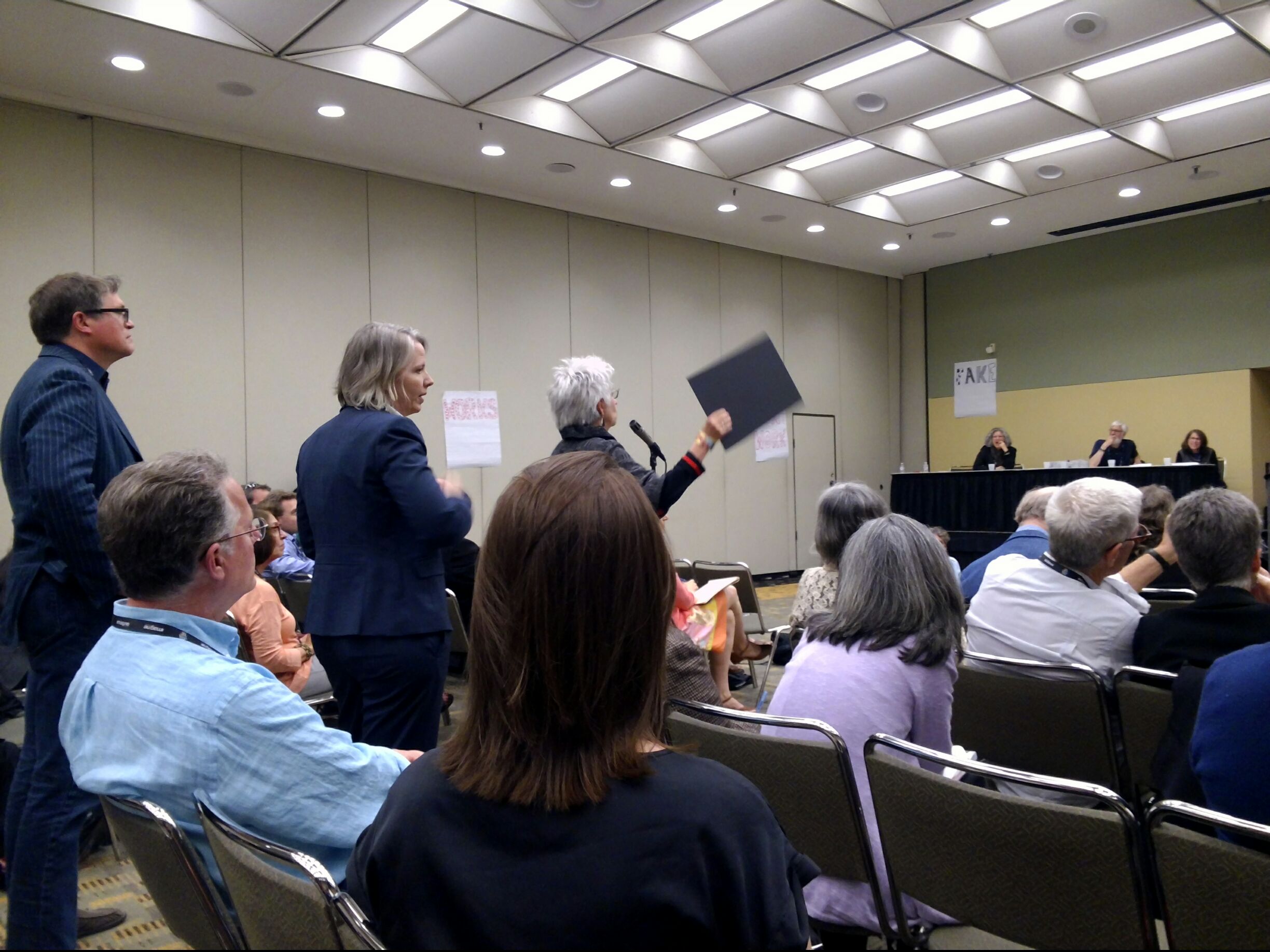
The other session I went to this afternoon concerned the use of reproductions, replicas, and non-accessioned objects in museum situations. Titled “Is it Real? Who Cares?” it featured some of the best interactive discussion in a large-audience panel-format session I’ve ever seen, with lively debate happening about the spectrum of real to fake objects and whether or not those experiences worked.  There was a lot of muddy ground in the middle, of course, but some very fun examples of curious uses of reproductions, etc, from the Franklin Institute’s extremely popular walk-through heart to disagreements over reenactors to a very wacky sounding Australian version of Stonehenge.  If you are curious in turn, you can check out the panelists’ planning blog.

IMG_20130519_154824.519