Happy Winter Solstice 2009!

Let it Snow

You would think I’d be done with cool snow-themed links by now, right?  Nope.

Guide to Snowflakes from CalTech.  Great chart of the immense variety of snow crystal shapes, with neat pictures by Ken Libbrecht and descriptions of some of the conditions needed to form specific kinds of snowflakes.  This is just one page out of a pretty impressive site all about snow and frost.  Well worth exploring.  (One of my favorite accidental discoveries on this site was the page on how to make snowflake fossils.)

Solstice: the day the sun stands still (from the Latin)

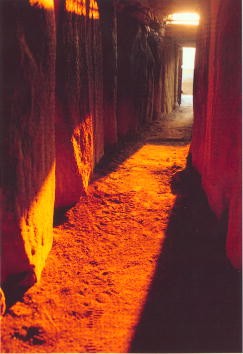
Newgrange at Solstice

Newgrange at Solstice, from Fodors.com (Click for original page)

Find all kinds of cool facts about the solstice today from National Geographic (you’ve all noticed I love these guys by now, I should hope?) I particularly enjoyed the mention of Newgrange, an incredibly cool Stone Age monument/tomb in Ireland which is 1000 years older than Stonehenge.  When it was built, it was designed to exactly align with the winter solstice dawn.  I visited it in summer, and it was still impressive then.

Here we come a wassailing

What’s the solstice without a touch of celebration? Despite my general fondness towards things historical, I haven’t tried either of these recipes yet.  However, they look delicious and have very positive reviews, so taste at your own discretion.

Kid-Safe Recipe

High Octane Recipe

Happy Holidays to all! This blog will be going on vacation until Jan. 2nd, 2010.  May you and yours be safe, warm, merry, and curious this holiday season.

Icy Cool Science

I was going to post this tomorrow, but in honor of the enormous blanket of white stuff covering the East Coast from DC northwards, I’m posting early.

Boiling Water to Ice Crystals in a Flash

Boiling Water Flash Frozen

Boiling Water Flash Frozen

On a day when temperatures are below freezing (the colder the better!), get a mug or pot of boiling water and bring it outside.  Toss the water in the air (away from yourself and any innocent bystanders!)  and watch the water flash freeze into a cloud of ice crystals.  NB: If you do this at your school or museum, do not direct the water where ice will fall on walkways, parking lots, or visitors.

Why does this happen?

All things being equal, cold water freezes faster. It takes time for the energy contained in a hot object to be transferred to a cold object. However, the rate of heat transfer is proportional to the temperature difference between the two objects, so hot water will lose heat faster than cold water. In other words, if you have water at 90 degrees C and water at 10 degrees C and the freezer is at -10 degrees C, the hot water will lose heat five times faster than the cold water; however, the cold water will still win the race. As the hot water cools it’s rate of heat transfer will decrease, so it will never catch up to the cold water.

Some people claim that hot water freezes faster because a pot of boiling water can be thrown into the air on a cold winter day, and it freezes in mid air creating a shower of ice crystals. Whereas a pot of cold water thrown into the air comes down as large blobs of water. This happens because the hot water is so close to being steam, that the act of throwing it into the air causes it to break up into tiny droplets. (hot water is less viscous than cold water, listen to the sound it makes when you pour it in the sink) The small water droplets have a large surface area which allows for a great deal of evaporation, this removes heat quickly. And finally, the cooled droplets are so small, that they can be easily frozen by the winter air. All of this happens before the water hits the ground. Cold water is thicker and stickier, it doesn’t break up into such small pieces when thrown into the air, so it comes down in large blobs.

Joe Larsen, Ph.D. Chemistry, Rockwell Science Center, Los Angeles, CA

For video and further information, see http://blog.wired.com/geekdad/2009/02/boiling-water-.html

Plus an extra-cool kaleidescope snowflake generator, with thanks to Paul Orselli of Exhibitricks for the link!  I love the option to spin your crystals round not only in two, but in three dimensions.

Fun with Snow: Shovels Optional

Here are a bunch of snow activities to try, to celebrate last week’s first intense snow of the year.

Make a Snowflake:

Fold a piece of paper or a coffee filter in half.  Then fold it in thirds from the middle point.  (As if you were making ‘pizza slice’ shapes, so that you have 6 triangles.)  Trim the edges so that you have roughly a circle, if you are using a regular piece of paper.  Cut along the edges and folds, then unfold for a proper 6 pointed snowflake!

If you want to avoid the blizzard of cut paper pieces, try an online snowflake-maker, here: http://snowflakes.barkleyus.com/

Outdoor Snow Fun:

1. Jump snow hurdles: Lightly pack a bunch of basketball-size snowballs. Use them to build a course of hurdles to jump over in a round of follow the leader.

2. Get on a roll: Pair up for a contest in which the object is to finish with the biggest snowball. The contest ends when the teams can no longer roll their entries or when you run out of snow.

3. Catch a snowflake: Find out what’s different ? and the same ? about a bunch of snowflakes. Catch some on a piece of black construction paper or a dark mitten or sweater.  At The Discovery Museums, we have a bunch of blue-velvet covered cardboard squares available for snow-catching.  We tend to store them in the freezer so they’re snow-ready!

4. Make an iceberg float: Invite kids to make two miniature icebergs (snowballs), one packed very hard and the other fairly soft. Indoors, fill a bucket or basin with cold water, put the snowballs in it, and watch what happens. (Because the hard snowball has air bubbles trapped inside, it will float higher in the water than the softer one.)

Stay tuned next week for icy cool science!

Ideabox: CD’s and CD cases

photo credit to ChristopherA

Due to the upswing of digitally-downloaded music, mp3 players, et al. there are a lot fewer junk CD’s and spare CD cases lying around these days.  This is certainly good for the planet, but not so great for those of us who like making cool projects out of them.  Fortunately, computer programs still end up replaced, CD-R’s burn with skips in them and have to be redone, and random CD cases still turn up in the bottom of your desk drawer when you least expect them.

So…what are some fun and funky things to do with these fabulous plastic leftovers?

ideabox cds

CD’s themselves

It is, of course, completely possible to just Google ‘CD crafts’ and find some cute projects, especially for kids–there are a reasonable number of idea-starters at Kaboose, for instance.  However, all that sifting takes time, so here are a few others of my favorites so far.

For the seasonally appropriate: Making CD Christmas Ornaments

For the jewelry fan: Example of CDs turned into earrings

For people who like to play with fire: (no seriously, apparently they want you to use a candle to heat the CD in order to bend it!) How to Make a CD into a Cellphone Holster

For the purely silly: CD Air Hockey Rink

For the science-minded: CD’s are obviously cool for the way they split light into its component rainbow colors–this is called a diffraction grating.  For an explanation of diffraction grating, how it works, and CD’s in particular, click here.  For a really cool build-your-own-spectroscope project, click here.

CD Jewel Cases

For the nature fan: CD Jewel Case birdhouse/greenhouse

For the recyclables architect: Cubic Display Case on Instructables (there are a lot of other cool CD case projects on the same site, check the sidebar for a few examples!)

Still looking for more ideas? There’s another fun collection on HubPages, here.  My favorite idea there is definitely the suncatcher, but see what inspires you!

Stay tuned for the next Ideabox post: cool stuff to do with those CD-R and DVD-R spindles, thread spools, and more!

Talk to Me: Websites that Capture Museum Experiences

I’m working on the problem of experiential museums and the way they represent themselves on the internet.  Though obviously some museums have an impressive web presence on Twitter, Flickr, Facebook, etc. I’m specifically interested in museums’ own home websites, where one hopefully gets the clearest message about who these museums are and what it is like being there.

There are a number of art museums that have very impressive websites (Boston’s MFA is top of my list largely due to familiarity, but there are certainly others), however I feel that in general art museums have it easiest, being in general object-centric.  (Certainly there are exceptions, but looking at the ‘object of the week’ feature and overall focus of exciting new projects like Open Museum show that I’m not alone in thinking that the ‘stuff’ is what’s central in a lot of these places.)  Historic sites have it almost as easy, if they’re largely interested in interpreting material culture.

What about other kinds of museums?  How do living history museums, inquiry-learning discovery/science centers, children’s museums, and others that put the experience (theatrical, hands-on, or otherwise) represent themselves in a format which is so removed from their physical presence?  Is there a way to capture what it’s like to be there?  To simulate it, or at least adequately record and share it?  To spread the message and the mission so that when people get to the physical space, they understand why it is the way it is?

Off the top of my head, the Exploratorium seems to have a few of those ‘best practices’ to share, and surely there are others.

Bat-eared Foxes, photo by Floridapfe

Talk to me about museums you think do this well (or if it’s even possible) –I’m all ears.

Looking through a New Lens: Interdisciplinary Programming (Even on a Small Budget)

This past week was the annual New England Museum Association conference, in Nashua, NH.  There were a number of fascinating sessions, ranging from ways to use content-embedded mapping projects, to the use of art in non-traditional spaces to further the ‘story’ of history or science, to ‘outside the box’ thinking about greening museums.  (Expect more thinking on some of those topics from me in the future!)

So, other than taking copious notes, wishing the hotel were just a few degrees warmer, and poking around the exhibit hall, what was I up to?
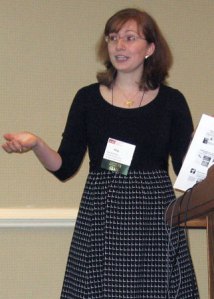
Meg presenting at NEMA2009

What am I bouncing about this time?

It was my great pleasure to chair a session titled “Looking through a New Lens: Interdisciplinary Programming (Even on a Small Budget)” with colleagues and friends from the Museum of Science, Boston, and Longfellow National Historic Site.  I’ve included my section of the presentation here, which provides basic background and coping strategies for ‘why do interdisciplinary programming?’ and ‘how to go about it’ depending on whether or not your idea bag is full.  Nancy Jones, supervisory ranger at Longfellow NHS then presented on some of the many ways she and her rangers make history, poetry, and art tangible, relevant, and exciting, and Mike Adams, outreach coordinator for MOS-Boston discussed the way their Archaeology week encompasses standard programs, special exhibits, and special events every October.

Why do interdisciplinary programming? (Which, for the purposes of this discussion and this blog in general is defined as taking one topic or idea which is usually considered part of one discipline, and looking at it through the lens of another less familiar one.)  First of all, why not?  There are a lot of good reasons, including giving your staff and visitors variety, attracting new audiences, and just plain having fun with it.  Not to mention the fact that in the age of standardized testing and rigid curriculum requirements, museums and other places of informal learning are some of the only remaining ways to explore, promote critical thinking, and generally enliven curiosity.

There are a lot of excuses for not doing interdisciplinary programming–expertise, time, and money are the big ones.  But depending on where you’re starting to brainstorm your ideas, there are a number of solutions available to you.

Have you already decided on a topic, an object, a person or idea?  Think about the basic questions: When is it from?  How was it made?  By whom?  Why?  What purpose does it serve?  How does it connect to today’s life and people?

If you don’t have an idea, there are three organizing questions to start your brainstorming:

  • What do you wonder?
  • What do you love?
  • What do you have?

Wonder: Maybe you have a popular program but you’d like to take it further, or in a new direction.  Maybe you’ve read an interesting article in a newspaper or magazine and would like to explore it beyond what you’ve read.

Love: This is the simple one, and my favorite.  Are you a frustrated actor?  Write programs that give you an excuse to dress up.  Feel like you’re living in the wrong time period?  Always wanted to be an astronaut?  Think about the things you (and your staff) love: your hobbies, interests, pursuits outside the world of work.  Bring them in and share them with your audience: the more enthusiastic you are, the more convincing an educator you can be.

Have: The bare bottom line.  Still don’t have an idea?  Look at what you’ve got.  Are there exhibits that you could liven up by changing signage or context?  Can you think about them from a different point of view, only tangentially related to the main story you usually tell?  Or are you starting with the infamous box of cool junk under your desk?  (Mine has multiplied in to several boxes, of spools, coffee filters, neat plastic tubes of different shapes and sizes, altoid boxes, magnets, and heaven only knows what else.)  What in that inspires you to make something, explore something, combine with something?

Still stuck?  Call a neighbor or a friend with the right expertise for what you’re hoping to do.  Generally we non-profit types are more than happy to help.  Also, don’t forget to poll your staff and make friends with your local librarian.  You never know what they might be able to find for you!
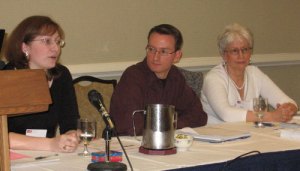
Meg, Mike, and Nancy at NEMA2009

Many thanks to Mike Adams of the Museum of Science and Nancy Jones of Longfellow National Historic Site!

If you’re interested in any of the handouts from the presentation or in Mike’s or Nancy’s presentations, please let me know.  Many of the resources I referenced in my presentation are already listed here on Brain Popcorn in the Resources section, and I add to it frequently.

Find some of my other program presentations on SlideShare, here.
Just for Fun: What’s in your brain?

It’s not every day that one comes across art that so perfectly ties in with a blog named “Brain Popcorn.”  However, thanks to a tweet from Paul Orselli, I wandered over to Behance Network to discover “What have you got in your head?

(My personal favorite is this brain made of star-shaped pasta.  Fabulous.  Even if today, my brain is made of chocolate wrapped in a to-do list.)

Credit goes to Sara Asnaghi. Click the picture to see the rest of her brain-art.

So much cooler than the brain-shaped jello-mold we had hanging around the ed office for a while. (I wonder what I did with that?  I’m feeling inspired.)

Looking for further brain art?  Check out “The Museum of Scientifically Accurate Fabric Brain Art.”  It’s a stitch.

And, just to make me feel better about the whole brain-of-chocolate business:
Chocolate, Wine, and Tea Improve Brain Performance


Another reason to love November

Is it just too long until National Poetry Month for you?  It certainly is for me–which is why it’s awesome that November is  Family Literacy Month.

The central idea behind Family Literacy Month is that parents and other adult role models are keystones to their children’s habits of, attitudes toward, and grasp of reading.  If you’re looking for some fun ways to incorporate literacy activities into your day, here are a few places to get started:

Credit to cx1uk

For ages 3-5: 31 Days of Reading (though personally I think older kids would enjoy some of these too!)

For all ages:
The Massachusetts Libraries’ page on Family Literacy Month, with a link to events occurring at local libraries and information on the Boston Children’s Museum event later this month.

The National Center for Family Literacy; they’ve got an interesting collection of research and resources for educators on working with parents and children.

Even more research and resources from the Massachusetts Family Literacy Consortium.

And because I cannot include links to all that dry information without some other fun places to start playing with words:

Wordle: creating pictures with words (ala the image above in this post)

Word Games by Merriam Webster Online

Read aloud the colors the words are written in, not the words themselves.

The Stroop Effect, at Neuroscience for Kids: trick your brain–how easy is it to read a color when the word says something else?

The Past in Motion

This does not, I suppose, technically qualify as archaeology.

However, in the theme of really-cool-bygone-stuff, I bring you: The Animated Bayeux Tapestry.

This is no substitute for getting to see the real thing–the sheer immensity of this tapestry just does not convey on a video clip.  However, it’s a cunning piece of animation, and the foley artist involved clearly had a lot of fun with everything from the feasting noises to the horses to the ‘guuuuh’ and ‘gack’ sounds of battle.  And if you’re looking for a way to liven up the story of 1066 and the Norman Conquest, this is a fun way to go about it.

Have I whetted your appetite for tapestries, Normans, or movie-making?

Britain’s Museum of Reading has a great site about the Bayeux Tapestry, including an activities page which made me grin.  [Specifically the directions on how to make your own Norman soldier’s helmet.  (Halloween, anyone?)]

If it’s the sounds that really caught your fancy, check out Paul Orselli’s great recent blog post: Exhibit Designer’s Toolkit: Creating the Sounds of Gore and Squidge

And if you’re intrigued by the illustration style of the medieval tapestry, try your hand at the Historic Tale Construction Cit (presumably pronounced ‘kit’ as all ‘c’s are hard).  Write and illustrate your own story using figures, settings, and beasts from the Bayeux Tapestry–careful, this is a hoot and dangerously addictive to those of us who grew up loving computer programs like Storybook Weaver.  The image interface is pretty sound, too–you can resize and flip the image elements, as well as type captions, with the option to create several frames, save them, email them, and submit to a visitor-created gallery.

Archaeology in the News

There’s been a lot of fun stuff going on in the world to do with archaeology!

Upcoming local event if you’re in Boston:
Next week is Archaeology Week at the Museum of Science.  Though The Discovery Museums sadly isn’t going to be there this year, we were last year and it was a blast.  I highly recommend the Fair on Friday and Saturday.  Hopefully we’ll see you there next year, too!

Awesome new discovery in England:
Just a few weeks ago, news broke of a hoard of Anglo-Saxon gold and metalwork found in a private farmer’s field by an amateur with a metal detector.  More details on Huffington Post and more pictures on National Geographic.

For kid-friendly background on the Anglo-Saxons, check out the BBC Primary History site here, including activity suggestions on the Teacher Resources page.

There aren’t a lot of metal working simulation activities out there for kids–I intend to do some playing around with aluminum foil to see if I come up with anything fun, and if I do, I’ll be sure to post it.

Buried streetlights surface on Governors Island

Buried streetlights surface on Governor's Island

Archaeology as a Character in Art:
Have you ever heard of Goverthing, the lost New York settlement last seen around the mid-1950’s?  Neither have most other people, but in a really neat confluence of art, imagination, and archaeology, visitors to Governor’s Island witnessed a dig uncovering this buried town.  Playing with the ideas of how we look at history, what we believe based on what’s buried in the ground, and just how gullible people are or aren’t, this exhibition looks like it was a lot of fun.