Those of you who follow Sea Dreams & Time Machines will know why I’ve been quiet this past month–all my blogging energy got diverted into churning out a whole lot of time-traveling, dragon-raising, industrialist-thwarting prose. In honor of people devoured by their passions everywhere, however, I share with you a recent clip by the highly entertaining Wil Wheaton, on why it’s awesome to be a nerd. (And thank you as always to the Trusted Source who pointed me towards it in the first place!)
Author: mwinikates
Ideabox: Cardboard Best Friends
There are some great stories out there about the power of imagination. As a kid, I was particularly fond of stories like Bridge to Terabithia, and The Phantom Tollbooth, and The Neverending Story. However, it’s a wide and wildly varying genre, so today I’m focusing on stories (and activities) to do with cardboard boxes.
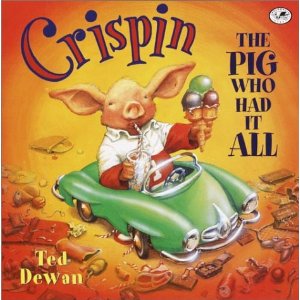 Crispin The Pig Who Had it All is officially a Christmas story wherein an overindulged pig is given an empty box for Christmas by Santa, but is a great story and amusingly illustrated for younger readers.
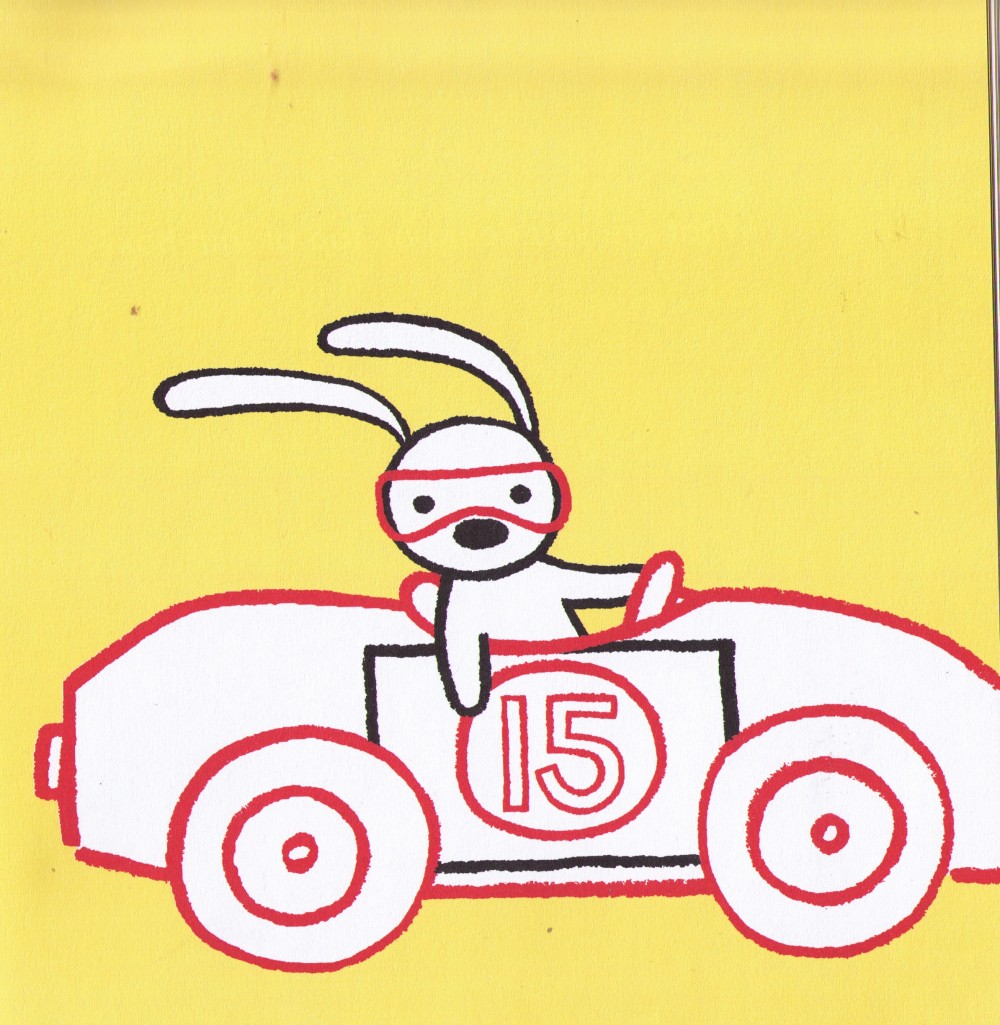
Not a Box is a in a much simpler style, with a much more indignant rabbit informing the off-page (and regrettably literal-minded likely-adult) that his/her apparent box is, in fact, not a box, but a…(you get the idea)
Not a Box printables for teachers at TeacherVision
Similarly, I ran across this beautiful video The Adventures of a Cardboard Box over on Vimeo:
And, of course, some people take their cardboard box visions to the extreme (and extremely cool):
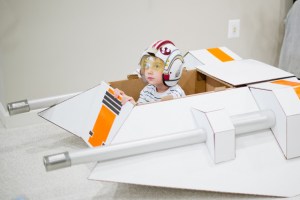
Created by Christine at Pure Joy Events. Click for link to source
But for the rest of us looking for a little inspiration, here is ikatbag’s Guide to Working with Cardboard and 40 Cool Cardboard Projects, which is an excellent starting place for the corrugated-minded.
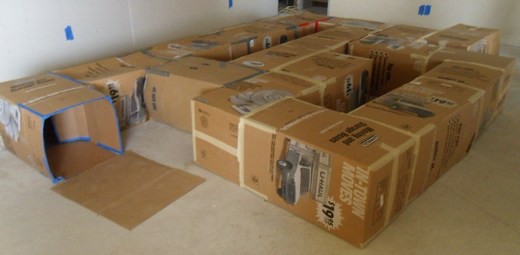
So tunnel in to a good idea (and then share it with me)!
Ideabox: Dough
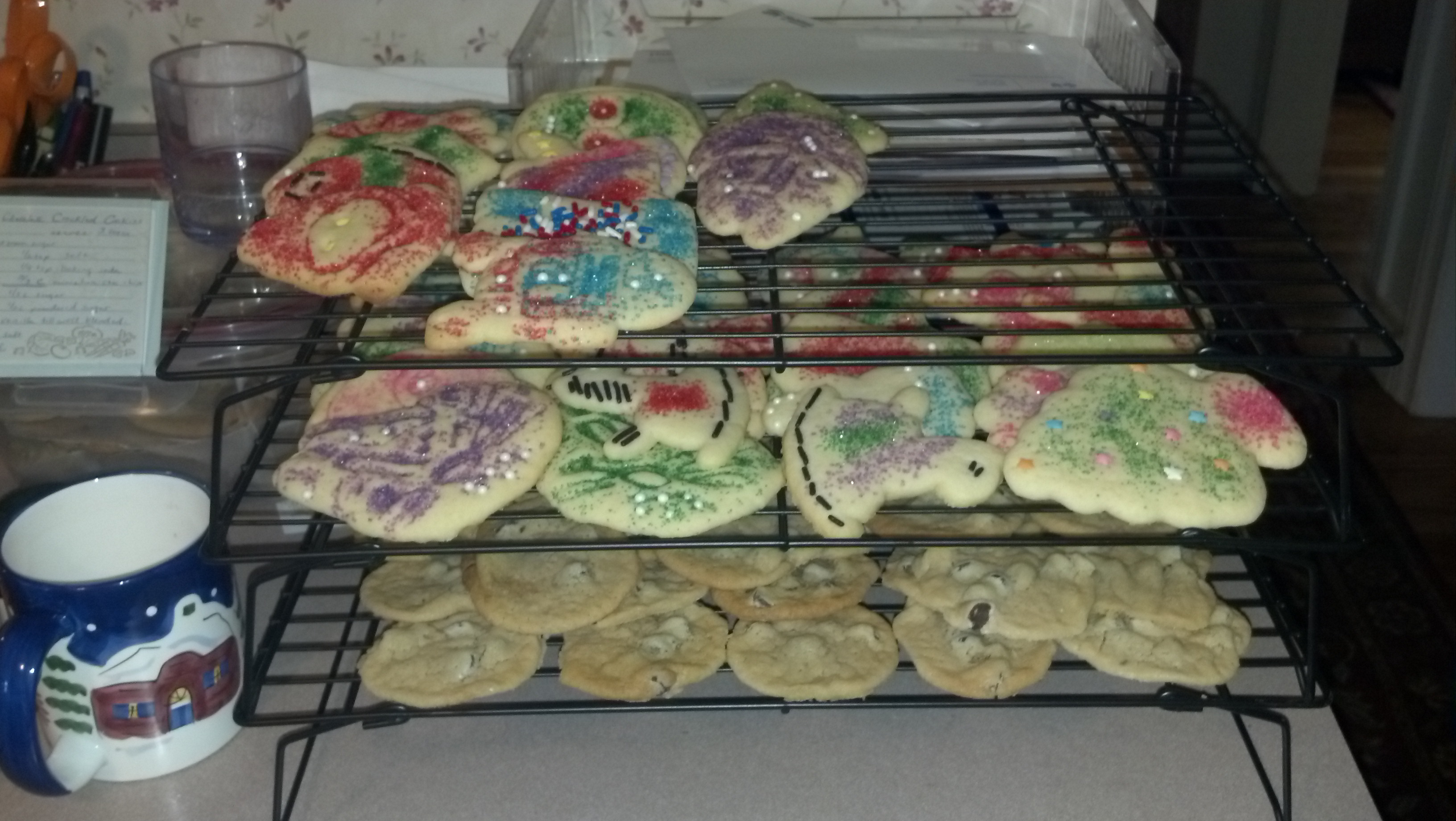
Just a sample of this year’s family baking output, complete with awesomely geeky new Star Wars cookie cutters to complement the traditional holiday shapes.
The Christmas season is so very strongly associated with cookie dough for me that it seemed the perfect time to explore some of the very many cool options involving doughy substances in art and science.
There are a number of good blogs out there that offer round-ups of fun things to do with play dough, so rather than repeat them, I will first point you to a few of my favorite existing aggregates:
12 props to use with play dough
137 cool activities and ideas for play dough
39 Ways to Use Play Dough from the Artful Parent (one of my absolute favorites)
And in true interdisciplinary fashion, here is an assortment of my play dough examples from across subject areas:
Science:
Discussing Play Dough as a Way to introduce the scientific thought process
History:
History of the Invention of Play-Doh
Literacy and Storytelling:
Art and Politics:
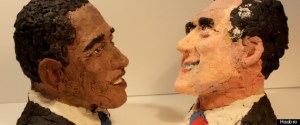
Award winning political play dough by Ian Williams
Artist Ian Williams’ Obama, Romney Play-Doh Creations Win Award
And finally, a few recipes for inspiration:
Playdough for the Allergy- and Eco-Sensitive
- Gluten Free Dough (be sure to check the comments for variations on the recipe)
- Natural Herbal Dough
- Natural Dyes for Play Dough
Playdough to Delight the Senses
Recipes for Interesting Smells
- Chocolate play dough (requires cooking)
- Cranberry, vanilla, chocolate, marzipan, allspice scented doughs
- Eucalyptus play dough and cloud dough (great if you have a cold!)
Recipes for Interesting Consistencies
- Traditional Cloud Dough
- Drawing Dough (more liquid, so you can create designs via squirt bottle)
- Cornmeal Dough (sandier texture than flour-based recipes)
Recipes for Interesting Visuals
Not enough? Check out this extremely thorough play dough focused Pinterest board
Happy Trails: A Year of Stories and Art
Once a month, I lead Story Trails, a program for families on Sunday afternoons that’s targeted for kids ages 5-8 with their accompanying adults. We look closely at an artwork in one of the exhibits, read an associated story, and then head for a studio space (or other safe art-making zone) and create something inspired by the artwork, the story’s theme, the illustration style, or the associated science/history/literature component. (Remember how my middle name is ‘interdisciplinary?’) Along with whatever their creation is, participants (including adults, because grown ups get to play too) take home a set of other recommended books, interesting web links, and an activity to try at home. Sometimes we also have special guest speakers, generally local authors and illustrators, with the occasional bee-keeper or lobster fisherman.
It’s a lot of fun, it’s a lot of work, and it’s one of my favorite programs, so I thought I would share the books and art activities that I loved most from this year.
January: The Spiral Connection
Book: Blockhead, the Life of Fibonacci by Joseph D’Agnese
Exhibition Connection: Ripple Effect, the Art of H2O
Art Making: Wall hangings with Fibonacci prints – we used flowers (both silk and cut flowers will do, flatter ones like sunflowers and daisies are better), pinecones, and seashells with fabric paint on plain white bandanas (available at most craft stores), to make printed patterns that feature examples of the Fibonacci sequence in nature, and then added extra decorations with fabric markers, and hung the bandanas on dowels to create easy-to-hang fabric art for your wall.
January Story Trails handout-small
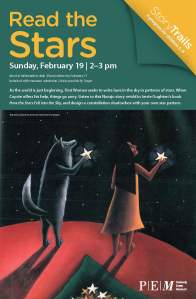
I love the ‘turning page’ look that our creative services team designed to differentiate Story Trails programming from other museum events.
February: Read the Stars
Book: How the Stars Fell into the Sky by Jerrie Oughton (retelling of a Navajo Coyote story, which is traditionally only told in the winter months)
Exhibition Connection: Shapeshifting: Transformations in Native American Art
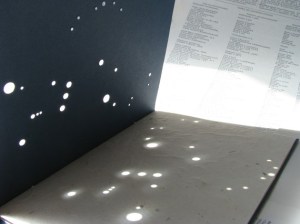
Art Making: Constellation Light Boxes – We talked about creation stories and specifically constellation stories, and then used awls and sharpened dowels to punch holes in shoe boxes to create our own (or recreate known) constellation patterns. We then added a hole in whatever side of the box was opposite the constellation pattern to either a) hold up to our eye and then up to the light to see the stars ‘shine’ or b) put a bright flashlight into and project the star pattern into a darkened room.
February Story Trails handout
March: Cloud Factory and Guest Appearance by Illustrator Katy Bratun
Book: Sector 7 by David Weisner
Exhibition Connection: the concept of storyboarding in art, as exemplified by a series of paintings of a battle in the Maritime Art collection
Art Making: Katy Bratun led a story-boarding workshop in which kids drew a series of 4-8 panels of a story on the theme of taking a journey, and bound them into a simple book using card stock and yarn. This was a great literacy-skills support program and kids were very, very excited to share their stories with a real author/illustrator.
March Story Trails handout
April: Weslandia
Book: Weslandia by Paul Fleischman
Exhibition Connection: Earth Day, and an incredibly cool bit of textile art on view in Perfect Imbalance: Exploring Chinese Aesthetics that featured pumpkins, ears of corn, and tomatoes as exotic fruits
Art Making: Butterfly Seed Mats — We used burlap, white glue, and butterfly seed mix to create biodegradable bits of art that you could plant in a corner of your garden and grow wildflowers to attract butterflies. Simple but incredibly effective. This book happened to be requested in the previous year’s visitor survey, and happily was already on my list for potential programming.
April Story Trails handout copy
May: Sing a Song for Mothers and Family!
Book: Anna Hibiscus’ Song by Atinuke
Exhibition Connection: Mother’s Day, and inspired by both the African Art collection and PEM’s ceramics collection
Art Making: Good Cheer Jars – We mod-podged tissue paper and other bits of recycled paper onto glass jars to create good cheer jars. A good cheer jar can work any of several ways: a) a semi-voluntary fine paid when one is in a bad mood, the proceeds from which are then used to do something cheery for the family like a trip out for ice cream, b) a collection of slips of paper on which you write things that make you happy and pull one out to read when you need cheering up, c) a mandatory fine for using the household’s forbidden words like ‘I’m bored.’
May Story Trails handout copy
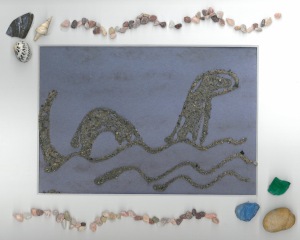
My Sea-Monster sand painting, which is still on display over my desk.
June: Beneath the Deep Blue Sea
Book: The Serpent Came to Gloucester by M.T. Anderson
Exhibition Connection: Local history and the Maritime Art collection
Art Making: Sea-Monster Sand Paintings — Using pre-cut mattes, construction paper, white liquid glue, sand, pebbles, and small sea shells and bits of sea glass, we created maritime-inspired natural collages. Some of them got very, very intricate, particularly those who decided to make mosaics of sea glass. This was one of my personal favorite art activities, and many of the adults who were at the program participated with gusto.
June Story Trails handout
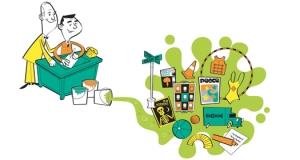
Illustration from The Day-Glo Brothers by Chris Barton
July: What a Bright Idea!
Book: The Day-Glo Brothers by Chris Barton
Exhibition Connection: Contemporary art in the Japanese Art collection
Art Making: Day-Glo (and Glow-in-the-Dark) Paintings — Using black construction paper, day-glo poster paint, and some very cool glow-in-the-dark paint, we created scenes that looked awesome in general and even better under the light of our interactive black light box. We also had samples of varying materials that kids could test to see whether or not they would react with the black light and start to glow, including beads, assorted fabrics, gelatinous substances (in safe containers), and assorted paper products. This was one of the year’s most popular programs.
July Story Trails handout copy
August: What Does the Clay Say?
Book: Dave the Potter, Artist, Poet, Slave by Bryan Collier and Laban Carrick Hill
Exhibition Connection: Ceramics in the American Art collection
Art Making: Experimenting with Clay – Though the idea was to start with pinch pots and some coil-building, clay programs always take on a life of their own. Some people made pots, others branched out into sculpture and beyond. Everyone had a fabulous time, including some adults who had missed the story and had no kids, but wanted to come work with clay anyway.
August Story Trails handout copy
September: Hats Off To You!
Book: Miss Hunnicutt’s Hat by Jeff Brumbeau
Exhibition Connection: Hats: An Anthology by Stephen Jones
Art Making: Decorate a hatbox – We used 12″ cake boxes from ULine, which fold into very decent sized hatboxes and are easy to decorate with colored pencil, stickers, collaged recycled material, and crayon.
Sept Story Trails handout copy
October: Canine Crusader
Book: Dex – The Heart of a Hero by Caralyn Buehner (alternate title Superdog)
Exhibition Connection: Hats: An Anthology by Stephen Jones and the Caps, Capes, and Characters weekend festival (organized by me)
Art Making: Superhero capes with interchangeable emblems – We used SmartFab and craft foam with adhesive velcro dots to create capes (I cut each cape to length to suit children individually), and discussed designing emblems that suited their personalities for their superhero alter egos. The velcro made it possible to rearrange or replace emblems later.
Oct Story Trails handout copy
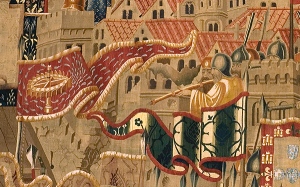
Detail from the Pastrana tapestries
November: Oh What a Knight!
Book: The Knight and the Dragon by Tomie dePaola and The Princess Knight by Cornelia Funke
Exhibition Connection: The Invention of Glory: Alfonso V and the Pastrana Tapestries and the Weaving Tales of Glory weekend festival (also organized by me)
Art Making: Tournament pennants — More SmartFab and back to fabric paint — we created jousting pennants inspired by the fabulous examples in the Pastrana Tapestries and the illustrations in both books.
Nov Story Trails handout copy
December: A Patient Brush
Book: Twenty Heartbeats by Dennis Haseley
Exhibition Connection: Perfect Imbalance: Exploring Chinese Aesthetics
Art Making: Chinese brush painting – We used rice paper (available at ACMoore or less expensively from Dick Blick), Chinese calligraphy brushes, and red and black watercolor paint, with examples from ‘how to’ books on traditional brush painting style.
Dec Story Trails handout copy
Found Poetry in Altered Books
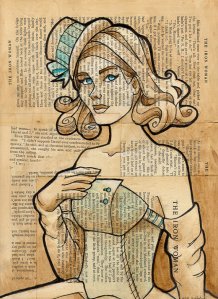
“Iron Woman” steampunk print by Karen Hallion
As a librarian’s daughter, an avid reader, and an English major, I am always attracted to wordy art projects, and I often find artworks made out of recycled print absolutely beautiful while simultaneously wincing over the fact that one must deface books to create them. After all, books are meant to be read, and what are they when they are no longer readable?
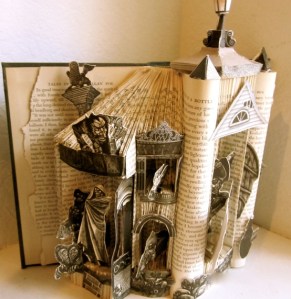
Poe’s Short Stories, altered book art by Susan Hoerth
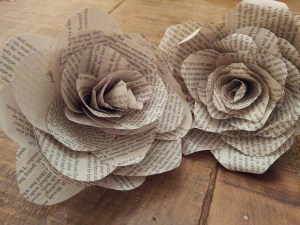
Paper roses made from book pages by Twigg Studios
For some artworks like the roses above, one could easily substitute with magazine pages or old maps (about which I feel decidedly less squeamish), and for others newspaper will also work.
However, I have finally lit upon a type of altered book artwork that bothers me less than others, because while it still alters the original intent, the book still gets ‘read’ in a new fashion.
Found Poetry in Altered Book Pages
As with the roses, this is an activity that can be done using other forms of the printed word (newspapers, magazines) and can also be done without altering the original text at all (words captured and written down in a new form from museum object labels, etc.) However, it combines both poetry and the visual arts in a way that is perfect for the programming that we do at PEM for the Massachusetts Poetry Festival. (Guess what’s going in this year’s program?)
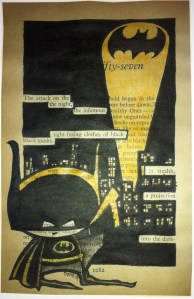
The image I saw on Pinterest that started it all: A Batman poem out of some other detective/adventure story
How does Illustrated Found Poetry work?
- Pick a piece of text with a decent amount of wording to it.
- Read through it for the sounds of the words and not necessarily the narrative or the original author’s intent.
- Find a theme to the words that inspires you. Use as many or as few as you like: cherry pick a word here, a phrase there, etc.
- The one limit to working on the original sheet is that you cannot rearrange the words to your own liking–the poem flows in the same direction as the original text did.
- Pencil boxes around the words you want.
- Pencil in any illustrations (doodles, sketches, details) that help to give your new poem mood, shape, or further depth.
- Use marker to darken the boxes around your poem and color in the details of your illustration. You may want to use highlighter within the boxes for your poem to help pick it out of the illustration, depending on how much color there already is in your drawing.
- Use black marker to cross out any words left that are not part of your poem or are already obscured by your illustration.
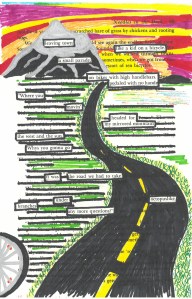
“Leaving Town” by Meg Winikates, originally from a page of The Walk West by Peter and Barbara Jenkins, click to read in full-size
The plan is to have a bunch of genres of books available from which to select pages: sci-fi, mystery, classics, memoirs, maybe even some more technical books. Hopefully this will show people that poetry can be found absolutely anywhere. The 2013 festival will be held May 3-5 in numerous venues around Salem–I’ll be sure to let you know how it goes!
Links for images in this post: Karen Hallion’s Etsy Page
How to make Book Roses
Poe’s Castle Short Stories Altered Book
Batman Altered Book Poem Illustrated
In Search of Alternative Art Making Materials
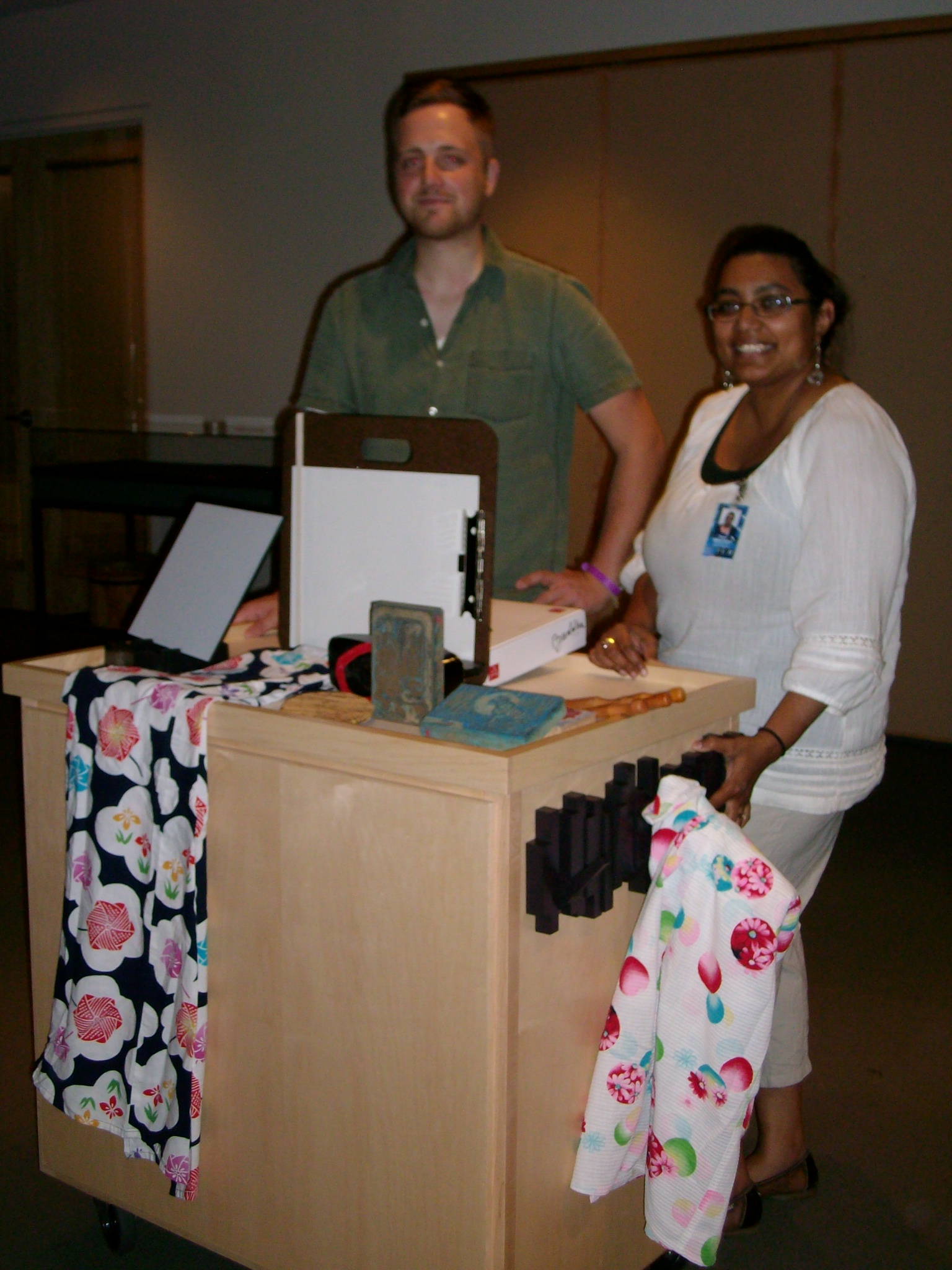
Art making in the gallery, solution 1: interactive art cart with touchable materials, sketching, and ‘safe’ art-making alternatives like sumi-e water painting and scratch art
PEM is undergoing an exciting construction phase which means our art studios are currently out of commission, a grave sadness to those of us who are in love with messy art projects. Many of the materials we’ve used in the past are on the “I seriously doubt it” list when talking about doing art activities in alternate spaces like galleries or the museum’s atrium. Such materials include recycled make-up, a variety of paints (though the atrium space can take a few more of those than galleries obviously can), liquid glue, melted wax, silk screening, glitter anything, anything with sharp tools (for stamp cutting, some clay tools), and even most clay is on the iffy side.
So what to do?
Fortunately, I’ve been collecting fun ideas in preparation for this whimsical construction period, so here are a few I’m looking forward to trying out in the near future:
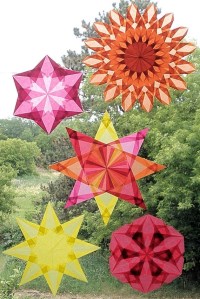
Multicolored translucent paper folding (click the inspiration image to go through to the artist’s site)
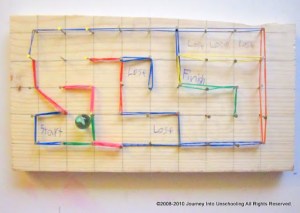
Kinetic Rubber Band Art (click the image to go to the directions)
Holepunch Art (click the image to go to the artist’s site)
Teaching Activist Art
A few weeks ago for PEM’s Arts Adventures Club, I got the opportunity to play ‘guest artist’ and lead an afternoon session focused on art with a message. I had the chance to work with several different sets of kids, and found that (unsurprisingly) it worked best with the oldest group, who ranged from 12-15. I used the following set of slides with all groups, just using slightly different language to carry the examples, and even in the group of younger kids, they turned out some fantastic works of their own.
The structure of the lesson started with a recap of the tour of public art and a reference back to the artist they’d been introduced to in the morning, and then a discussion of the motives behind activist art, using the slideshow and examples of works by Banksy and Shepard Fairey. Then we brainstormed possible topics for artworks of their own based on what interested or concerned them in their own lives: at school, at home, in their communities and in the wider world. Topics ranged from bullying and terrible school lunches to global warming and marriage equality. Next they sketched ideas and brainstormed words or quotes they wanted to include, recording it all in their art journals, and finally went on to create the finished product.

Showing off the layered approach to creating a multi-media artwork
Inspired by the multi-layered prints and other works by Shepard Fairey, the camp coordinator and I decided to introduce the students to a few techniques to create a visually dense multimedia art piece.
Here are the steps we outlined for the kids, though we gave them the choice to depart from the steps as their own inspiration dictated.
1) Cover the page with a watercolor wash.
2) Add basic details in pencil. Color as desired.
3) Create your own block print out of styrofoam or use the provided stamps to add depth, words, or repeated patterns.
4) Use mod-podge and a bone-folder to do newspaper transfer of print or simply collage black and white imagery to the top layer.
The final products were as varied as the kids that created them, and it was very fun to see them included in the “exhibition” the kids put on at the end of the week.
It’s the Most Wordiful Time of the Year
Happy National Poetry Month, Everyone!
As you know from previous posts (2010, 2011), I love this month. I like seeing poems pop up on my RSS and Twitter and assorted other feeds; I like having excuses to talk about poetry (even more than I usually do), and I like giving myself time to read poetry in a more concentrated way. This year, I also liked developing a raft of new family-friendly art&poetry events for the museum.

The Massachusetts Poetry Festival is happening in Salem again this year, at the end of this week (Friday-Sunday). PEM is a host for a number of reading and concert events from the larger festival (I’m particularly looking forward to the Typewriter Orchestra), but I’m also spearheading a collection of activities tying the visual to the verbal arts for kids and families, including a collaborative paper mural “Grow a Poet-tree,” make your own magnetic poetry, illuminated capitals word-art, a docent-led poetry tour, and a self-guided Poet Quest.
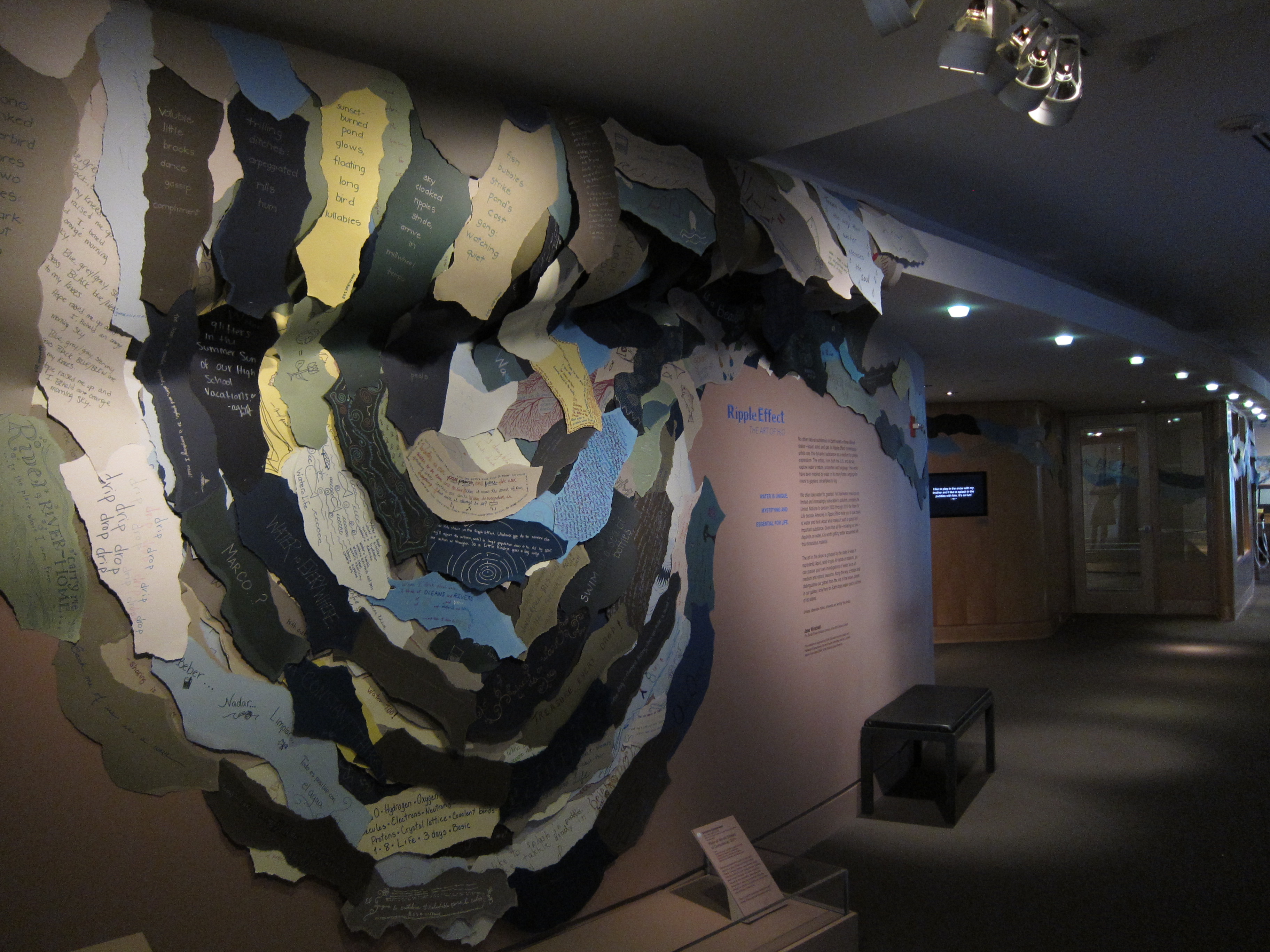
"River of Words: Stream of Conscience" as installed in Ripple Effect, the Art of H2O at the Peabody Essex Museum. Photo by me.
We also have the talented and charming artist Christine Destrempes back to talk about her “River of Words” project (featured in Ripple Effect), and invite visitor participation in the next installment of same, and the highly entertaining David Zucker who will be reciting and performing “Poetry in Motion.”
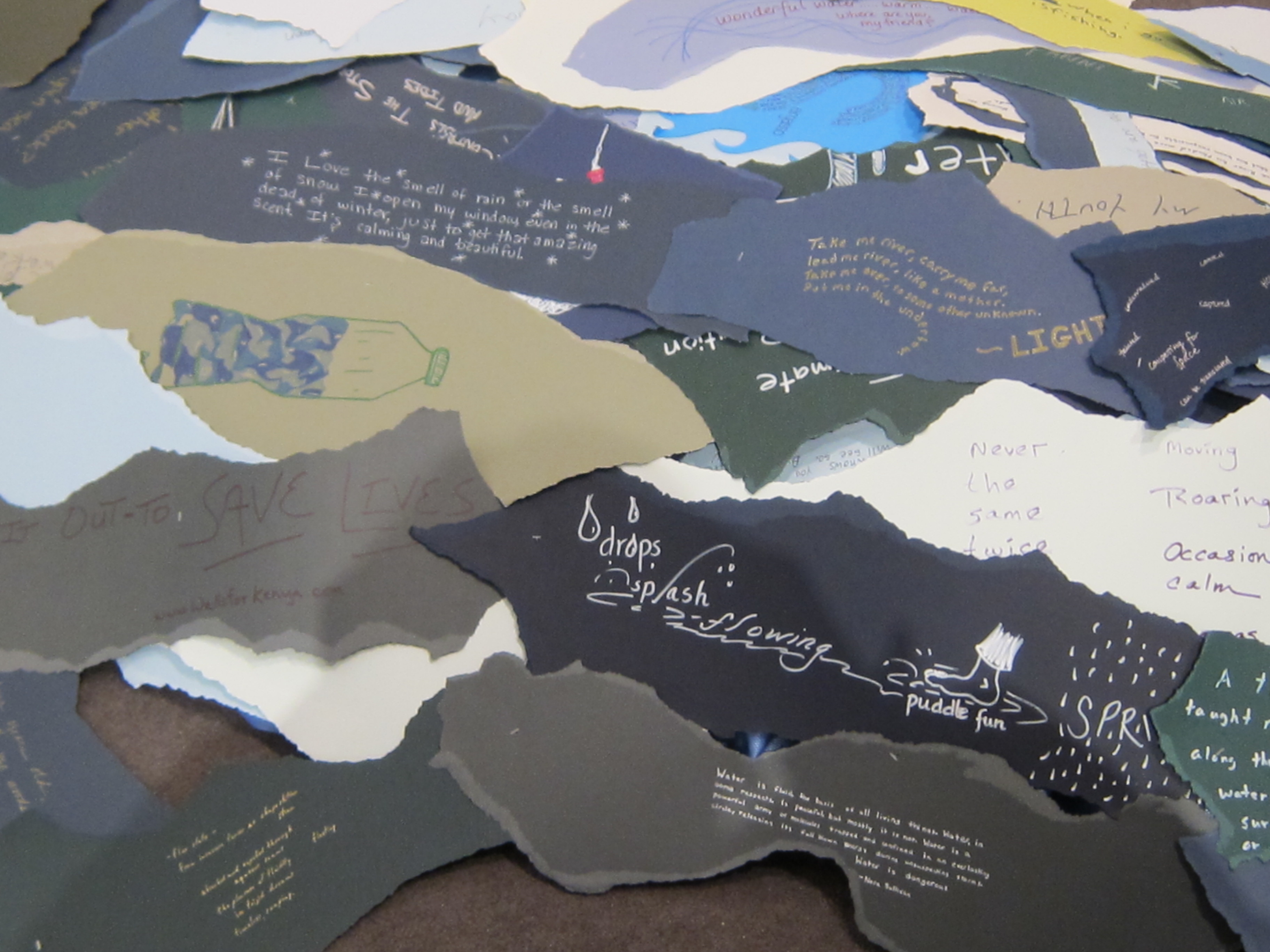
Detail from the "River of Words: Stream of Conscience" project by Christine Destrempes. Photo by me.
For more info, check out the MA Poetry Fest’s spotlight on PEM’s involvement with the MA Poetry Festival this year, and another article featuring my family-focused events.
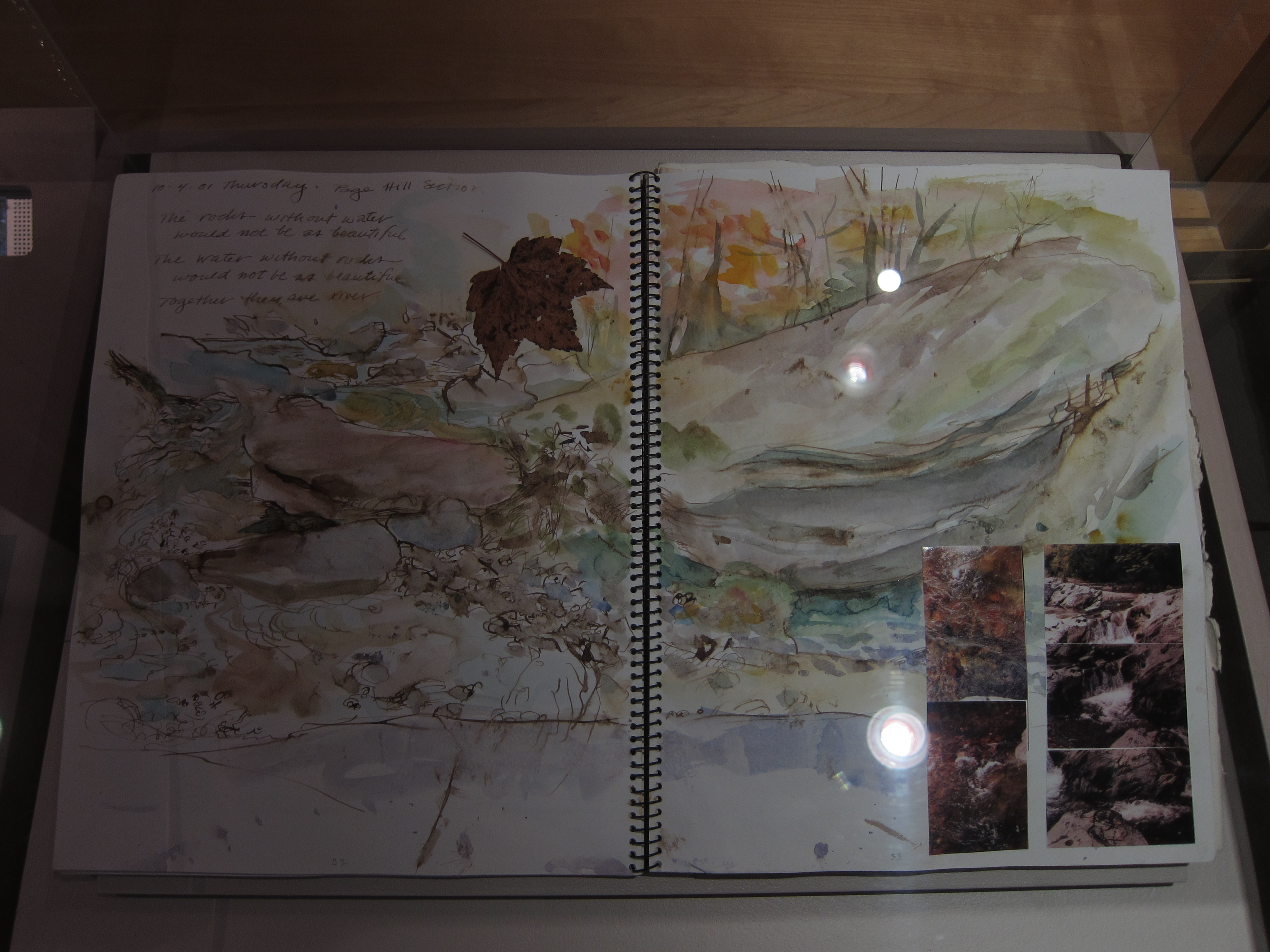
Sketchbook belonging to Ripple Effect featured artist Janet Fredericks, who writes poetry in connection to her "Tracings" river drawings, also featured in the exhibition. Photo by me.
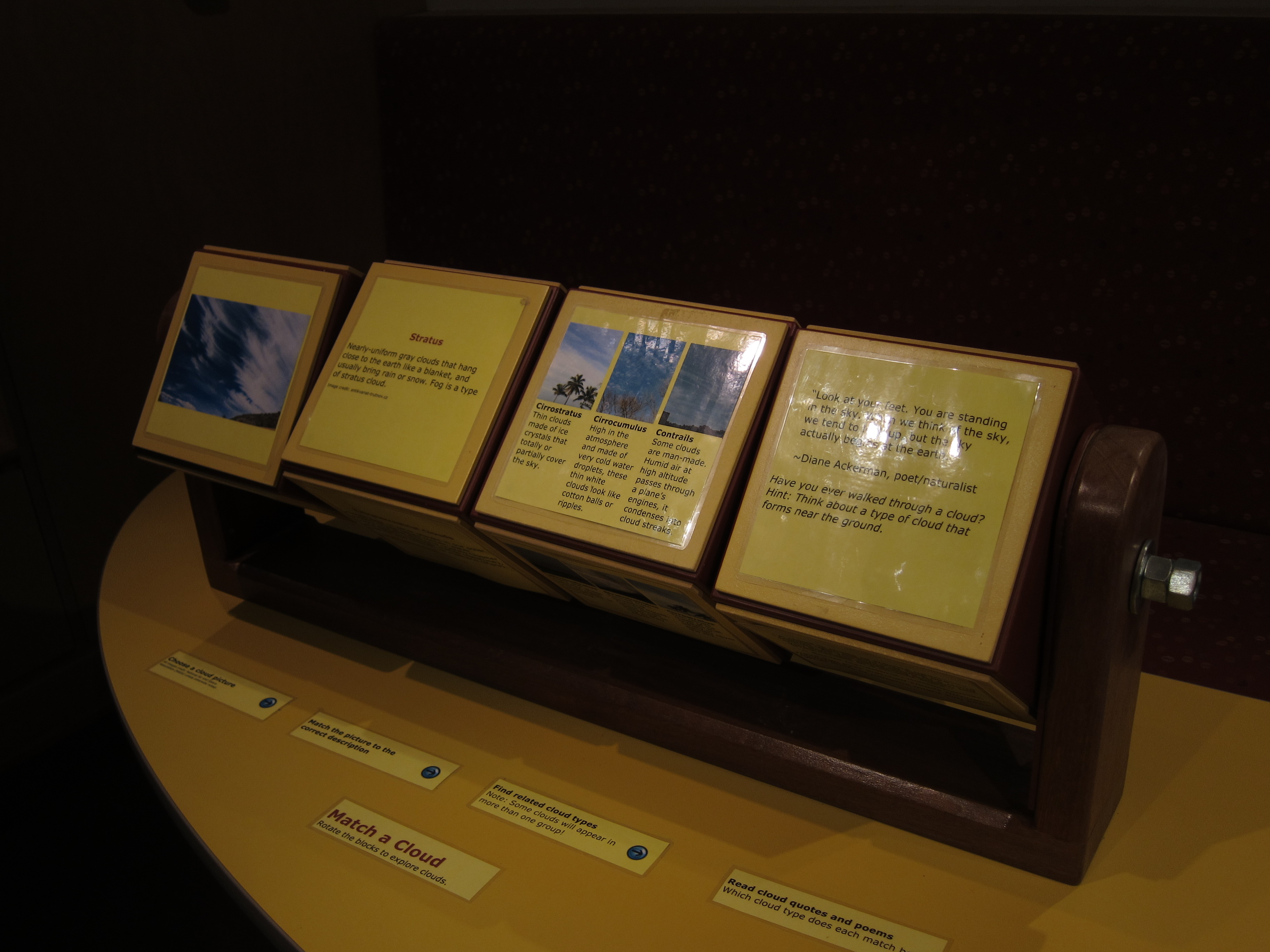
Spot poetic influences throughout the Art & Nature Center! In our clouds and vapor room, for instance...
"Look at your feet. You are standing in the sky." ~Diane Ackerman, poet/naturalist
Photo by me.
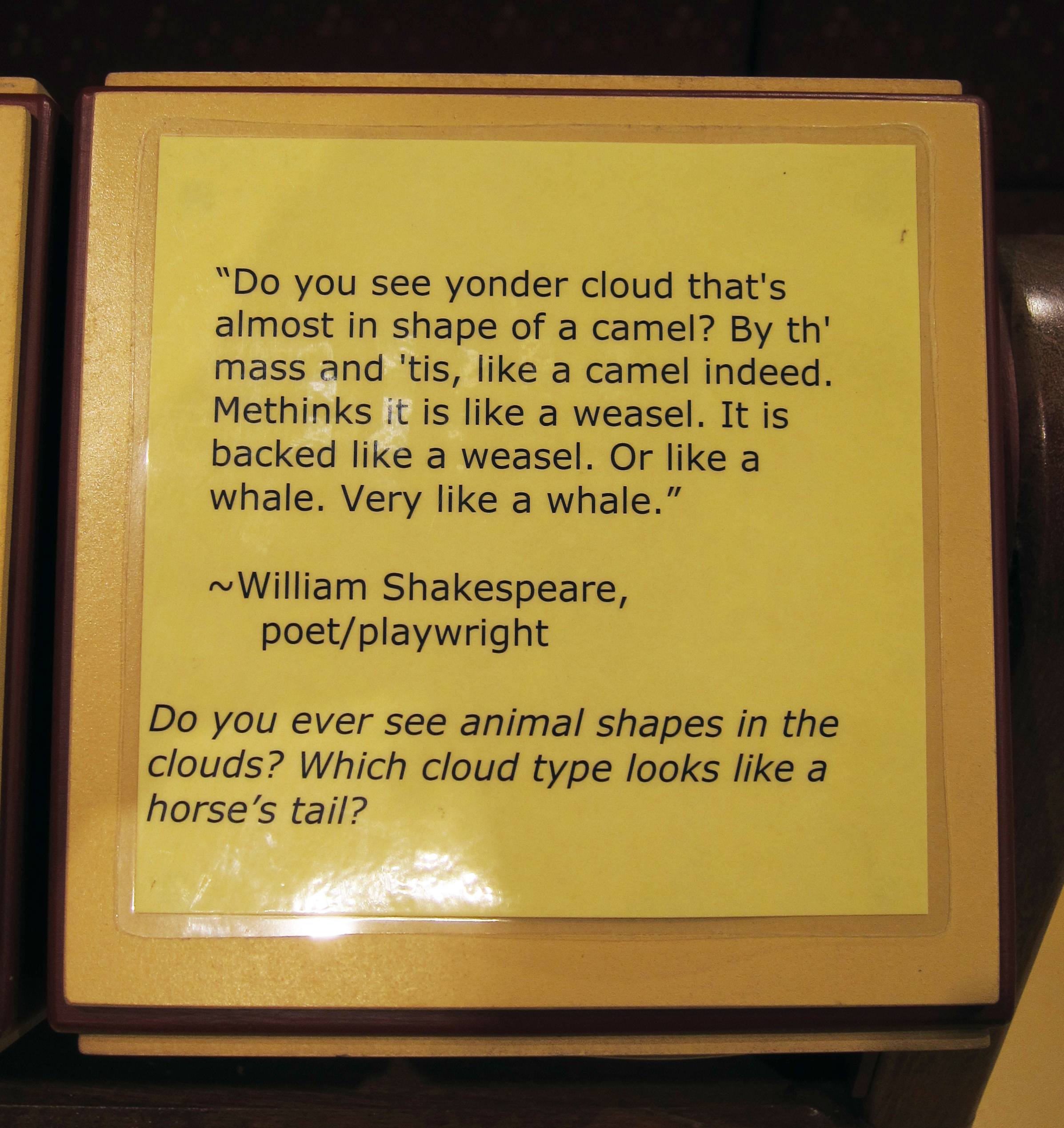
Methinks that cirrus cloud is ruffled like your shirt collar, Master Shakespeare. Photo by me.
We’re also highlighting poetry in the Art & Nature Center’s popular “Books and Boxes Zone”–come by to check out some of our fantastic books!
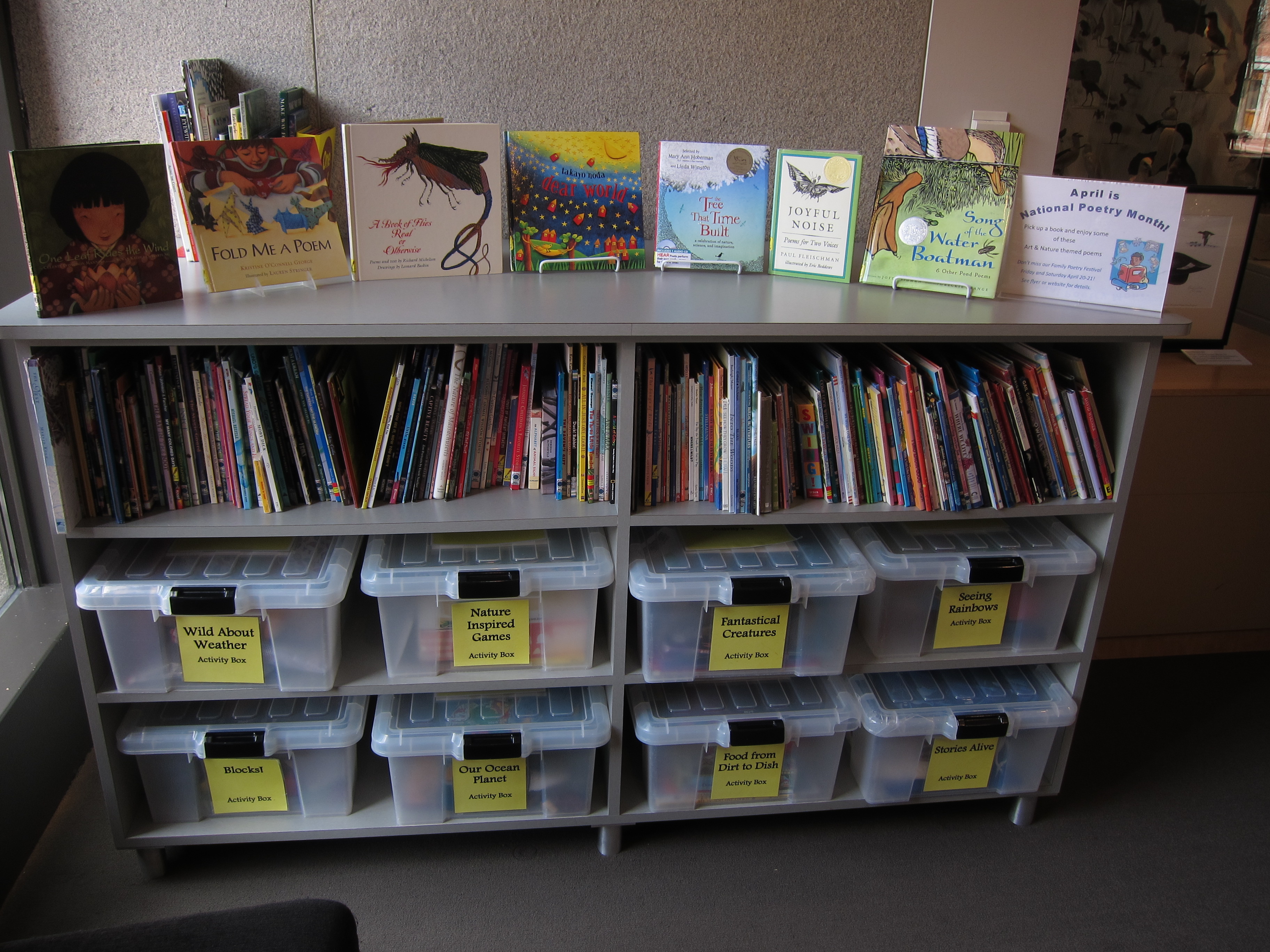
Plenty of fun things to read, by many of the ANC's favorite writers! Pull up a couch, grab a puppet or a friend, and enjoy. Photo by me.
Surfing, Tumbling, and Pinning
I run across a lot of fun stuff surfing the wilds of the internet, much of which I stash away to share with you here in an eventual Brain Popcorn post. Sometimes it’s from an article on my reader (and blessings on the day I decided to invest in upkeeping my RSS feeds, or I’d miss so much cool and wacky content!), and sometimes it’s a neat link on Twitter, but recently there’s been a fair amount of it on tumblr and Pinterest. I initially resisted both sites because I need more ways to fritter away time on the internet like I need a ten-ton elephant standing on my head, but between a few influential articles and blog posts from people I admire, not to mention a few sessions at the recent National Art Educators Association conference in NYC, I decided to jump straight in.
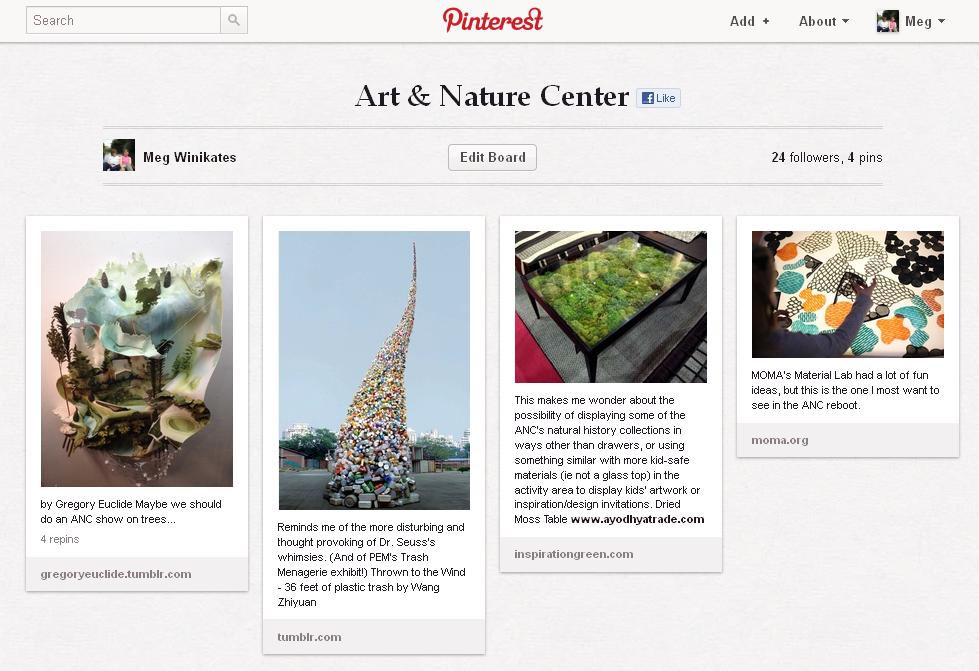
Museums on Pinterest
If you search Pinterest users for ‘museum’ you get a fairly large number of results, which I initially found surprising, especially the heavy concentration of children’s museums, though in a lot of ways the art museums are a perfect fit. I haven’t looked at all their boards, but here are a few folks doing interesting things on Pinterest:
SFMOMA – Thematic collections of elements of their collection, and one cool and self-referential board that highlights where they turn up in the press.
Metropolitan Museum of Art – More thematic collections, and I’m particularly fond of the way they used a quote in the description section of their ‘cat’ board. (also a great resource to get to other cool museum boards: check out the list of who the Met’s following! I’m particularly keen to see what ends up on the crowdsourced Future of Museums board.)
Met Teens – The museum’s teen advisory group runs this set of boards, which they use to highlight student work (both written and visual) especially in response to museum collections, draw correlations between historical fashions and modern, and advertise upcoming teen-focused events at the museum. Very cool!
Not convinced? Right before I was putting this post out into the world, fellow museum enthusiast Colleen Dilenschneider over on Know Your Own Bone wrote a fantastically well-researched set of arguments about why Pinterest is a useful investment for the extended museum community: 5 Reasons for Museums to get on Pinterest right now.
Museums on Tumblr
This is a bit more of a stretch: I don’t actually find Tumblr to be as easy a site to navigate or search. Simply tracking the ‘museum’ tag gets you interesting photos from people’s vacations, but locating specific museum projects on Tumblr is harder.
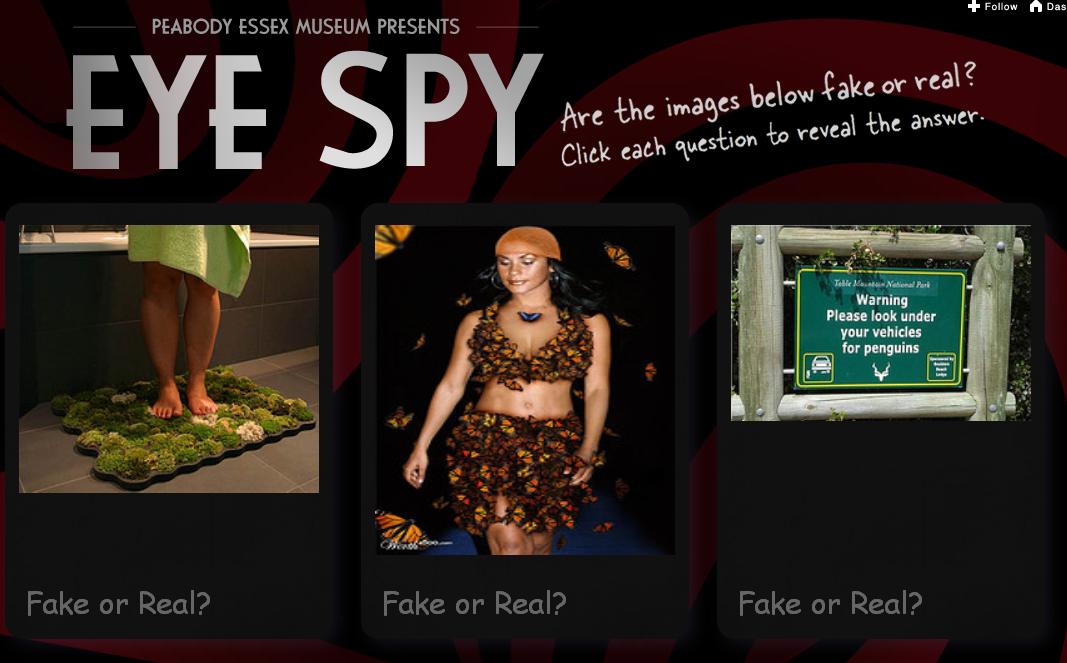
Eye Spy: Fake or Real? – This was actually the project that introduced me to Tumblr, which was a game we designed to go with our “Playing with Perception” show at PEM last year. I really liked the format that our team put together, and I haven’t seen any similar game-style Tumblr projects out there. (But I’d love to, so if you know of any, do tell!)
SFMOMA (again) – Their general feed is interesting, but I particularly like their ArtGameLab tag, where they share visitor photos etc. from their visitor-designed game projects accessible online and in the galleries.
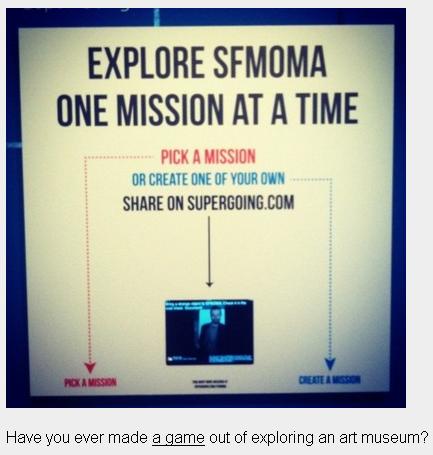
Have you run across any cool organizational projects on Tumblr or Pinterest? Share them here!
Or, of course, you could just come find me there! (fair warning, what you see there is often what happens in my brain before it makes it into a coherent Popcorn post)
Ideabox: Plastic Bottles
Everybody loves to hate plastic bottles, and yet somehow it’s impossible to be rid of them, even for the most conscientious reusable-bottle carrier. Here are a few incredibly cool artists who have figured out fun ways to repurpose the ever-present plastic bottle, and a few ways you can do the same.
Art from the Ugly
Here are a few artists I admire, who work with plastics and make thought-provoking and beautiful objects from less-than-sightly leftovers.
David Edgar – makes impressively beautiful marine life sculptures from discarded detergent bottles. He was a featured artist in the PEM/Art & Nature Center show, Trash Menagerie.
Miwa Koizumi – Her PET project created stunningly ethereal jellyfish and coral forms out of plastic bottles. While not the most eye-catching of the pieces in Trash Menagerie, they were still among my favorites.
Christine Destrempes – This artist is currently featured for her River of Words project in Ripple Effect, the Art of H2O, but one of her best known pieces is an installation of bottle caps, each representing a person who dies for lack of clean drinking water.
Stuff You Can Do
Cool Project Links
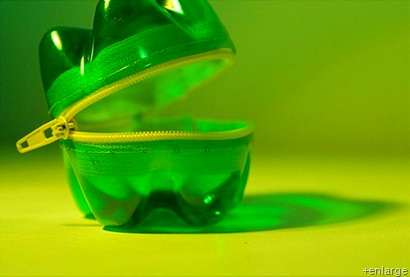
Photo credit to the site linked below
Plastic Bottle Zippered Purse/Box – Upcycle those unredeemable bottles into handy containers. (I’ve always been a fan of Winnie the Pooh’s ‘useful pot to put things in’ theory of birthday presents.)
Wave Bottles — One of my favorites, and you can find lots of suggestions for how to fill them. (I use water with food coloring and baby oil because it’s perfectly clear, but some people recommend vegetable oil as well.) I like adding a layer of glitter to lie on top of the waves, too, and gave people the option of also adding floating beads, or sinking shells, sea glass, and pebbles. When I did this activity with a group at the museum, I went for a purpose-bought set of bottles with sealable leak proof tops instead of recycling, so that I didn’t have to worry about getting the label glue off.
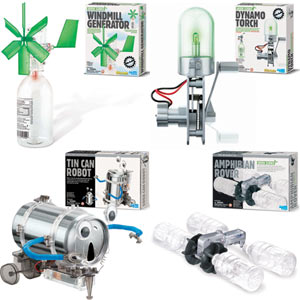
Photo credit, Educational Innovations at teachersource.com
Science Kits — I don’t usually advocate for things one has to buy, and I haven’t actually tried any of these, so I don’t know how well they work, but they sure do look like fun. (I really want to build a tin can robot!)
Plastic Bottle Bracelet Directions
It’s almost spring (or at least I can pretend it is, right?) and one’s thoughts naturally turn to the pleasant days to come when it isn’t imperative to wear three layers of sweaters on a constant basis and can bear to bare one’s wrists. I was simply stunned at the variety of directions for making bracelets out of plastic bottles: these two cuff-style bangles are fabric-covered and felted, while this one (typos and all) recommends giving your bangle some twisted appeal by heating it over a candle. I think anything involving not only exacto blades but heat and needles has the potential for tragedy, but then I gave myself a foot-long scratch with a sewing pin this weekend, so caveat crafter.
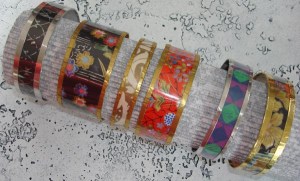
Photo credit Cool2craft.com Click the picture for directions!
My favorites, therefore, are these simple plastic and paper bangles, using two layers of bottle-rings to sandwich a particularly cool artwork, illustration, magazine cutout, or seasonal wrapping paper. These directions recommend using metallic tape, which looks classy, but electrical tape works just as well, comes in a variety of fun colors, and stretches as you wrap it so you actually get very few problematic wrinkles. The version I’ve made also cuts both rings at one spot so that the bangle can adjust to any size wrist: very helpful if you’re starting with a small bottle!
 Brain Popcorn