Cartoon Brain Food

This turned up on one of my museum discussion email lists, and I had to share it with you for several reasons.

1) Cartoon characters visit a museum and get excited about the artwork instead of running through it, destroying it, or ignoring it, ala Tom & Jerry, Scooby Doo, or any number of other cartoons I could name. (Granted, the fact that it was produced by a consortium of French museums does make it more likely that the art would be more of a focus than otherwise…but it’s still great and models mostly appropriate museum behavior.)

2) In one minute the three characters manage to actually model close-looking and observation of the artwork depicted. One character knows more than the others and helps them look for details, then gives them some context for what they’re seeing.  The cartoon gets away with sounding a little condescending, which I wouldn’t really advocate, but otherwise it’s a good model for teachers, docents, or parents to follow when tying in details of kids’ lives with facts about a more distant time or culture.

3) There’s a very “I Spy” attitude to the conversation, which is a game kids love, and which I’ve been tuned into recently due to the upcoming opening of Eye Spy in my section of PEM.  I particularly love the last detail of the reflection of the man in the window, since reflections, distortions, and other plays on perception are all over the upcoming exhibition.

4) This is part of a whole series of movies which feature artworks from the participating museums, so you can do a cartoon-guided virtual tour of a bunch of very cool art .  Check out some of the others on the Louvre’s YouTube channel, at the “Jeunesse” playlist.  (Some of the videos are in French and some in English.)  Note, as far as modeling appropriate behavior goes, the characters never touch any of the art, even the really appealing lion with the movable tail.  Even I wanted to give it a yank and see what might happen!
Popping with Poetry

If I feel physically as if the top of my head were taken off, I know that is poetry.

~Emily Dickinson

Ms. Dickinson was clearly a Brain Popcorn-style poet.  (She also reputedly said “The brain is wider than the sky,” a sentiment I quite enjoy.)  And so I am happy to say…

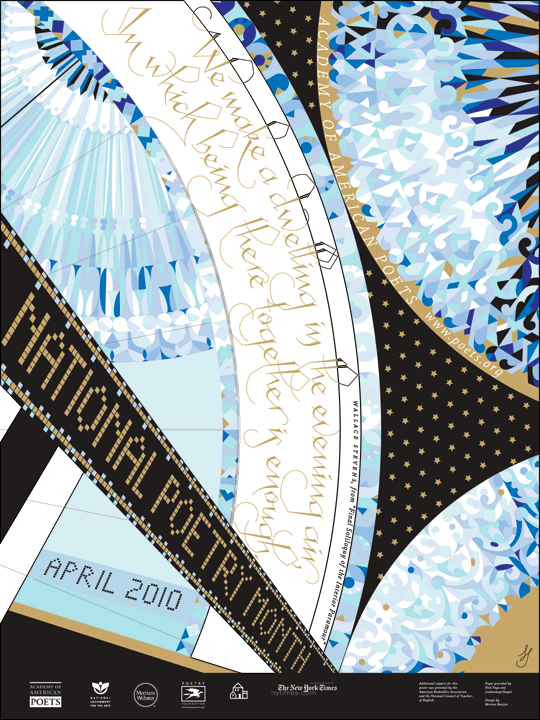
It’s National Poetry Month!  (As good a reason as any to love the fact that it’s April, just as Archaeology Month is  a grand thing to celebrate in October.)

There are a lot of very cool things going on in the world for National Poetry Month, and here are a smattering of particularly interesting and/or interdisciplinary approaches:

One Day Poem Pavilion — a very neat project, brought to deserving attention by Paul Orselli over on Exhibitricks.  This particular intersection of art and science writes a poem with sunlight and cardboard which changes as the day progresses.  Be sure to check out the time lapse video.

You Too Can Haiku — ARTSEDGE does it again!  A nice satisfying lesson plan incorporating writing, visual art, and multicultural discussion.

Michelangelo Complains in Rhyme about the Sistine Chapel — Highly amusing, even if one probably loses something in the translation.  (And it holds particular shine for me, as I’m going to Italy at the end of next week!)  This would be a really fun poem to tie in to a discussion/activity on ekphrasis.  If you’re looking for further ideas, I recommend this lesson plan over at ReadWriteThink.

MYO Magnetic Poetry Activity Plan (downloadable pdf) This is the list of materials and directions for a Make Your Own Magnetic Poetry activity that I’ve done several times at The Discovery Museums, and which will also be one of the April drop-ins at the Art & Nature Center here at PEM.  It’s entertaining, and though pre-cutting words can be time consuming, it’s very rewarding to watch people sift through the words and exclaim over the ones they find.  Small kids through teenagers and adults have fun with this one!

Finally, I would like to applaud this particular random act of poetry in a grocery store.  That kind of news just makes my day.

Ideabox: Spools and Spindles

No princesses were injured in the creation of this post.

It’s time for another Ideabox–this time, on CD spindles and the many uses thereof, with a guest appearance by a few spools of thread.

ideabox spools

I think CD spindles are a remarkable piece of design: they’re the kind of thing that do what they’re supposed to very well, and then sit there and taunt you, gathering dust because they LOOK like you should be able to do something else with them.  If you have a few of these lying around that you’re looking to ‘upcycle’ into something new and useful, here are some ideas to get you started.  (Instructables was a really valuable resource in assembling this post.  You’ll see what I mean.)

First, a video that gives you four options in what feels like forty seconds, just to get you thinking:

Next, for the folks who can never get too organized:

  • The ‘you’re kidding, someone wrote instructions for that?’ Headphone Holder.  (Yes, they did.  But just because it’s easy and not exactly aesthetically pleasing doesn’t mean it isn’t a valid idea!)
  • The ‘I know a techie sort with too much jewelry’ CD Spindle Earring Holder.  (I know an artist who could really use this kind of display stand…)
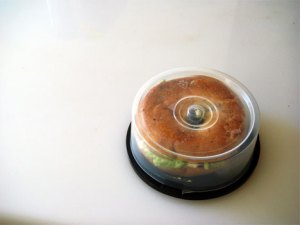
CD Spindle Sandwich

Bagelwich Buffer

CD Spindles for the Plant and Animal Worlds:

  • Flower Planters — this is a particularly cool idea if you’re trying to do a science experiment that allows you to watch the roots of things grow.  Visible carrots!
  • Mushroom Storage Case — I wasn’t sure whether to put this under ‘plants,’ ‘organization,’ or ‘huh?’ but it’s cute.
  • High Speed Silent Hamster Wheel — For the fleet of foot, but not the faint of heart.

For the Electrically Savvy:

  • CD Spindle Lamp — Gorgeous, actually.  And using an LED or CFL bulb would make it even safer.  I’d love to see a version that took up less horizontal footprint though, for the sake of those of us who live in small spaces.
  • Water-Powered Tesla Turbine — There are a number of variations to this idea provided by ‘mrfixits’ on Instructables.  They’re all fascinating in a ‘how do you come up with these things?’ way.  I love the idea of using recycled materials and water power and magnets to talk about generating electricity, though.  (And on that note, a similarly cool variation, A Pringles Can Wind Turbine)

And finally,

Spools get to play too:

Detail from “After Vermeer 2” 2006, by Devorah Sperber. Click for link to artist’s statement.

Plum Blossoms, Bamboo, and Pine Sprigs

Welcome in Lunar New Year with the spirit of friendship (as represented by the flower arrangement above) and with an arrangement of my own suggestions for cool resources and activities.

Lunar New Year

Lunar New Year Parade, Chinatown, New York City 2009, photo by ho_hokus

History and Culture

A brief but interesting collection of information on the New Year as celebrated in China, from the University of Victoria

A nice resizeable map of China, with or without more detailed information, from National Geographic

Asia-Art.Net, a collection of really beautiful examples from several cultures, organized by medium or by culture.

Science

Why is it Lunar New Year?  Observing the Moon, from Science NetLinks

Arts and Crafts

Disney’s family activities offer up some fun and easy decorations for the holiday: a festive ribbon dragon, a beautiful lacy banner, and a good-luck goldfish.

The Smithsonian strikes again!  (I love these guys as much as I love National Geographic!) The Sackler and Freer Museums are home to the Smithsonian’s Asian collections, and they have both Chinese centric and Across Asia teacher resources as part of their larger set of Online Guides.

Theater and Music

Two fabulous resources from the Kennedy Center’s Artsedge:

Puppets on the Move: China and the Silk Road and

The Sounds of China Pod Page, with music to listen to and connected information and activities.

Literature

Also from the Kennedy Center, Chinese Calligraphy and Ink Painting

And finally, from Read-Write-Think, which is run by the National Council of Teachers of English, a very cool Fairy Tale Autobiographies lesson plan, which uses Chinese tales but could be adapted for pretty much any culture.

Not enough?  Then come celebrate with the Peabody Essex Museum, on Saturday February 27! (Chances are very good you’ll find me making paper lanterns in East India Marine Hall…)

More ‘Brain Art’

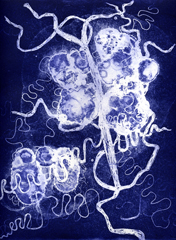
Susan Aldworth (British, b. 1955) Brainscape 18, 2006

Yes, there are more fun and fabulous examples of brain-inspired art coming to a Massachusetts museum! Landscapes of the Mind: Contemporary Artists Contemplate the Brain is running at the Williams College Museum of Art from January 30–May 2, 2010.  (See the full press release here.)  Being who I am, I’m particularly excited about their family day with student-led tours and art making activities in March, as well as intrigued by the fact that this exhibit, which is all about what is literally inside your head and therefore something we never see of ourselves, is tying in with the museum’s ‘year-long focus on art and landscape.’   I think there are a lot of fun parallels people could draw with other ways artists, writers, and scientists have imagined, described, and mapped what goes on in the brainscape.

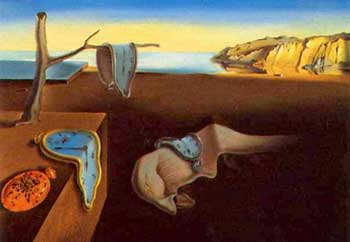
Historically, for instance, there’s all the wackiness associated with phrenology, (very popular in Victorian times).  Art-historically there are those fabulous surrealists (or insert adjective of choice depending on your own opinion) like Salvador Dali.  Scientifically we have all those brain-mapping studies, and virtual reconstructions through forensic anthropology, and Einstein’s brain in a jar (more than one jar, apparently).

Persistence of Memory by Salvadore Dali

Persistence of Memory by Salvadore Dali

Back to Lunar New Year and other fun multicultural stuff in the next post, I promise!

Review: Emperor Qin’s Terracotta Warriors at National Geographic Hall

Disclaimer: I totally love National Geographic.  You, my astute readers, will have figured that out already.

= = = = = =

My family and I spent the long weekend in Washington DC, enjoying a little respite from New England snow, and taking in (as one does, when one lives in a museum-mad family and works in a museum) the cultural sights.  Though I’d love to give detailed reviews of everything (kudos to the US Holocaust Memorial Museum, for instance, for a fascinating exhibit design in “State of Deception: Nazi Propaganda” which I wish I’d had more time to explore), I’m going to focus on the original impetus for the visit, which was National Geographic’s Terracotta Warriors: Guardian’s of China’s First Emperor.

Sadly, there were no pictures allowed inside the exhibition, so I have no photos of my own to share.  Fortunately, they bent the rules for their own bloggers, so there are some fabulous pictures of objects in the exhibition and at least some small sense of the layout available here.   One of the things I thought they did best in this exhibit was that each element was allowed its own space: the exhibit areas weren’t over crowded, which was important given how many people were trying to view them, and where two or three statues or other artifacts were placed together, it made sense and helped advance the ideas and context which the audioguide and interpretive panels were trying to convey.  It seems like a very basic and obvious thing to get right, but it’s noticeable in the traffic flow and the overall feeling and satisfaction of the visit if artworks or other objects are placed awkwardly.

There was a lot of overlap between the text panels and the audioguide, but enough difference that for the slow-paced intent studier like myself, it was worth listening and reading both.  I appreciated the context provided regarding the period especially immediately before the rise of Emperor Qin, but thought (as I have thought about many exhibitions before, including the MFA’s Tomb 10A exhibit) that it would have benefited from a timeline somewhere early in the exhibit, possibly also including reference points to western/European events of the same time period, to provide that extra hook for those of us who had largely Eurocentric history educations. (For the record, NG does apparently have a video segment not featured in the exhibit anywhere which mentions a little of what was going on in Rome at the same time period, which I’ve embedded below.)

Overall, however, I loved it.  I thought it was fascinating, the figures themselves were stunning displays of individuality and craftsmanship and technique, and the overwhelming impression that I left with was one of a man who commanded immense power and influence, and who, like many strong rulers in other cultures, created an infrastructure that allowed the arts to flourish.  Very cool.

(Video: A reconstructed flyover of what they think the complex around Emperor Qin’s burial mound would have looked like.)

= = = = =

More fun Chinese themed posts to come as we approach Lunar New Year, but for now I leave you with the events listing for Lunar New Year at the Peabody Essex Museum, which promises to be a huge amount of fun.

2009 Wrap-Up

Welcome back, folks!

Before we launch into all the cool and exciting new stuff planned for 2010, I wanted to take a chance to wrap up some leftover business from 2009.   I posted my own contributions to the New England Museum Association conference in November, and promised the slideshows from my co-presenters, Mike Adams of Boston’s Museum of Science, and Nancy Jones of Longfellow National Historic Site.  Mike’s fabulous talk focused on the ways in which the MOS adds to existing programs, reworks older programs, and invites in local experts from numerous other institutions to host Archaeology Week every October.  Nancy’s marvelous contribution brought art, literature, and history to the discussion, with examples of hands-on crafts, teen involvement projects, music, and a dash of poetry.

Fun with Snow: Shovels Optional

Here are a bunch of snow activities to try, to celebrate last week’s first intense snow of the year.

Make a Snowflake:

Fold a piece of paper or a coffee filter in half.  Then fold it in thirds from the middle point.  (As if you were making ‘pizza slice’ shapes, so that you have 6 triangles.)  Trim the edges so that you have roughly a circle, if you are using a regular piece of paper.  Cut along the edges and folds, then unfold for a proper 6 pointed snowflake!

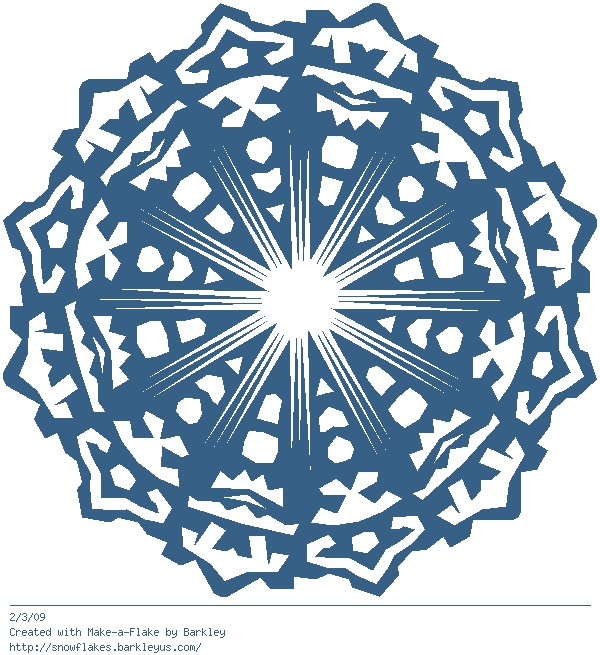
If you want to avoid the blizzard of cut paper pieces, try an online snowflake-maker, here: http://snowflakes.barkleyus.com/

Outdoor Snow Fun:

1. Jump snow hurdles: Lightly pack a bunch of basketball-size snowballs. Use them to build a course of hurdles to jump over in a round of follow the leader.

2. Get on a roll: Pair up for a contest in which the object is to finish with the biggest snowball. The contest ends when the teams can no longer roll their entries or when you run out of snow.

3. Catch a snowflake: Find out what’s different ? and the same ? about a bunch of snowflakes. Catch some on a piece of black construction paper or a dark mitten or sweater.  At The Discovery Museums, we have a bunch of blue-velvet covered cardboard squares available for snow-catching.  We tend to store them in the freezer so they’re snow-ready!

4. Make an iceberg float: Invite kids to make two miniature icebergs (snowballs), one packed very hard and the other fairly soft. Indoors, fill a bucket or basin with cold water, put the snowballs in it, and watch what happens. (Because the hard snowball has air bubbles trapped inside, it will float higher in the water than the softer one.)

Stay tuned next week for icy cool science!

Ideabox: CD’s and CD cases

photo credit to ChristopherA

Due to the upswing of digitally-downloaded music, mp3 players, et al. there are a lot fewer junk CD’s and spare CD cases lying around these days.  This is certainly good for the planet, but not so great for those of us who like making cool projects out of them.  Fortunately, computer programs still end up replaced, CD-R’s burn with skips in them and have to be redone, and random CD cases still turn up in the bottom of your desk drawer when you least expect them.

So…what are some fun and funky things to do with these fabulous plastic leftovers?

ideabox cds

CD’s themselves

It is, of course, completely possible to just Google ‘CD crafts’ and find some cute projects, especially for kids–there are a reasonable number of idea-starters at Kaboose, for instance.  However, all that sifting takes time, so here are a few others of my favorites so far.

For the seasonally appropriate: Making CD Christmas Ornaments

For the jewelry fan: Example of CDs turned into earrings

For people who like to play with fire: (no seriously, apparently they want you to use a candle to heat the CD in order to bend it!) How to Make a CD into a Cellphone Holster

For the purely silly: CD Air Hockey Rink

For the science-minded: CD’s are obviously cool for the way they split light into its component rainbow colors–this is called a diffraction grating.  For an explanation of diffraction grating, how it works, and CD’s in particular, click here.  For a really cool build-your-own-spectroscope project, click here.

CD Jewel Cases

For the nature fan: CD Jewel Case birdhouse/greenhouse

For the recyclables architect: Cubic Display Case on Instructables (there are a lot of other cool CD case projects on the same site, check the sidebar for a few examples!)

Still looking for more ideas? There’s another fun collection on HubPages, here.  My favorite idea there is definitely the suncatcher, but see what inspires you!

Stay tuned for the next Ideabox post: cool stuff to do with those CD-R and DVD-R spindles, thread spools, and more!

Just for Fun: What’s in your brain?

It’s not every day that one comes across art that so perfectly ties in with a blog named “Brain Popcorn.”  However, thanks to a tweet from Paul Orselli, I wandered over to Behance Network to discover “What have you got in your head?

(My personal favorite is this brain made of star-shaped pasta.  Fabulous.  Even if today, my brain is made of chocolate wrapped in a to-do list.)

Credit goes to Sara Asnaghi. Click the picture to see the rest of her brain-art.

So much cooler than the brain-shaped jello-mold we had hanging around the ed office for a while. (I wonder what I did with that?  I’m feeling inspired.)

Looking for further brain art?  Check out “The Museum of Scientifically Accurate Fabric Brain Art.”  It’s a stitch.

And, just to make me feel better about the whole brain-of-chocolate business:
Chocolate, Wine, and Tea Improve Brain Performance