Branching Out Opens Tomorrow

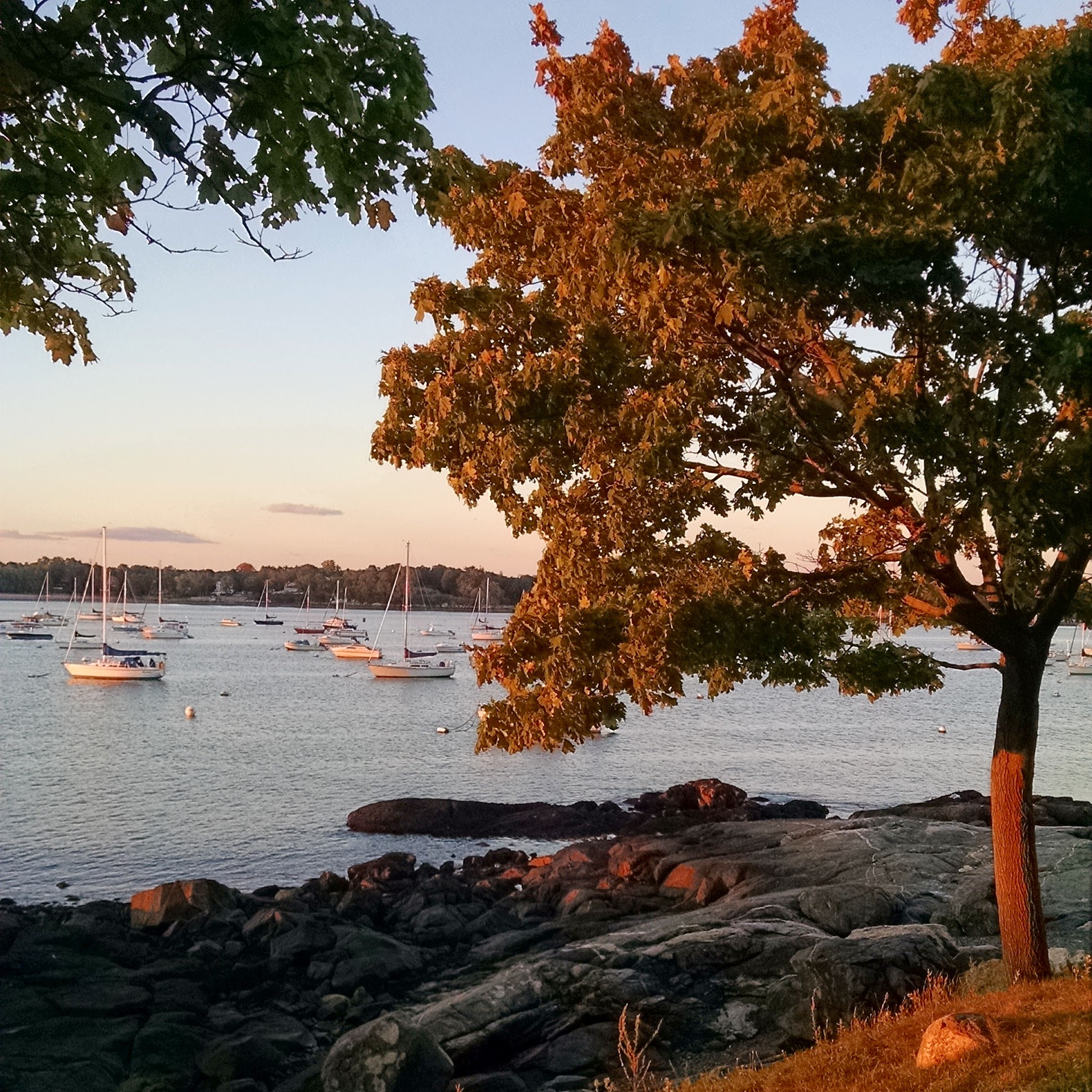
Salem Willows at Sunset, September 2014.  Photo by Meg Winikates

Salem Willows at Sunset, September 2014. Photo by Meg Winikates

The Art & Nature Center’s new show, Branching Out: Trees as Art opens tomorrow, and it’s going to be a fun day of tagua nut scrimshaw, bonsai demonstration, maple syrup and chocolate tasting, storytelling and musical performances, and more.  Learn how to engage in active meditation with a tree, hear participating artists discuss their work, or create your own visual art with data taken from the bioelectric energy of a potted plant in the Maker Lounge!  Programs run 10:30-4.  If you’re in the eastern MA/near NH area tomorrow, come say hi!

Macaroni Commas and Two Left Feet

Tomorrow is National Punctuation Day, so here’s a fun collection of punctuation celebration from the archives!

mwinikates's avatarBrain Popcorn

Didn’t get enough word fun on International Literacy Day?  Then get ready for September 24, which is National Punctuation Day.  I kid you not.

According to the official site for National Punctuation Day, this particularly exacting holiday is the brainchild of comma fiend Jeff Rubin, and is now in its seventh year of celebration.  Last year’s festivities were punctuated (ha!) by a baking contest, and this year they are soliciting punctuation-themed haiku, so go check it out if you’re feeling em dash deprived.  Don’t miss the photo gallery of punctuation mistakes–a sadly bountiful crop of terrible pluralization, but some other entertaining gaffes as well.

But why would you want to do that?  Grammar isn’t fun!

Yes it is.

I will grant you, I don’t know if playing Punctuation Pasta with macaroni commas and quotation marks would have gotten me all excited about punctuation as a student, but looking at…

View original post 232 more words

Finding the Fun: Three guides for a new school year

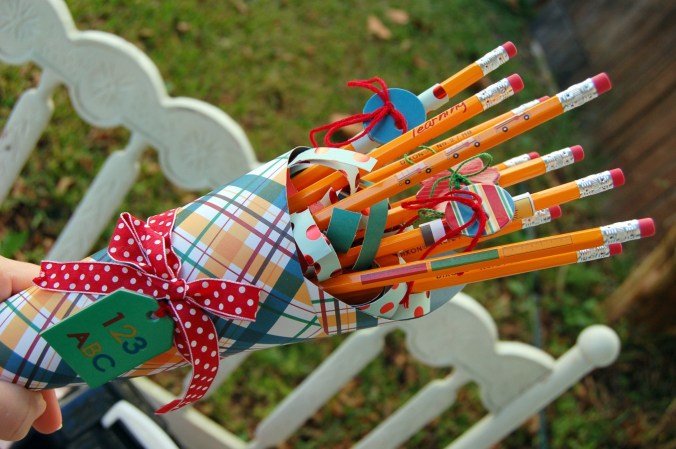
Fall is here (yikes! Where did summer go, anyway?) which means that even though I’m not *literally* going back to school, I still get that happy feeling about September and bouquets of freshly sharpened pencils.

Click image for photo source

Click image for photo source

For those of us who are looking for that fresh burst of inspiration and wonder that a new school year always meant, here are three great books to find the fun in your everyday, in and out of a formal learning environment!

Art is Every Day by Eileen Prince

Subtitled “Activities for the Home, Park, Museum, and City,” this book caught my eye in the bookstore immediately.  Though it is of course full of fun art-making ideas and some great examples in full-color, the most helpful parts of the book are the substantive suggestions to parents and educators about how to talk with kids about art in general and kids’ own art in particular.

Made to Play by Joel Henriques

Everyone needs a book on how to make toys, right?  The projects in this book use everyday and easily recycled materials, require a minimum of crafting know-how (some light sewing and woodworking required), and leave a lot open to the imagination of the maker for how the final product looks.  I’m seriously considering a number of the projects for possible use with my Story Trails programs.

How to Be an Explorer of the World by Keri Smith

Probably better known for her “Wreck this Journal” series, Keri Smith delivers on ways to be a more observant, curious collector of experience with her “portable life museum,” inviting you to doodle with coffee stains, photograph interesting typography, record overheard bits of conversation, and make lists of 10 things you notice in a particular space, be it familiar or entirely new.  This is another great resource for journaling prompts for kids or just to revel in your own reflective, creative practice.

What books or resources get you excited for a fresh new school year?

Ideabox: Leaves

ideabox leaves

The August blog vacation is over, September is here, and with it comes the opening day for Branching Out, Trees as Art.  So I’ve been compiling cool tree-related links and activities for you for months now, and have a set of companion activities to my earlier post, Ideabox: Twigs.

Leaves are awesome, when you stop to think about them, and this is, quite frankly, the best time of year to think about them if you are lucky enough to live in New England.  Foliage season is as exciting as flowering tree season if you’re me.
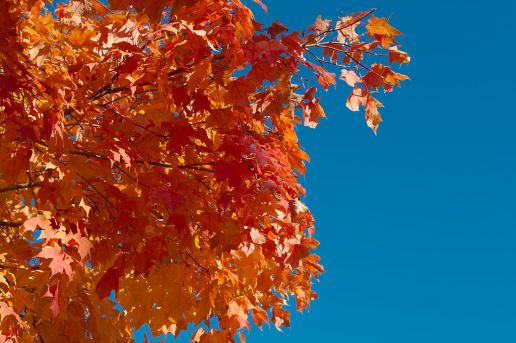
Fall Foliage by Dori, Creative Commons license.  Click image for source.

“Fall Foliage” by Dori, Creative Commons license. Click image for source.

We have a number of cool leaf-based artworks going into Branching Out, including work by Joan Backes, Steve Hollinger, and Adrianne Evans, among others, and here are some fun interdisciplinary ways of exploring leaves this fall (and beyond!).

Science: The Chemistry of Leaves

Leaf pigment chromatography is a staple in science classrooms this time of year, but in case you’ve never tried it, here’s a great breakdown of the experimental process from Scientific American, and a fun explanation of the phenomenon from Chemical of the Week.

Adrianne Evans does some very cool works with leaf pigments as well, using the leaves like photographic paper and allowing the sunlight to essentially make a print.
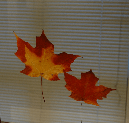
Colored Leaves by Adrianne Evans, on view in Branching Out starting Sept. 27

Colored Leaves by Adrianne Evans, on view in Branching Out starting Sept. 27

Try this yourself with cyanotypes, always fun on a sunny fall day!  Sun print or other sun-sensitive paper is available from a variety of sources including Dick Blick, Teacher Source, Steve Spangler and others.
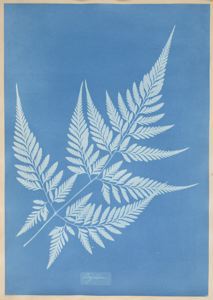
Cyanotype by Anna Atkins, 1850, from SFMOMA via Creative Commons.  Click for source.

Cyanotype by Anna Atkins, 1850, from SFMOMA via Creative Commons. Click for source.

Health

There are always new trends in health recommendations, but I can’t argue with the idea that walking in the forest can help with stress levels.  I traded a forest preserve for a coastline when I switched jobs from Acton to Salem, but this is still a good suggestion for oneself, one’s class, or one’s family: Go “Forest Bathing!”

Need more information on how hanging out with trees improves your health?  Check out “Take Two Hours of Pine Forest and Call Me in the Morning.”

Literature & Drama

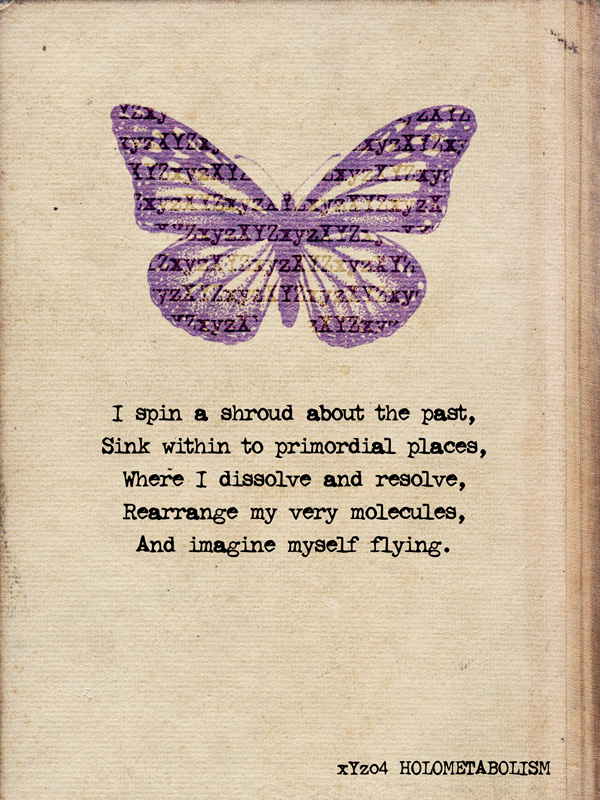
Lois Ehlert’s Leaf Man and Red Leaf, Yellow Leaf are early childhood classics when it comes to leaves, but what about combining your ‘forest bathing’ with a reflective writing activity, as in the haiku below?
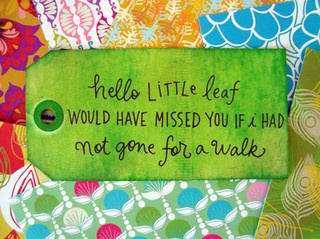
Haiku by Artsyville, click for source

Haiku by Artsyville, click for source

And how about a few classic poems to go with the (many) cool children’s books that are out there about trees?

Fall, leaves, fall

By Emily Brontë

Fall, leaves, fall; die, flowers, away;
Lengthen night and shorten day;
Every leaf speaks bliss to me
Fluttering from the autumn tree.
I shall smile when wreaths of snow
Blossom where the rose should grow;
I shall sing when night’s decay
Ushers in a drearier day.


On First Seeing a U.S. Forest Service Aerial Photo of Where I Live

By James Galvin

All those poems I wrote
About living in the sky
Were wrong. I live on a leaf
Of   a fern of   frost growing
Up your bedroom window
In forty below.
I live on a needle of   a branch
Of   a cedar tree, hard-bitten,
Striving in six directions,
Rooted in rock, a cedar
Tree made of other trees,
Not cedar but fir,
Lodgepole, and blue spruce,
Metastasizing like
Bacteria to the fan-
Lip of a draw to draw
Water as soon as it slips
From the snowdrift’s grip
And flows downward from
Branch to root — a tree
Running in reverse.
Or I live on a thorn on a trellis —
Trained, restrained, maybe
Cut back, to hold up
Those flowers I’ve only heard of
To whatever there is and isn’t
Above.


Art
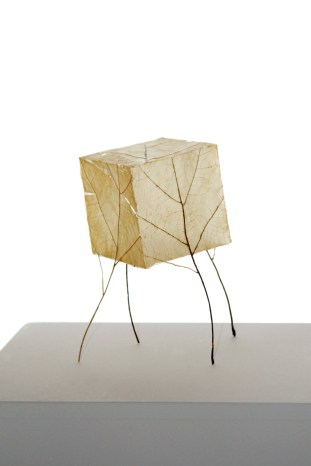
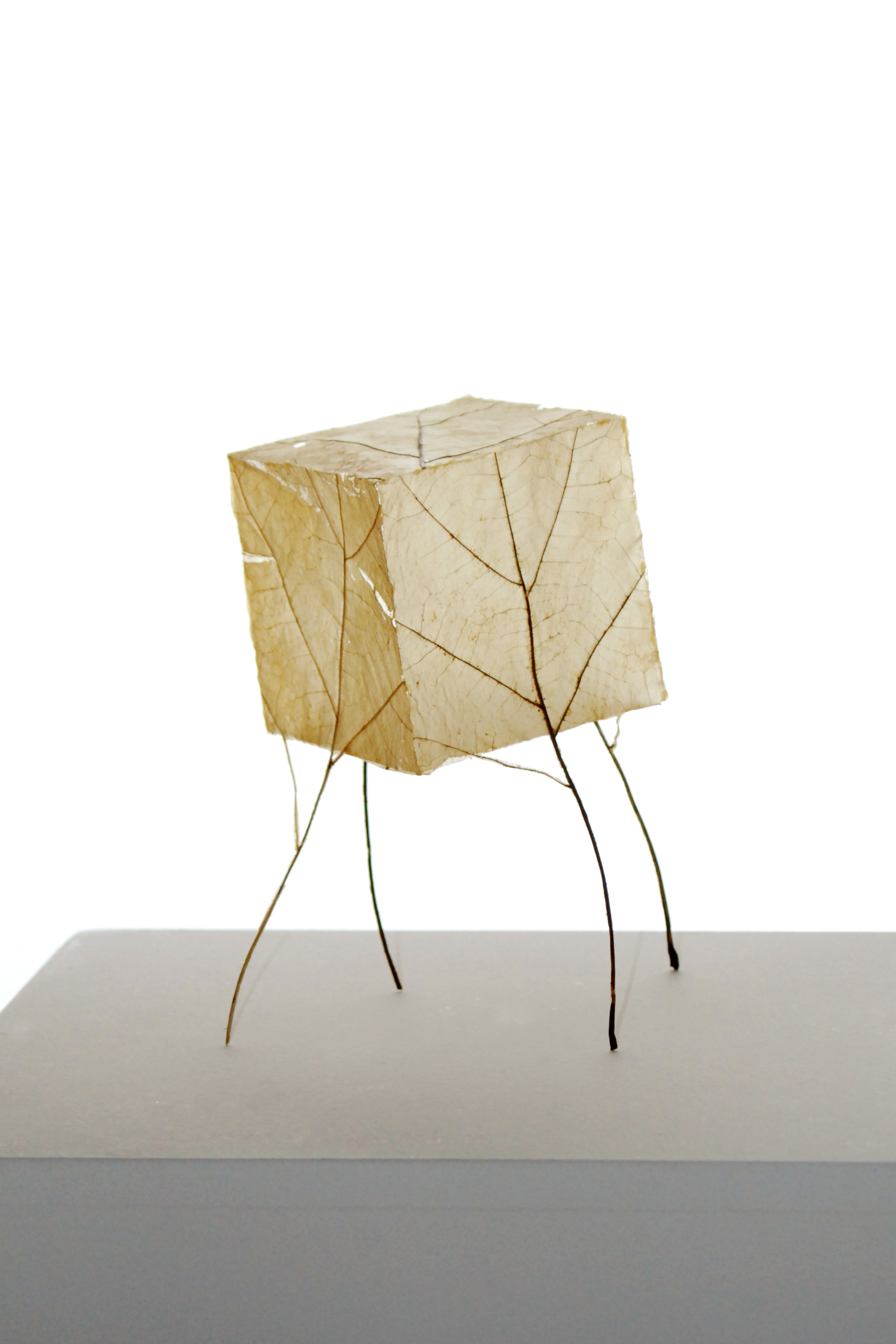
Leaf box by Steve Hollinger

Leaf box by Steve Hollinger

If you’re not up to acid-washing your leaves like Steve Hollinger (though you can get small leaves pre-treated through Dick Blick), how about some pressing, painting, punching and patterning?
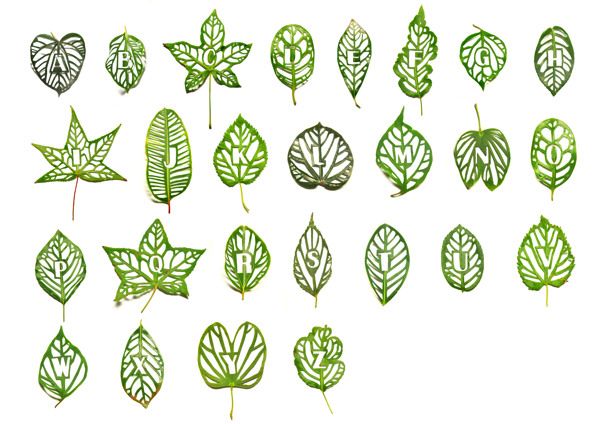
Leaf Type by Mei Linn Chan.  Click for source.
Leaf Type by Mei Linn Chan. Click for source.


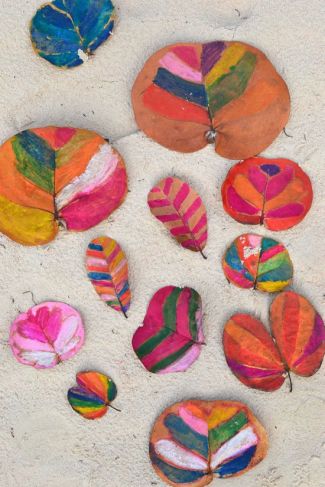
Painting patterns on leaves with watersoluble crayons.  Click for source.

Painting patterns on leaves with watersoluble crayons. Click for source.

Leaf printing with splatter technique.  Click for source.
Leaf printing with splatter technique. Click for source.

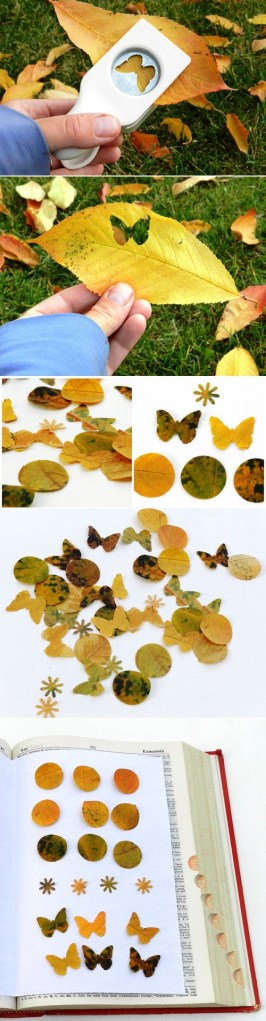
Leaf punching and patterning.  Click for source.

Leaf punching and patterning. Click for source.

Looking for more? Check out some previous Ideabox posts:

Ideabox: Sand
Ideabox: Altoid Tins
Ideabox: Dough
A Smattering of Science Poetry

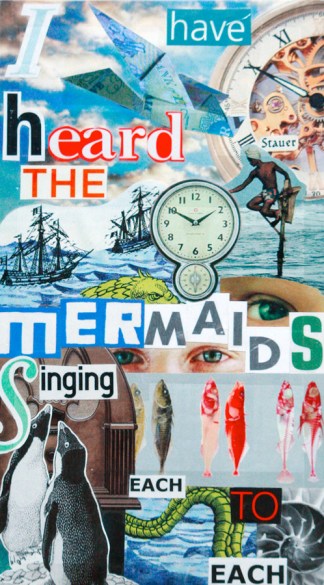
Collage by Serena Epstein, click for source

“Prufrock” Collage by Serena Epstein, click for source

In high school I had a chemistry teacher who had once taught literature, and he had a tendency to quote “The Love Song of J. Alfred Prufrock” at inexplicable times (usually when despairing over the state of our latest test grades).  I still hear “I grow old, I grow old,  I shall wear the bottoms of my trousers rolled and walk along the beach” in his voice, in fact, and while I learned to love poetry long before sophomore chemistry, I think he’d be pleased that science and poetry have such an unbreakable covalent bond in my brain.

If you have a hankering for the poetry of the universe, the folks over at Brain Pickings have a great assortment for you, including the first poem to be published in a scientific journal, 30 Days of Quantum Poetry, Diane Ackerman’s poems of the planets, and more.

From Quantum Poetry by Joanna Tilsley

From Quantum Poetry by Joanna Tilsley

And if you’re looking for science poetry that works in a classroom, I highly recommend the humorous stylings of Doug Florian, the thoughtful works of Joyce Sidman (who has some great teacher resources on her author page!), and the beautiful compilation The Tree That Time Built, with works from a wide variety of poets on an assortment of natural themes and CD included so you can appreciate the poems read aloud.

Do you have a favorite science poet?

From Red Sings from Treetops by Joyce Sidman

From Red Sings from Treetops by Joyce Sidman, an exploration of the colors of seasons

Barriers to Family Engagement in Museums

We’re working on rubrics for 2015 planning already, and this is a great reminder to think about not only what the goals of your programming are, but what they look like in action.

Mike Murawski's avatarArt Museum Teaching

Written by Marianna Adams, Audience Focus, with Elizabeth Margulies, Museum of Modern Art

Cross-posted from mariannaadams.blogspot.com

All three families scheduled for last week had to cancel or reschedule so it gave me some time to think and have some great conversations with museum educators around the country. What emerged as a theme for me this week was thinking about challenges to facilitating exciting, authentic co-participation in family experiences. I’ve invited Elizabeth Margulies, Director, Family Programs and Initiatives, at MoMA to chime in as she has some valuable reflections to share.

MoMA 1

Since 2004, the USS Constitution Museum has been actively involved in experimenting with and evaluating techniques that foster family engagement. Currently their IMLS-funded project “Engage Families” seeks to identify characteristics of family programming that result in active intergenerational engagement, enjoyment, and learning in museums and libraries. To assist that effort, I implemented an online survey of museum and…

View original post 1,352 more words

#ArtsMatter at the Create the Vote Gubernatorial Forum

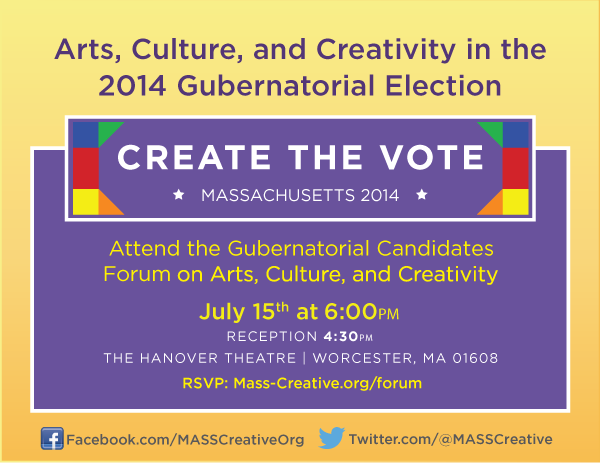
On Tuesday, the non-partisan advocacy group, MassCreative hosted a forum in Worcester where all the gubernatorial candidates were invited to attend and talk to arts leaders and advocates about their platforms for supporting the arts in Massachusetts.  Most attended, though Republican Charlie Baker neither bothered to show up in person nor send a representative.  About 600 arts leaders, participants, and activists were in the audience, and they were both enthusiastic and determined to get some nitty-gritty answers to their questions about arts funding and state support.

MassCreative put together a summary of much of the tweeting that went on at the event here, and I also tweeted a number of the moments that caught my ear (find the whole set @mwinikates).  You can also find much of the same material from the evening covered in the candidates’ position surveys here.

Overall, I thought Don Berwick and Martha Coakley both had good and interesting points that got cheers and applause, and Steve Grossman clearly had support in the hall.  Falchuk was very focused on affordable housing and cost of living issues, and McCormick had a very business-minded approach to dealing with the arts, while Fisher seemed underprepared and tone-deaf to the concerns and realities of his audience.  Here are a few of the evening’s highlights:

(And here I am, catching up with Neil Gordon of the Discovery Museums, my old stomping ground,  and Dan Yaeger of NEMA.)

Plugging back in to the theme of the evening, in response to an audience question about how to get the legislature to get behind a gubernatorial arts initiative:

I agree, and I hope that MassCreative keeps up the good work in the time between now and the election (and after!).

Looking for more?  There’s another great round-up of the evening’s event over at Dig Boston.


Throwback Thursday: Fair-Weather Forts and other Sunshine Notions

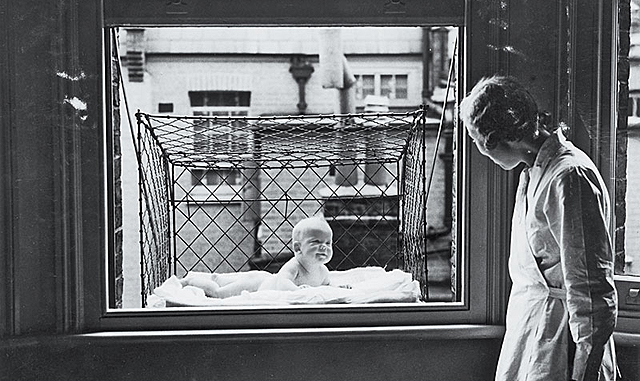
It’s Throwback Thursday, and a beautiful day outside, so grab your recycling bin full of last week’s newspapers and a roll of tape and build yourself a backyard fort! (Just don’t use it to hang your child’s playpen out the window…)

mwinikates's avatarBrain Popcorn

It’s warming up, it’s almost school vacation week here in Massachusetts, and as the leaves are starting to unfurl I thought I’d offer up some paper-craft options for fresh-air fun.

That’s an idea whose time has fortunately gone by, but if you’ve got that spring-air fever, may I recommend a fair-weather fort made of newspaper?

Indulge your architectural side and build a geodesic dome out of rolled newspaper struts.  (Alternate directions also available here.)  This is a great activity in small scale or large — I’ve done it with visitors both ways, and it’s always a big hit.  Just typing this makes me want to build one in my backyard.  There’s some fun inspirational architecture-via-recyclables here: Amazing Recycled Architecture.

And while you’re into the newspaper-folding mode, and out in the backyard, try out a six-sided kite or these neat biodegradable newspaper seed-starter  pots. Or make yourself…

View original post 47 more words

Politics, the Arts, and Massachusetts’ Gubernatorial Race

masscreative

Are you invested in the future of culture and the arts?  Do you have friends or family members who are?  Do you plan to vote in the next Massachusetts race for governor?

If you answered yes to any of the above questions, and can get to Worcester (or one of the bus departure points) on July 15th, please consider signing up here, and I will look forward to seeing you there!

If you can’t make it, and want me to ask a question at the forum, please let me know in the comments below, and I will make a full report after.

Pledge to Play

From "Let the Public Play," a recent exhibition at the Cambridge City Hall Annex, photo by me.  See more from this exhibition at "The Playful Season" post linked below.

From “Let the Public Play,” a recent exhibition at the Cambridge City Hall Annex, photo by me. See more from this exhibition at “The Playful Season” post linked below.

I’ve been blogging over on PEM’s Connected again, this time about the importance of intergenerational play.  Did you know that playful behavior in adults can improve your mental and physical flexibility, but that play involving adults and children can also improve empathy and conversational skills on both sides of the age divide?

Check it out here: The Playful Season.

Do you have any playful plans for this summer?  I’ll be overseeing/sitting in on a watercolor painting class, for one, and looking forward to digging out my diving gear in a week or two as well.