Twelve Days of Popcorn (Day 3): Trains

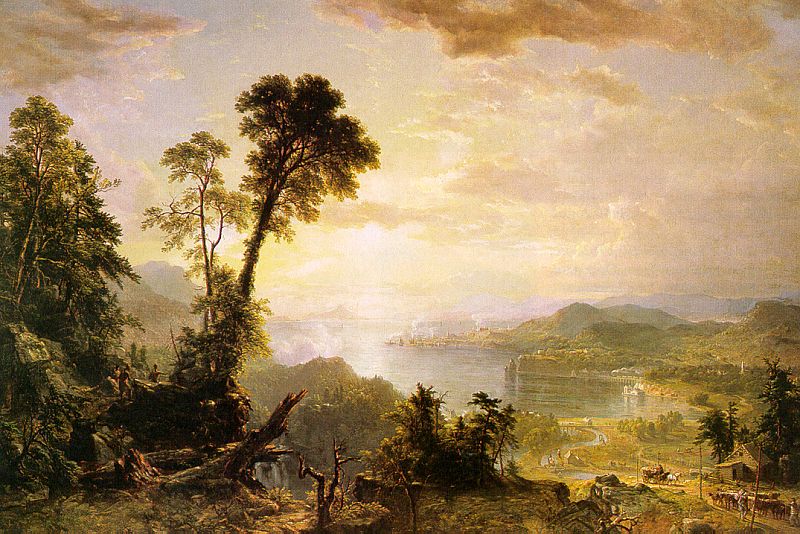
We set up the HO trains under the family Christmas tree this weekend, which is always fun and knocks about twenty years off my apparent age.   It’s amazing how enduring a fascination trains can hold, whether they’re models or massive machines, still or belching smoke and whistling like a time machine.  Trains even make good bait for getting a small child through an art museum (those luminists and Hudson River types often had creeping inroads of steam power in their paintings, after all, and you can enjoy the brushwork and color while the kiddo bounces around looking for train tunnels).

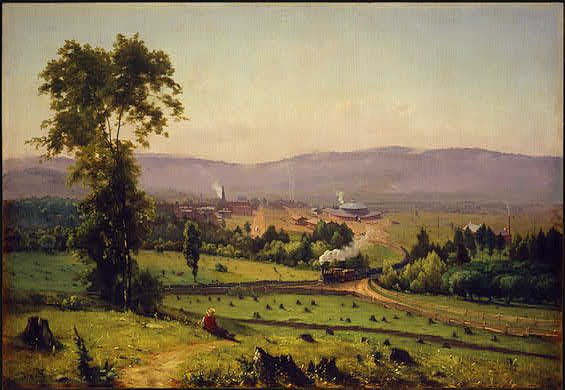
George Inness’ Lackawana Valley

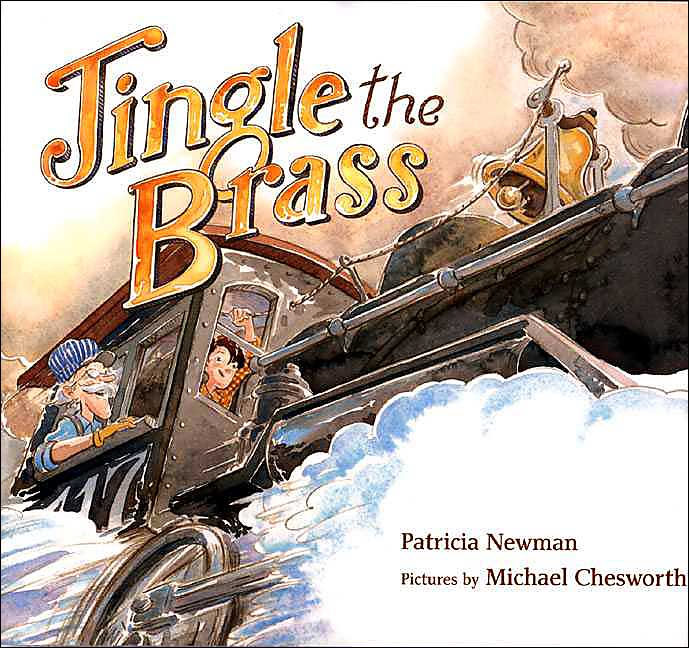
So it was with great delight that I discovered OurStory, a website hosted by the Smithsonian’s National Museum of American History.  The site is a family- and teacher- friendly resource for approaching history from the ‘story’ angle.  There is a searchable booklist, a great thematic list of activities to do at school or home, and one of their current features on the homepage is a downloadable packet of ideas and activities to explore the world of trains in your own backyard, from the local train station to the nearest rail museum.  (And even more book suggestions and activities on the thematic ‘trains’ page.)

One of NMAH's recommended reads

The NMAH has, of course, an impressive transportation collection of its own, but I love the fact that they’ve created resources which reflect the geographically wide-spread nature of visitors to a website.  “Can’t get to the NMAH?  Here’s how to find cool similar stuff near you.”  Fabulous.  Site specific materials can be fantastic, but accessibility is key.

Asher Durand, Progress (The Advance of Civilization), 1853

Twelve Days of Popcorn (Day 2): Underwater Art

It’s far too nippy here in New England to dig out the SCUBA gear, but a girl can dream, especially when faced with some truly beautiful marine-inspired artworks.

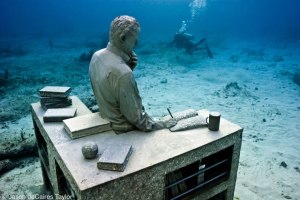
British sculptor Jason deCaires Taylor creates artificial coral reefs, not by submerging old train cars, buses, and other mechanical detritus as is often done elsewhere, but instead by creating beautiful sculptures which evolve over time as they are colonized by marine creatures. These underwater sculptures can be beautiful, spooky, or strange, but are always compelling, from their pristine state to their eventual end as the heart of a new kind of natural beauty.

The Dream Collector, by Jason deCaires Taylor. Click for link to original image.

And for those of you who prefer to keep your feet dry while checking out marine art, there is the incredibly cool collaborative crafting of the Hyperbolic Crochet Coral Reef, currently on display at the Smithsonian.  Based on the brain child of mathematician/professor/artist Daina Taimina, who first figured out how to use crochet to create this kind of mathematical form, others have gone on to build huge reefs including the Smithsonian’s Community Reef, which took contributions from interested participants in the DC, Maryland, and Virginia area.

On the second day of popcorn, these ideas gave me glee — two coral reefs and a pop-up folding snow-bedecked tree…

Twelve Days of Popcorn (Day 1): Seasonal Papercraft

In recognition of the holiday season, I have decided to celebrate with twelve posts of things that make me happy, inspire me, make me think, or otherwise stick alluringly in my brain.  (Expect a bit more humor and a bit less curriculum!)

Today’s Topic: Seasonal Papercraft, with a highlight on origami and snowflake making

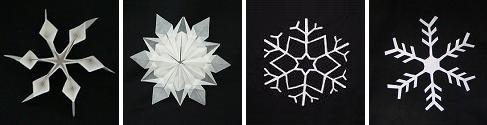
Photos from the Origami Resource Center

Round Up of Origami Snowflakes and Snowmen directions from the Origami Resource Center.  Very cool stuff.  I love the idea of using wax paper or patty paper so that you get the layered translucent snow-like effect.

Decorating the Origami Tree at the American Museum of Natural History:

Photo by snowflake designer, see link for details

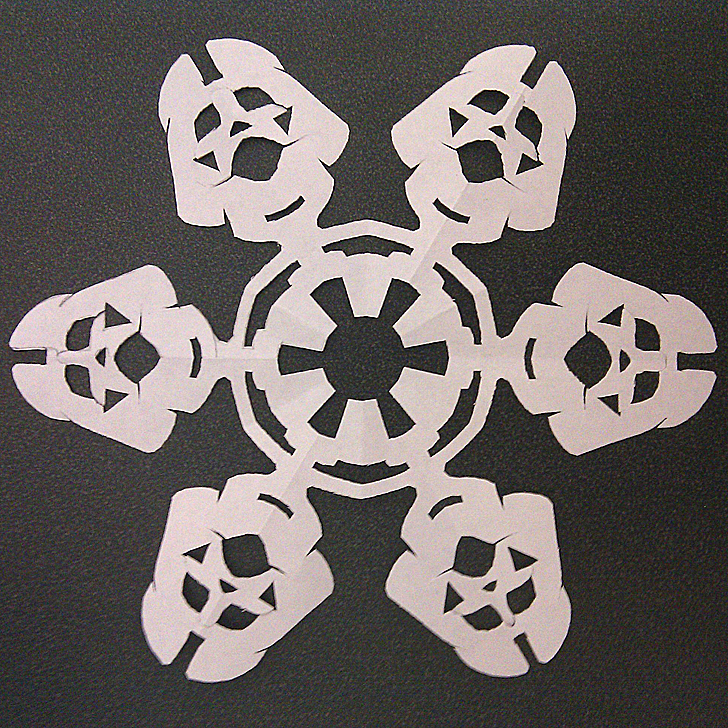
How to Make Star Wars Paper Snowflakes

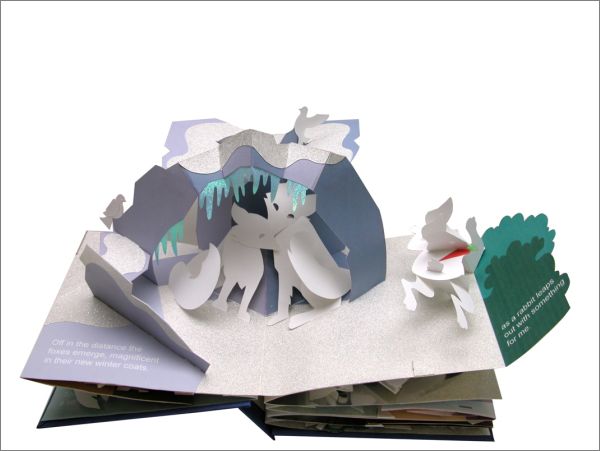
Robert Sabuda’s Winter’s Tale, a pop up book that makes me happy every time I open it.  His site has templates for creating all kinds of cool pop ups as well.

A page from Robert Sabuda's Winter's Tale


On the first day of popcorn, this idea gave me glee–a pop-up folding snow-bedecked tree…


Learn Vocabulary and more with the New York Times

Every now and then I run across a link that is just too cool to wait for an appropriately themed post, and today is one of those days.

Today I discovered The Learning Network, a blog on education hosted by The New York Times.  This extremely active blog uses content from NYT as the basis for lesson plans, quizzes, activities, and other materials directed at both teachers and students across all academic disciplines.  You can investigate their archives based on subject matter (grammar, social sciences, math, etc.) or by type of activity (word of the day, ‘6Q’s about the news,’ poetry pairings, etc.), or search the blog for a specific topic, article, or event.

One of the currently featured posts is “Twelve Ways to Learn Vocabulary with The New York Times,” full of neat trivia regarding the main NYT website itself (did you know that double clicking any word in an article will bring up dictionary definitions of that word?), lesson suggestions on content based analysis (even for the sports pages!), and opportunities for student writing.

This blog and some other cool resources I’ve encountered will soon be showing up on the re-organized resource pages here at Brain Popcorn, so stay tuned!

Why Science Needs Art, and so do we all


“When we try to pick out anything by itself, we find it hitched to everything else in the Universe.”
John Muir

Every so often, when I tell people that I write a blog about interdisciplinary education for museums, schools, and the generally curious, the response I get is a generic “That’s cool!” while their faces say quietly “What?”  and “For heaven’s sake, why?”

Why indeed.  At its most flippant level, the answer is ‘because it’s fun.’   However, there are serious reasons to advocate for interdisciplinary learning, and every so often I feel the need to point out just how many people agree with me.

For instance, graphic designer, computer scientist, and author John Maeda (who also happens to be the founder of Second Life) claims that “Innovation is born where art meets science.” In answer to the question “Why does science need artists?” he replies

We seem to forget that innovation doesn’t just come from equations or new kinds of chemicals, it comes from a human place. Innovation in the sciences is always linked in some way, either directly or indirectly, to a human experience. And human experiences happen through engaging with the arts – listening to music, say, or seeing a piece of art.

For this reason, he advocates for turning the tenets of ‘STEM (science, technology, engineering, and math) education’ into ‘STEAM,’ including the arts to promote innovative thinking and a greater acceptance of ambiguity.  (For more good background on the whats and wherefores of STEM Education, check out this excellent New York Times article, “STEM education has little to do with flowers.” Unsurprisingly, this article also points out the many benefits of looking at the connections between these subjects as opposed to the ‘silo’ approach.)

The Common Core Standards, which are slowly being adopted nation-wide, are also supportive of interdisciplinary education, though the standards are of necessity organized currently under the major umbrellas of English language and literature, and Mathematics.  Consider this benchmark for third grade, located under the ‘comprehension and collaboration’ strand in the English standards:

Determine the main ideas and supporting details of a text read aloud or information presented in diverse media and formats, including visually, quantitatively, and orally. [emphasis mine]

Visually–the reading and comprehension of artwork, symbols, photography, and motion pictures.
Quantitatively –the reading of charts, graphs, and numerical results.
Orally — the comprehension of spoken words, theater, lyrics, music, etc.

These are true interdisciplinary skills, necessary in all fields and for life in general.  And beyond the development of life skills, interdisciplinary education and exploration has been shown to promote creativity.
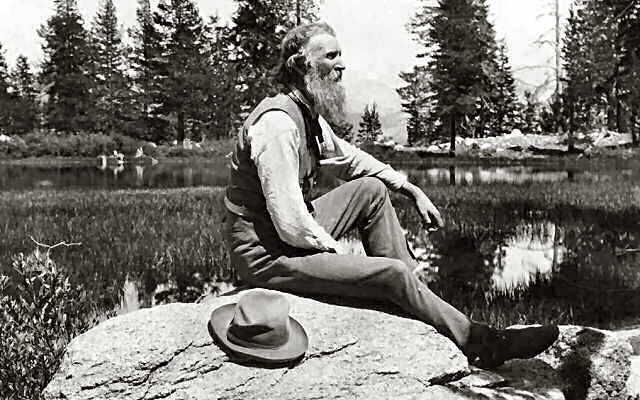
John Muir, environmentalist

The power of imagination makes us infinite.
~John Muir

Miller Mc-Cune reported this spring that studies have shown that experiencing different cultures can make you more creative, as can thinking of yourself as a seven year old.    (As I regularly travel and visit toy stores, this is good news for me all around.)

Check out The Walters Art Museum’s two interdisciplinary classroom units at their teacher resource page, Integrating the Arts, for some examples of how this could be done in connection with a museum or in  your own space.
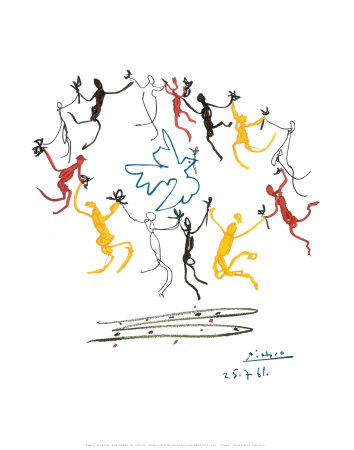
The Dance of Youth, by Pablo Picasso

“All children are artists.  The problem is how to remain an artist once he grows up.”
~Pablo Picasso

What steps can be taken, once we’re ‘grown up,’ to keep that creativity alive?  (Other than visiting museums and giving ourselves permission to play?)  The Idea Hive has some suggestions: The Subtle Art of Provoking Serendipity , including gathering diversity and making connections.  Interdisciplinary learning in the workplace as well as the school and the museum.  I love it.

‘The most exciting phrase to hear in science, the one that heralds new discoveries, is not “Eureka!” but “That’s funny.”‘
~Isaac Asimov

Has all this put you in the mood for some fresh ideas?  Open up the multimedia Moodstream created by Getty Images and let your brain start popping.
Cool and Creepy Archaeology in October

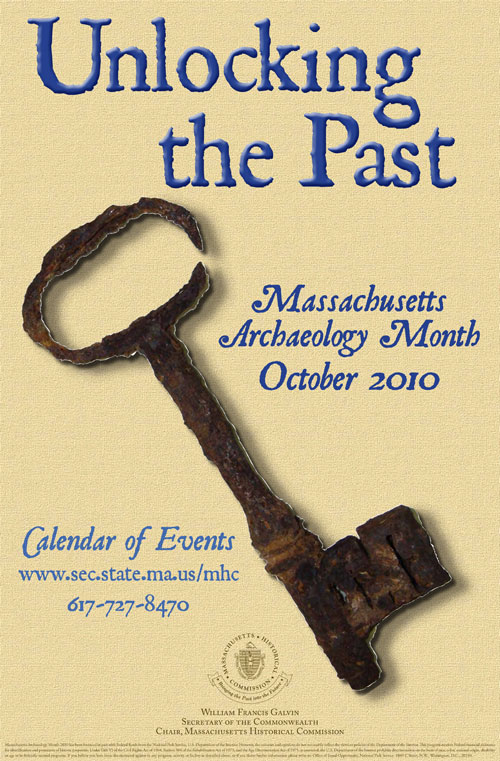
The month is almost over, but I can’t let it go completely by without tipping my hat to Massachusetts Archaeology Month.

Since life here at PEM has been very focused on the amazing Emperor’s Private Paradise exhibit, I have to admit I’ve been more tuned to archaeology stories from that corner of the world recently, including this incredibly cool discovery which may make people reevaluate historical trade routes: Could a Rusty Coin Re-Write Chinese-African History?

In celebration of which I give you Mint Your Own Coin from the American Museum of Natural History’s OLogy page, which also features fun interviews with archaeologists, make-your-own archaeological stationery, artifact features, and more.

If you’re looking for other online archaeology interactives, check out the extensive list at Fun Archaeology For Kids.  The list includes lots of different cultures and time periods, with a great many of the interactives created by museums and other reputable sources.

And now for the creepy. (It is, after all, the week before Halloween, and I’m not entirely immune to the Salem atmosphere.)

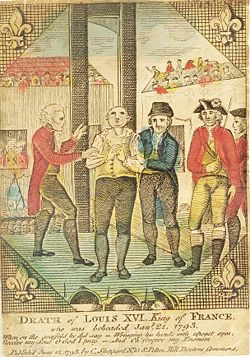
Royal blood may be hidden inside decorated gourd.  (eeurgh!)  An intricately decorated gourd bears traces of blood which may very well have come from a handkerchief soaked in the blood of the beheaded King Louis XVI of France.

Personally, I prefer my blood 100% Pure Fake, as in the book reviewed by exhibit interactive wizard Paul Orselli.  And if that’s not enough gross and gucky exploration for you, check out Wastewater: Sewage in your face! from the San Diego department of public works, which, among other more educationally rewarding activities, has recipes for making soda and cake that look like sludge.

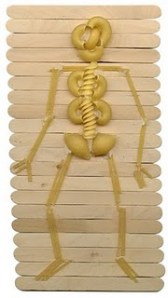
All creeped out?  Build an Egyptian tomb, uncover a prehistoric burial, or just make a pasta skeleton, courtesy of artist Kathy Barbro, directions here (or click the picture).

Pasta skeleton designed and photographed by Kathy Barbro. Click for link.

Star Wars Ice and Scientific Mermaid Song: Exploring Sound

My anonymous tipmaster sent me a very cool video earlier this week showcasing the universality of the pentatonic scale.  (Bear with me: it means that anywhere in the world, people watching Bobby McFerrin jump around a stage can actually sing on pitch and together with almost no instruction).  This incredibly cool exploration of sound, music, and the way we think  reminded me that I’d been collecting some very fun sound-related links to share with you here on Brain Popcorn.

A Not So ‘Silent World’

Diving in New England is a relatively quiet business.  Most of the time, it’s your air bubbles, your dive buddy’s air bubbles, and the occasional scrape of gear on rock that accompanies you in the deep.  But not always, and not elsewhere.  Diving in the USVI a few years ago I was thrilled and startled to be surrounded by what seemed like a chorus of marine Morse code, and was informed that there were ‘very talkative shrimp’ on that particular reef.  A recent report highlighted by the Smithsonian suggests “A Noisy Reef is a Healthy Reef,” which is a fascinating new look at ways to measure the health of communities in endangered waters.

For most of us, the ‘sound of ice’ is skates carving up the surface, or possibly that sharp pop you get when you drop an ice cube into a glass of lukewarm juice.  If you’ve been lucky enough to visit the land of glaciers and icebergs, maybe you also think of the great rumble and splash of a calving glacier.  But what about a lake in winter?  Thoreau certainly noticed interesting sounds at his spot by Walden Pond:

The cracking and booming of the ice indicate a change of temperature. One pleasant morning after a
cold night, February 24th, 1850, having gone to Flint’s Pond to spend the day, I noticed with surprise, that when I struck the ice with the head of my axe, it resounded like a gong for many rods
around, or as if I had struck on a tight drum-head. The pond began to boom about an hour after sunrise, when it felt the influence of the sun’s rays slanted upon it from over the hills; it stretched
itself and yawned like a waking man with a gradually increasing tumult, which was kept up three or four hours. It took a short siesta at noon, and boomed once more toward night, as the sun was
withdrawing his influence. In the right stage of the weather a pond fires its evening gun with great regularity.

Read more from Thoreau’s Walden here.

If you can’t make it out to a pond when the weather is perfect, then listen to some amazing ice sounds from the warmth of your own desk, with sound artist Andreas Bick’s recordings, or check out compositions played on instruments made of ice by Terje Isungset.

Sounds Like a Fairytale

The Voice of the Little Mermaid — How might the Little Mermaid have sounded under water?  If, like certain people who shall remain nameless, you’ve ever tried humming in the swimming pool to find out, here’s a way to explore a little further.  An opera singer has actually performed most of an opera, singing underwater, and discusses her technique and the changes in the sound at the link above.  Very cool–but hard on the costumes, I should think!

Ladle Rat Rotten Hut – Did you ever notice that when listening to the radio or the TV in the background, you could still get a sense of the meaning even without catching all the words?  Try reading this intro to “Little Red Riding Hood” aloud with a ‘storytelling voice’ and see how far you get.  Listen to the narrator on the Exploratorium’s page if you’re stumped, and find the rest of the story there too.

Wants pawn term, dare worsted ladle gull hoe lift wetter murder inner ladle cordage, honor itch offer lodge dock florist. Disk ladle gull orphan worry ladle cluck wetter putty ladle rat hut, an fur disk raisin pimple colder Ladle Rat Rotten Hut.


Copyright-Friendly Image Use

You need images for your blog.  For your power point presentation.  For your activity sheet.  The clip art you have available on your office software is boring, or limited, or completely insufficient for your topic.

You decide to take a quick hop on the nearest available internet image search, find the perfect image and then use those helpful right-click-copy or save-as options.  You drop your new-found ideal picture into your document.  Maybe there’s a watermark or a signature that you decide to crop out.  Maybe you leave it.  Maybe you include a photo credit.  Maybe you don’t.

We’ve all done it.  Unless we’re remarkably scrupulous, we didn’t ask permission.

Which means that at one point or another, we’ve all been guilty of (mostly innocent) copyright infringement.

Big businesses have found all sorts of solutions to wrangling infringement on the internet–their latest solution appears to be allowing it so long as they get advertising revenue out of it: YouTube Ads Turn Videos into Revenue.

But most artists and a great many businesses don’t have the resources to be tracking down misuse of their works all over the wild and wacky internet, so a lot of infringement goes unnoted.  If you, like I, have started wondering how to go about borrowing images in a more responsible manner, here are some resources for you which help explain copyright law and also point you in the direction of people who *want* to share their work with you.

Copyright Basics — A decent plain-language overview of copyright law from Stanford University

Museumwise’s compilation sheet of copyright resources, online and print (links to a pdf)

Creative Commons home page — These are the folks that like to share their work, where you can license a particular image, etc. for sharing under certain restrictions in easily understandable language, such as ‘I’m happy to share this with you if you will use it in a non-commercial way without altering it, or with alterations so long as you also allow your version to be shared with others under this same kind of license.’  Find artists or license your own work to share here.

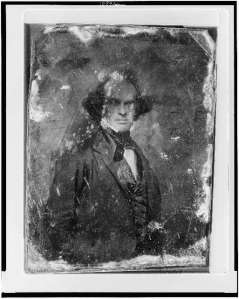
Daguerrotype of Nathaniel Hawthorne, from the Library of Congress collection. Click for link.

Copyright Friendly and Copyleft Images and Sound — This is a resource list for places to find free stock photos, images which are in the public domain (including a number of excellent resources from the federal government, which is not allowed to hold copyright), and even some sounds/music, which is usually even more complicated from a copyright standpoint than words and images.

Two Weeks to National Fossil Day

Every time I look at my inbox and start thinking that I really need to try to cut down on the amount that lands there on a daily or weekly basis, something cool invariably arrives to change my mind.  Case in point, this morning’s email from the National Park Service announcing the upcoming arrival of the very first National Fossil Day(TM) on October 13, 2010.

I like fossils.  I like love the National Park Service.  I had my career-epiphany-moment directly after taking a fossil hike on the rim of the Grand Canyon.

I opened the email.

So what is National Fossil Day?  Part of the 2010 Earth Science Week celebrations sponsored by the American Geological Institute, National Fossil Day  is “a celebration organized to promote public awareness and stewardship of fossils, as well as to foster a greater appreciation of their scientific and educational value.”

(In other words, a really good excuse to play in the dirt.  I always like those.)

The NPS website is a wealth of interesting information, a “rockin'” interdisciplinary list of activities, and other fascinating and fun stuff.  A few highlights include a map of the 230 national parks containing fossils (including ones in Guam and the US Virgin Islands) and fossil highlights from many of those parks,  a list of the official state fossils, and a list of events in your area.

If, like me, you take a look at all the amazing activity which is going to be on the National Mall in DC and want to cry into your Pleistocene soup from sheer envy, here are a handful of fun fossil-related activities and articles you can enjoy from the comfort of your desk chair.

Geology for Fossil Hunters, courtesy of the Exploratorium’s very cool site “Evidence: How do we know what we know? Human Origins”. Also including cool videos on virtual fossil reconstruction and other nifty topics.

Professor Allister McFragilis, Dinosaur Geo-Detective.  No, seriously. It’s an electronic field trip, or EFT put together by Bryce Canyon National Park, and has both online games and then downloadable lesson plans about geology and specifically fossils.

Dinosaur True Colors Revealed for First Time by pigments remaining in fossilized dino fuzz.

Pterosaur Ornithopter videos.  Which are apparently flying vehicles which mimic bird- or bird-like flight, specifically in this case, dino-bird-like-flight.  The key to this seems to be that the wings flap, as opposed to fixed-wing aircraft like normal planes.  Intrigued?  There is actually someone who has built and tested a successful human-powered ornithopter called the Snowbird, with a record setting 19.3 second flight, achieved just last week on September 22nd.

And, of course, more fossil fun activities and links at my previous post, “Dinosaurs, Art Photography, and Toddlers?

Holograms, Impossible Objects, and Floating Furniture

An impossible shape, the Penrose triangle, in Gotschuchen, Austria, erected in 2008 by the "physics meeting" association as part of the project "Physics on Spielplatz" Used with a creative commons license. Click for source.

Impossible Objects

In one of my recent posts I mentioned that studies have shown that we start recognizing impossible objects when very young.  Fortunately, they continue to be fascinating, and have led to amazing art, interior design, and stories like DB Johnson’s Escher-inspired Palazzo Inverso.  (I’m still holding out for a closet that’s either Narnia or a TARDIS, but while they are working on making tractor beams a reality, pocket dimensions to increase the size of my apartment are not on next year’s Christmas list.)

…Though I might want to talk to this guy: Jerry Andrus’s Illusions.  The warping clouds are enough to give you a headache, but the bolt-through-the-impossible-nuts is pretty impressive.  Even after seeing it repeatedly my brain still gets tricked.

Check out other life-sized impossible sculptures like the one above from Austria here.  Almost all of them are the sort that require you to look at them from one particular perfect vantage point: if you’re feeling inspired, there are directions on creating your own impossible triangle sculpture at Cool Optical Illusions: Penrose Triangle.

Holograms

If they’re working on tractor beams, surely holodecks aren’t far behind.  Eye Spy featured artist Betsy Connors is a holographer here in Boston, and likes to work with whole-room holographic installations, though her works currently showing at the Peabody Essex Museum are discrete elements instead of a single larger piece.  Her route to holographic creations includes lasers, a giant sand table, mirrors, film, and a multi-step developing process (see the PEM interview with her here).

If you’d like to try a similar effect without the heavy-duty equipment, William Beatty’s got detailed instructions and a lot of related links on creating what he calls a “Scratch” or “Abrasion” hologram.

Through the Looking Glass

Optical illusions are a great inspiration for unusual decoration.  These designers have gone beyond painting the roses red, however, to create chairs and couches that seem to (or maybe even will) float, exploding bureaus, room-lengthening curtains (aha!  there’s my pocket dimension after all!) and invisible tables.

Still here? After all those cool ideas?  Fine, have a book trailer for the aforementioned Palazzo Inverso, a very entertaining story you read front to back, and then upside down back to front.  And when you’re done with that, go read Mirror Mirror, which is a set of fairy tale poetry from two points of view, read down the page and then up it again.